

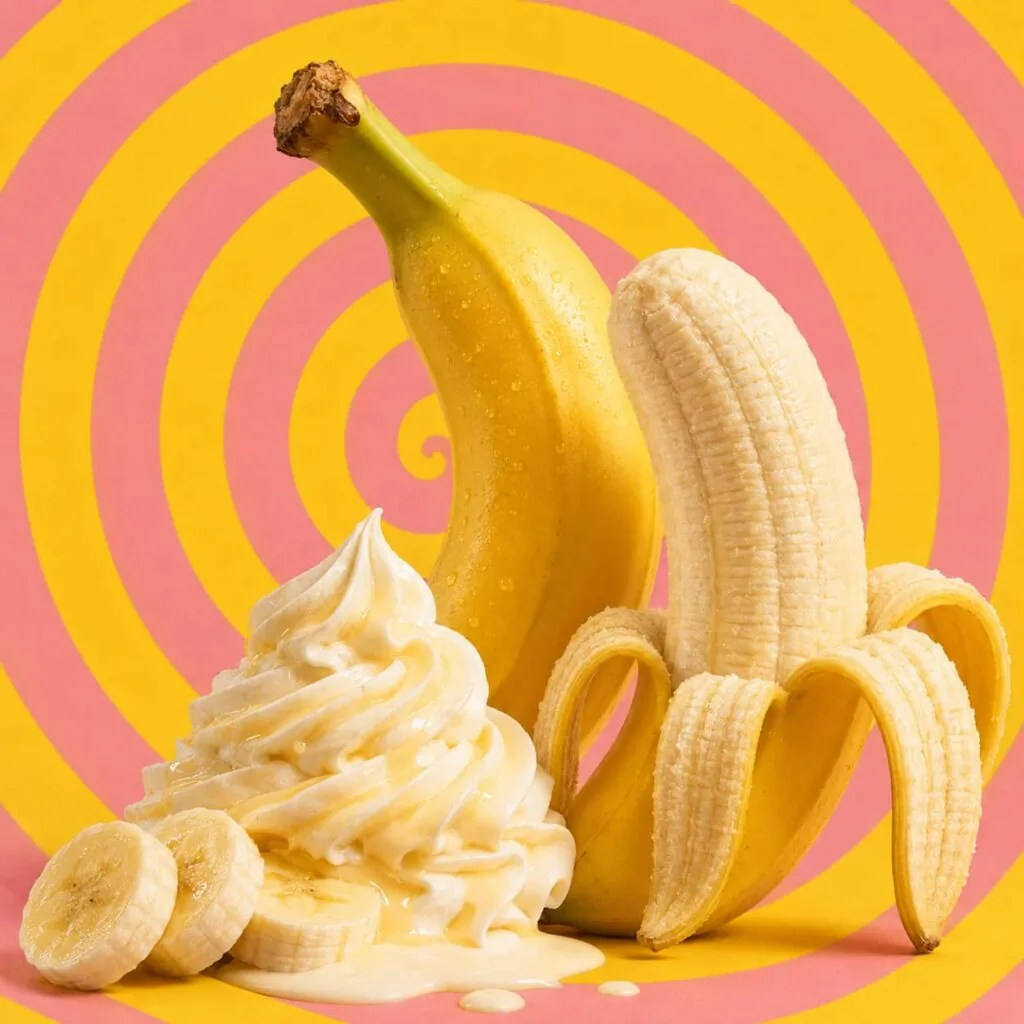
Banana Cream sounds like a simple cultivar to research until several unrelated strains begin appearing under nearly identical names. The original Banana Cream is a Banana OG × Cookies and Cream hybrid, but it is often confused with Banana Cream OG, Banana Cream Cake, Banana Cream Pop, and autoflowering products that use similar branding.
Different genetics produce different growth patterns, aromas, and schedules. This guide focuses on the original photoperiod hybrid: its regular-seed background, phenotype variation, training options, approximately 60-day flowering window, and selection trade-offs.
| Strain feature | Original Banana Cream details |
| Genetics | Banana OG × Cookies and Cream |
| Type | Photoperiod hybrid, commonly described as indica-leaning |
| Original seed format | Regular seed; plants may be male or female |
| Flowering window | Approximately 60 days, or roughly 8–9 weeks |
| Indoor or outdoor | Suitable for both when climate and season allow |
| Growth pattern | Medium structure with phenotype-dependent stretch and good response to topping |
| Yield potential | Moderate to good; varies significantly among phenotypes and setups |
| Aroma and flavor | Banana, overripe fruit, cream, vanilla, dough, earth, and OG-style fuel |
| Grow difficulty | Moderate, mainly because regular seeds and phenotype selection require more management |
| Best training fit | Multi-topped bush for seed plants; short-veg SOG after selecting a suitable clone |
| Harvest priority | Judge each plant by maturity rather than harvesting every phenotype on one date |
These specifications describe the documented Banana OG × Cookies and Cream cultivar. If the package says Banana Cream OG, Cake, Pop, autoflower, or feminized Banana Cream, verify its lineage. Do not apply this schedule based on the name alone.
The name on a jar or search result is not enough to establish a plant’s identity. Modern cannabis naming is inconsistent, and similar dessert-style names are frequently used for unrelated crosses.
| Name found on the label | What it usually refers to | Can this guide be applied directly? |
| Banana Cream | The original Banana OG × Cookies and Cream photoperiod hybrid | Yes, if the lineage matches |
| Banana Cream OG | A separate cultivar often listed with Blue Dream, Banana OG, and Ocean Beach OG ancestry | No; verify its own flowering and growth information |
| Banana Cream Cake | A separate dessert cultivar with breeder-dependent genetics | No; the similar name does not prove shared lineage |
| Banana Cream Pop | Another distinct cultivar sold under its own lineage | No; follow the relevant breeder information |
| Banana Cream Auto | An autoflowering product using similar naming | No; an Auto has a different lifecycle and training window |
| Banana Cream flower or clone | A market product that may descend from the original line or a local selection | Only after confirming the source and lineage |
Start with the original package or clone record. Confirm the breeder, full cultivar name, seed type, and stated lineage. If those details are unavailable, treat online schedules as starting hypotheses rather than proof.
The original Banana Cream was created by Exotic Genetix by crossing Banana OG with Cookies and Cream. Banana OG contributes fruit and fuel. Cookies and Cream adds dough, cream, and resin appeal.
| Parent | Main family traits | Possible expression in Banana Cream |
| Banana OG | Ripe banana, overripe fruit, earth, OG fuel, resin, and potentially more vertical growth | Sweeter banana aroma, elongated flowers, fuel underneath the fruit, and a heavier finish |
| Cookies and Cream | Vanilla dough, sweet cream, dense resin coverage, branching, and dessert-style character | Creamier aroma, compact flowers, frost, stronger lateral growth, and a smoother pastry-like finish |
| Balanced expression | A combination of both parents | Banana or fermented fruit over vanilla, cream, dough, earth, and fuel |
These are family tendencies rather than guarantees. Seed-grown plants may lean toward either parent or split the difference. Aroma alone cannot predict every trait.
Banana Cream is therefore better evaluated as a phenotype hunt. Do not treat it as a uniform seed line. Structure, resin, aroma, maturity, yield, and stability all matter. Selecting only the plant with the sweetest banana smell can mean overlooking a better all-around keeper.
The documented original release used regular seed. A pack can therefore produce male and female plants in an unpredictable ratio. Keep enough space to remove males, label every plant, and avoid placing unsexed seedlings into a tightly packed SOG.
| Regular-seed task | Why it matters | Practical approach |
| Permanent labeling | Phenotype notes become useless if plant identities are lost | Label the container and backup clone with the same unique code |
| Early sex monitoring | Males can release pollen if ignored after flowering begins | Inspect nodes and preflowers frequently during transition |
| Backup cloning | A keeper cannot be recovered easily after harvest without a living copy | Take more than one clone from promising plants before the flip |
| Separate plant notes | Aroma, structure, stability, and maturity can vary widely | Record observations for each plant instead of averaging the room |
| Separate drying and curing | Finished aroma may differ from mid-flower impressions | Keep harvests labeled until final keeper decisions are complete |
A modern “feminized Banana Cream” pack may be a recreation, derivative, or later selection. Verify it independently. That does not make it inferior. It does mean its genetics and schedule should be verified independently.
Banana Cream can develop a productive, bushy frame after topping, but phenotype variation is meaningful. One long-running public grow diary followed several plants from regular seed and later compared multiple female expressions. The observations reveal trade-offs hidden by a single strain description. They remain anecdotal rather than controlled trial data.
| Documented expression | Aroma and structure | Production and selection lesson |
| Sweeter Banana OG-leaning plant | The clearest sweet-banana direction and stronger resemblance to Banana OG | Produced the least of the three compared females; aroma intensity did not predict yield |
| Earthy, productive plant | Earthier profile with a lighter banana note | Produced more than two dry ounces in that setup but showed intersex expression low on the plant, requiring further stability testing |
| Balanced keeper | Good branching, greasy resin, bright-green flower, purple resin details, and cured rotten-fruit, floral, and vanilla notes | Produced about two dry ounces in the documented setup and offered the best balance of structure, yield, resin, and finished quality |
Those figures came from individual plants under a 600-watt HPS in three-gallon containers and are not yield promises. The useful lesson is that the sweetest plant may produce less, the heaviest plant may reveal a stability issue, and a quieter plant may become more aromatic after curing.
Many strain descriptions promise banana cream pie from the moment flowers appear. Real plants are less predictable. In the documented grow, one keeper’s aroma changed noticeably through flowering and curing.
| Stage | Observation from one documented keeper | What the grower should learn |
| Flower week 3 | A recognizable banana-like aroma began appearing | Early aroma can help identify direction, but it is not the final profile |
| Flower week 4 | The scent became “funky banana,” while the plant developed greasy resin | Resin and aroma can strengthen together in mid-flower |
| Flower weeks 6–7 | Banana became fainter beneath a stronger sweet, dank smell | Fruit notes can be masked temporarily by fuel, earth, or late-flower intensity |
| Immediately after harvest | Aroma was not considered especially strong | Do not reject a plant based only on its first dried impression |
| After curing | Aroma increased and shifted toward rotten fruit, floral notes, and slight vanilla | Final keeper decisions should wait until the cure reveals the complete profile |
This progression is one of the most useful information gaps to close. Banana intensity is phenotype-dependent, and the cure can change both strength and balance. A fast, hot dry may flatten the same volatile notes the grower was trying to preserve.
Avoid exact terpene percentages unless they come from a certificate of analysis for the specific flower. Cultivar names do not guarantee a uniform laboratory profile across producers, phenotypes, harvest dates, or testing facilities.
Both a multi-topped bush and Sea of Green can work, but they suit different stages of the selection process. The documented grower tested both methods. A multi-topped bush performed better for that keeper, although SOG also worked.
| Method | Best situation | Advantages | Main limitation |
| Multi-topped bush | Growing from regular seed or comparing unfamiliar phenotypes | Reveals branching behavior, creates several tops, and makes individual plants easier to inspect | Requires more vegetative time and horizontal room |
| Short-veg SOG | Running a known female clone with predictable stretch | Fast turnover, simple vertical structure, and efficient use of selected genetics | Poor fit for unsexed regular seedlings and inconsistent phenotypes |
| Light SCROG | A vigorous keeper with strong lateral branching | Creates an even canopy and provides flower support | Can make separate phenotype removal and inspection harder during a seed run |
Let the plant establish several nodes before topping. Use soft ties to create three or more leaders while keeping the center open. During a regular-seed hunt, this structure keeps plants accessible so males or unstable individuals can be removed easily.
SOG is more predictable after a female keeper has been tested and cloned. Keep vegetative growth short and base the flip on the clone’s observed stretch. In one documented SOG run, the selected clone grew taller than expected. Keeper-specific behavior matters more than a generic label.
A phenotype hunt is not about finding the loudest plant as quickly as possible. It is a structured comparison designed to identify the best plant for a specific goal.
| Step | Action | Decision produced |
| 1 | Assign every seedling a permanent code | Prevents lost identities later |
| 2 | Grow all plants under the same environment and medium | Makes comparisons more meaningful |
| 3 | Record vigor, internode spacing, branching, and stress response | Identifies structural differences before flower |
| 4 | Take labeled backup clones before the flip | Preserves potential keepers |
| 5 | Inspect sex and stability during transition and flower | Removes males and flags problematic expressions |
| 6 | Record aroma and resin at weeks 3, 5, and harvest | Captures how the profile changes over time |
| 7 | Dry and cure every female separately | Preserves the evidence needed for final selection |
| 8 | Re-run finalists from clone | Tests whether quality and stability repeat under controlled conditions |
Treat stability as a pass-or-fail requirement. A single late-flower “nanner” does not prove cultivar-wide instability. First review light leaks, heat, root problems, damage, and maturity. Re-run the clone under stable conditions before making a conclusion.
This schedule is designed for the original photoperiod cultivar. Use it as a planning framework, not as a fixed breeder recipe.
| Stage | Expected development | Main grower priority |
| Seedling, weeks 1–2 | Compact leaf growth and root establishment | Avoid saturated media, oversized containers, and strong feeding |
| Early veg, weeks 3–4 | Branching becomes easier to compare | Label carefully, begin gentle LST, and note structural differences |
| Late veg, weeks 5–6 | Plants become ready for topping, cloning, and transition | Take backup clones and prepare for sex identification |
| Flower weeks 1–2 | Stretch and preflowers reveal more about each plant | Remove confirmed males, support branches, and avoid heavy stress |
| Flower weeks 3–4 | Aroma becomes noticeable, and resin begins increasing | Record banana, dough, earth, and fuel direction separately |
| Flower weeks 5–6 | Flowers gain density, and phenotypes separate clearly | Maintain airflow and compare nutrient response and stability |
| Flower weeks 7–9 | Flowers mature and aroma may become more dank or fuel-forward | Inspect trichomes, control humidity, and harvest each plant independently |
| Dry and cure | Aroma settles, strengthens, or changes direction | Keep plants separate and delay keeper selection for at least three to four weeks |
Use an airy medium and avoid keeping a small root system inside a large, saturated container. One documented run reported early stunting after overly wet soil. Let the medium regain air between irrigations and prioritize root health over rapid fertilizer increases.
Once plants are vigorous, top and organize the new leaders with soft ties. Take multiple labeled clones before the flip and install support early. Keep every lower branch visible for sex and stability checks.
Switch to 12/12 when plants occupy roughly 60–70% of their intended space. Inspect nodes frequently and remove confirmed males before pollen sacs open. Recheck female plants after heat, irrigation, pruning, or light-cycle stress.
Record aroma differences without choosing a winner too early. As flowers gain density, improve airflow and avoid pushing EC merely because one phenotype looks productive. Begin maturity checks around day 56 and inspect closely around day 60. Harvest each plant when its calyxes and trichomes are ready.
The following ranges are adaptable starting points. Nutrient lines, media, light intensity, leaf temperature, irrigation strategy, and phenotype all influence the correct target.
| Stage | Day temperature | Relative humidity | Approx. VPD | Starting EC | Soil pH | Coco/hydro pH |
| Seedling | 74–78°F | 65–72% | 0.7–1.0 kPa | 0.4–0.8 | 6.2–6.6 | 5.7–6.1 |
| Early veg | 75–80°F | 60–68% | 0.9–1.1 kPa | 0.8–1.2 | 6.2–6.6 | 5.7–6.1 |
| Late veg | 75–80°F | 55–62% | 1.0–1.2 kPa | 1.2–1.6 | 6.2–6.7 | 5.8–6.2 |
| Transition | 74–79°F | 52–58% | 1.1–1.3 kPa | 1.3–1.7 | 6.2–6.7 | 5.8–6.2 |
| Early flower | 74–78°F | 48–55% | 1.2–1.4 kPa | 1.4–1.8 | 6.3–6.7 | 5.8–6.2 |
| Mid flower | 72–77°F | 44–50% | 1.3–1.5 kPa | 1.5–1.9 | 6.3–6.7 | 5.8–6.2 |
| Late flower | 68–75°F | 40–48% | 1.3–1.5 kPa | 1.2–1.7 | 6.3–6.7 | 5.8–6.2 |
VPD depends on leaf temperature rather than air temperature alone. Measure the leaf surface under LED lighting and use our VPD Chart for Cannabis to adjust temperature and humidity together.
Do not treat every pale leaf as a demand for more fertilizer. Confirm pH, root health, irrigation frequency, runoff or root-zone EC, and environmental demand first. Our hydroponics vs soil guide explains why the same reading can require different responses in different media.
Use the same scoring system for every female. Aroma is important, but it should not outweigh stability, finished quality, or the plant’s fit for your room.
| Selection category | How to evaluate it | Suggested treatment |
| Stability | Repeated flower development under a stable, light-tight environment | Mandatory pass/fail |
| Structure | Branch strength, spacing, trainability, and canopy efficiency | Score 1–5 |
| Vigor | Rooting speed, recovery, and consistent growth | Score 1–5 |
| Resin | Coverage, maturity, texture, and possible extraction value | Score 1–5 |
| Aroma after cure | Banana, cream, fruit, dough, earth, fuel, intensity, and cleanliness | Score 1–5 |
| Usable yield | Quality flower after drying and trimming, not wet weight | Score 1–5 |
| Maturity | Finish time and uniformity across the canopy | Score 1–5 |
| Repeat performance | Whether the clone reproduces the desirable traits | Final confirmation |
If extraction is the goal, add a small standardized sift, wash, or press test. Run equal weights under equal conditions and compare return, cleanliness, aroma, and finished quality. A frosty-looking plant does not always produce the best solventless result.
Treat approximately 60 flowering days as an inspection window, not a compulsory chop date. Some plants may finish close to that point, while others may need more time.
Examine trichomes on swollen calyxes under magnification rather than relying only on pistil color or sugar-leaf frost. Check several parts of each plant because the top and interior may mature at different rates.
Many growers aim for approximately 60–65°F and 58–62% relative humidity, with indirect airflow and adequate spacing. A roughly 10–14-day dry is a useful planning range, but flower density and room conditions change the pace. Cure phenotypes separately and wait at least three to four weeks before selecting a keeper. Quiet flower may develop deeper fruit, floral, vanilla, dough, or fuel notes.
A similar name does not mean identical genetics. Confirm the complete lineage and seed format before following any schedule.
The documented original release used regular seeds. Plan space for sex identification, label plants carefully, and keep backup clones before flowering.
A dense SOG is inefficient when unknown males must be removed, and phenotypes stretch differently. Select and clone a suitable female before committing to a uniform SOG run.
Small roots in a large saturated container can stall. Use an airy medium, control irrigation, and allow oxygen back into the root zone.
The sweetest early-flower plant may not be the best yielder or most stable keeper. Compare post-cure aroma, structure, resin, yield, maturity, and repeat performance.
A two-ounce plant in a specific HPS setup does not establish a universal yield. Use documented results as context and plan around your own light, plant size, root volume, and health.
Inspect plants throughout flower, especially after stress. Re-run a promising clone under stable conditions before deciding whether unusual flower development is genetic or environmental.
Hot, dry air can flatten the fruit-and-cream character. Use a controlled dry and wait for the cure before judging the final aroma.
Treat Banana Cream as a phenotype-selection project rather than a uniform dessert strain. Confirm that you have the original cultivar. With regular seed, label plants, keep backup clones, identify sex early, and preserve comparison space.
A multi-topped bush is practical during selection, while SOG becomes more useful after a female has been tested and cloned. Feed according to plant response and maintain canopy airflow. Inspect maturity plant by plant, then wait for the cure before selecting a keeper.
For the next stage of planning, explore our guides to low-stress training, VPD for cannabis, hydroponics vs soil, and Piatella hash. Together, they cover the canopy, environment, root zone, and post-harvest decisions that turn a promising phenotype into repeatable quality.


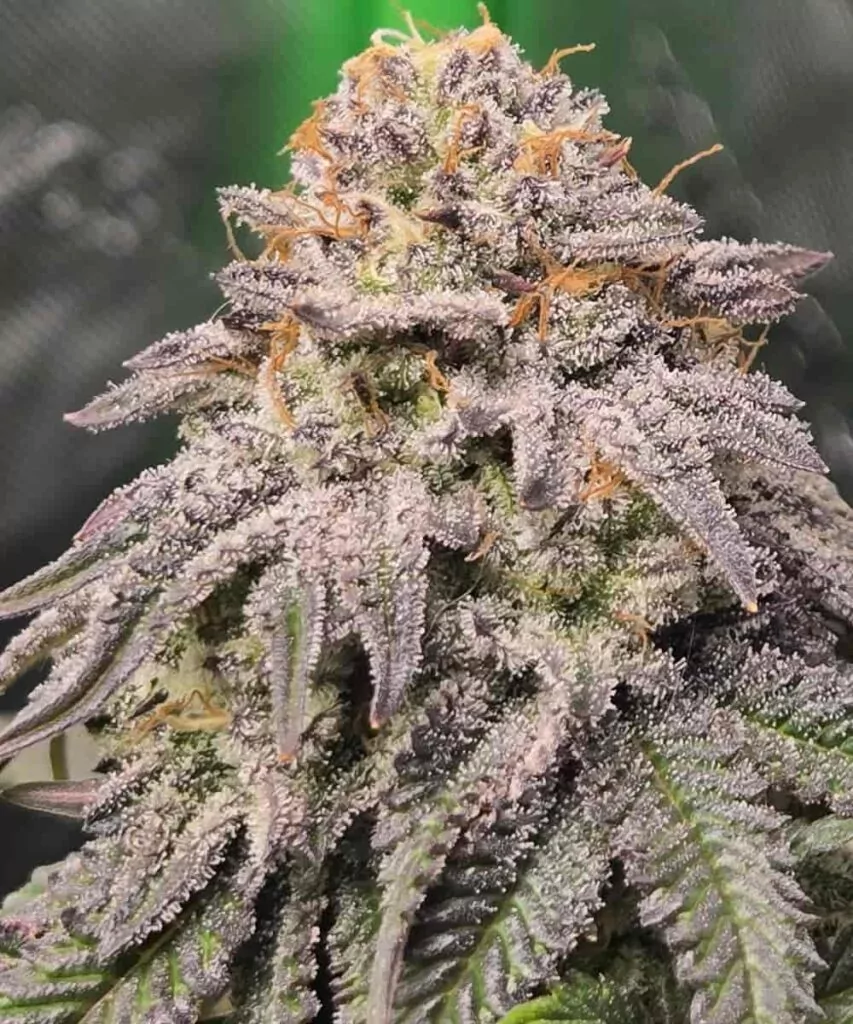


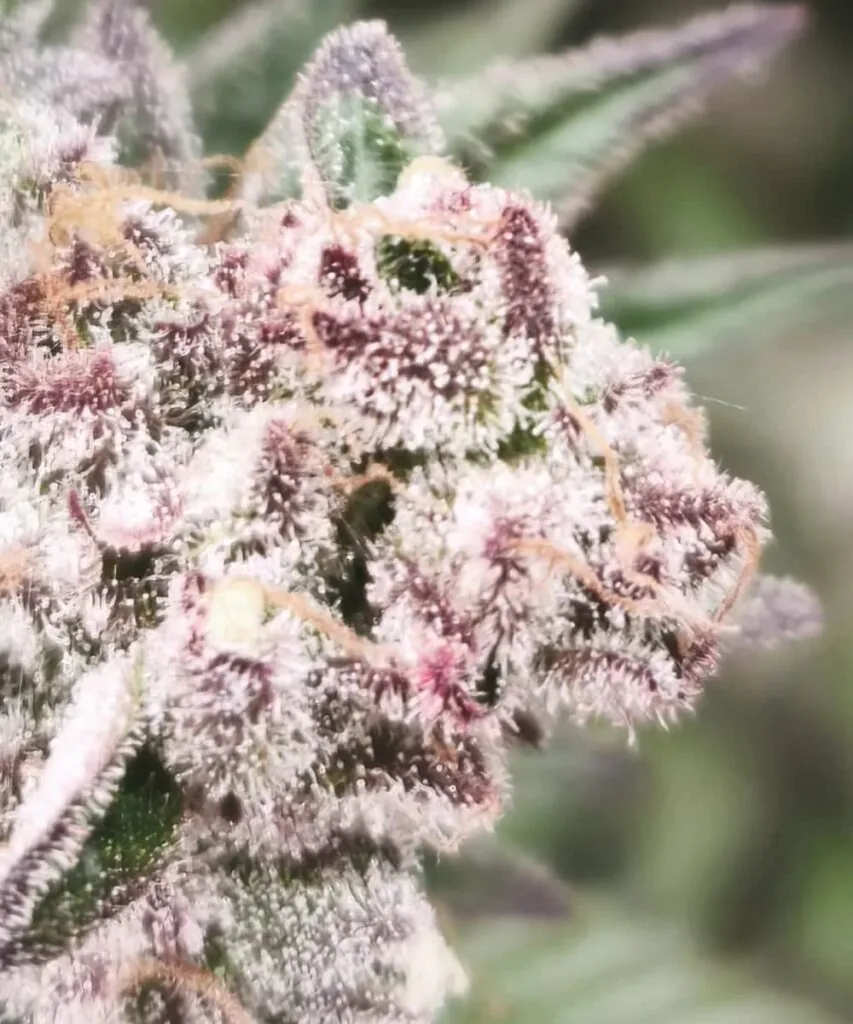
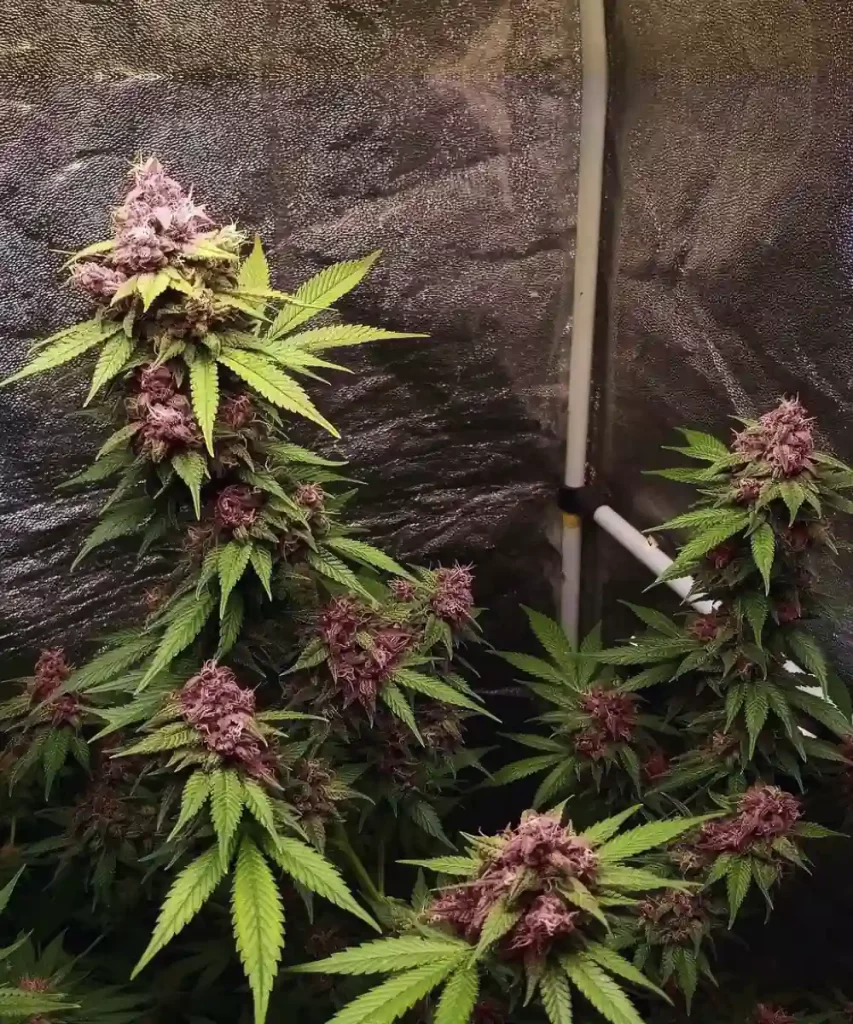
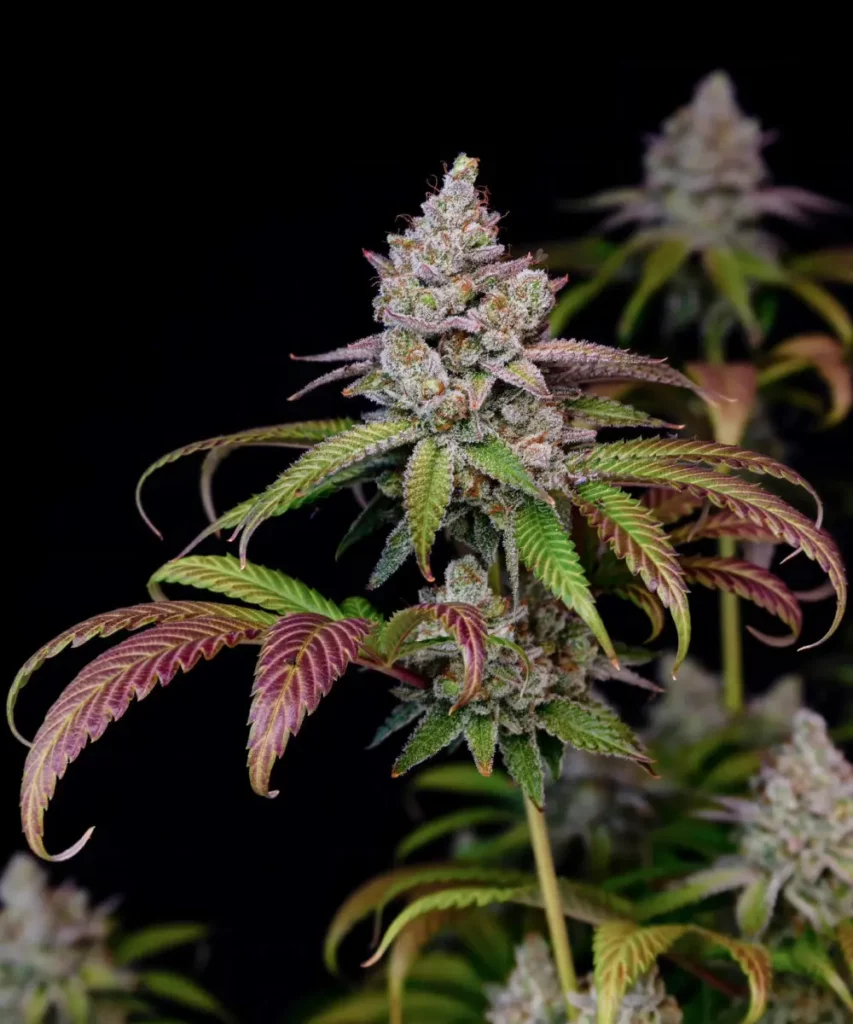
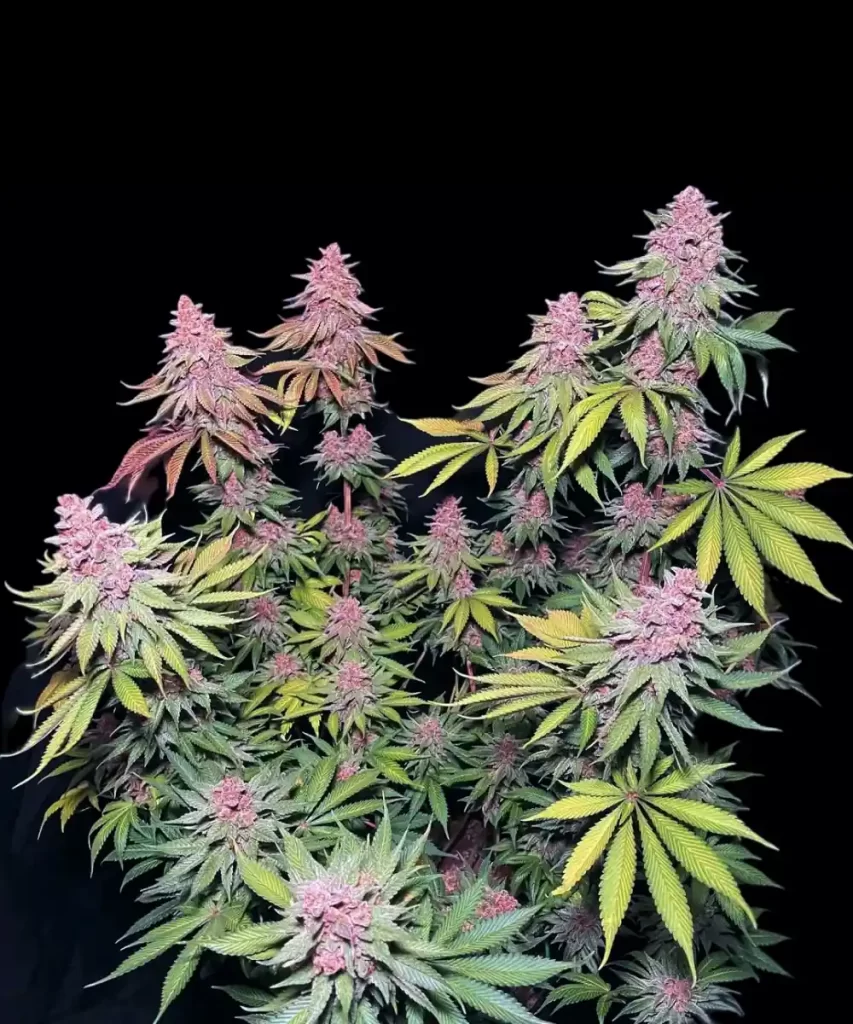

I planted 10 Super Boof seeds, and all germinated without a hitch. The plants grew strong and healthy, producing dense, frosty buds with a sweet, earthy aroma. The high is uplifting yet relaxing—a perfect balance. Impressive yield too, even with minimal effort

I’ve been growing weed for 30+ years, and to be honest, it’s quite difficult to surprise me. After a few decades of facing different strains, changing growing conditions, and solving whatever problem you could possibly think of, by then, I believe I’ve seen it all in cannabis growing.
Gary Payton defied every single one of my expectations.
The plant thrived, growing to an impressive 6 feet in what seemed like a blink of an eye. It quickly filled out with buds and displayed better smell each day, showing solid proof of superior genetics. The buds were tight, aromatic, and a source of immense pride, surpassing the outcome of many of my previous endeavors.
Hypno Seeds with their Gary Payton strain has won my complete admiration and loyalty. Outstanding genetics in this plant have truly turned what I always thought of to be an experiment with negligible expectations into one of the most satisfying grows of my long career.
Looking forward, my excitement for the next growing season is unparalleled. I can’t wait to see how much I can take these strains, especially with the attention that Gary Payton really does deserve right from the start.

TRUE MAGIC! This strain really stands out. I am trying Hypno Seeds for the first time and I surely made the right choice. I will be ordering more RS11 seeds just to keep this beauty in my garden for the upcoming season. Growing in Virginia and it’s only shown perfection by now.

Starting my latest grow, I decided to try out some Blackberry Kush from Hypno… I planted her on a whim alongside my other favorites. Hypno Seeds said it had to be a powerful plant with rich, fruity scents… Seeing is believing. She developed purplish hues and dense resin coated buds and quickly took center stage in my garden and produced much more than expected. The buds are tightly packed, literally bursting with the heady aroma. The yield? Very impressive for her conditions…
Germinated three seeds using the paper towel method with100% success rate within 48 hours. Planted in 5 gallon pots with living soil under a 315W CMH light. Plants remained compact (3.5 ft) with thick lateral branching, showing high resistance to humidity and minor nutrient fluctuations. Yield per plant: 5.8 oz of extremely dense, trichome-heavy buds. Smell profile during flower: sharp pine, pepper, and a hint of citrus. Harvested at week 9, after trichomes showed 30% amber for peak sedative effects. Smoke report: Potent. Deep relaxation without full sedation. Ideal for stress relief.


