

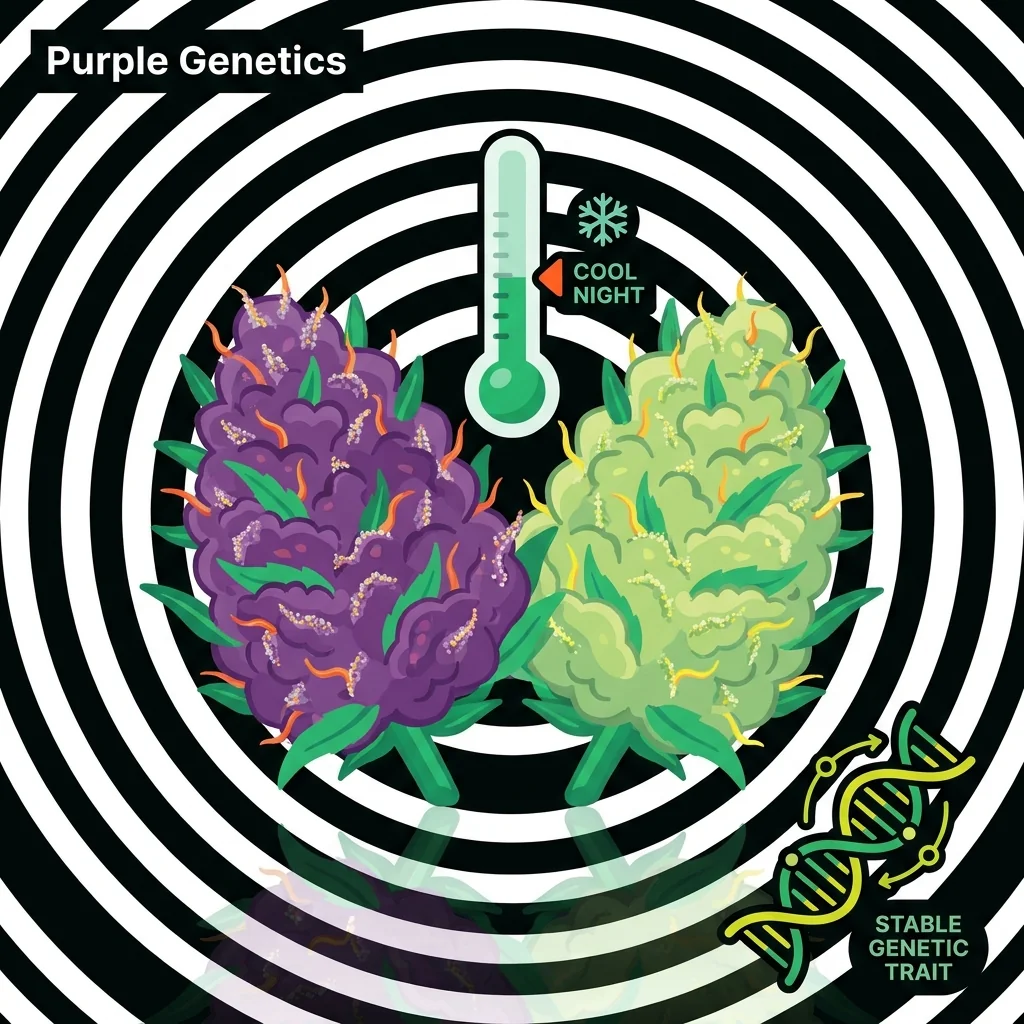
The reliable way to get purple bag appeal is to choose a seed line where the purple trait has been fixed through multi-generation selection, not an F1 cross where only some seeds carry it. Purple color comes from anthocyanin pigments controlled by specific genes, so cool nights can only reveal purple in plants that already carry those genes. Hypno Seeds approaches this as a breeder, not a reseller: its genetics are developed and stabilized in-house over multiple generations, which is the process that turns one striking purple pheno into a line that repeats.
About the Author: This guide was written by the team at Hypno Seeds, a US-based breeder that develops and stabilizes its own genetics in-house and germination-tests every seed batch every 30 days.
Consistent bag appeal starts with one fact: purple is a genetic trait first and a grow-room effect second. The color comes from anthocyanins, a class of flavonoid pigments, not from cannabinoids. Their production is linked to specific genetic markers, including R2R3-MYB transcription factors such as CsMYB78, which a 2025 University of Wisconsin-Madison study found in a marker cluster on chromosome 6 linked to flower color, with a separate cluster on chromosome 1 linked to stems and leaves.
That split matters. A plant with purple stems can still finish with lime-green buds.
Think of chlorophyll as a coat of green paint. In late flower, cooler nights slow chlorophyll production and the green layer fades. If anthocyanin sits underneath, the buds turn violet. If it doesn’t, you get pale yellow-green and nothing more.
| Factor | What it does | What it can’t do |
|---|---|---|
| Genetics (MYB markers) | Decides whether a plant can make anthocyanin, and where | Guarantee color if the finish is too warm or stressed |
| Cool late-flower nights | Fades chlorophyll so existing pigment shows | Create pigment in a green-only plant |
| Nutrient stress | Can tint stems and leaves | Produce true purple buds |
If purple is written in the genes, the real question is how reliably those genes get passed down. Most purple crosses start from parents that aren’t true-breeding for color, so the seeds in a pack carry different combinations of purple and green genes and show high variation in anthocyanin expression. Stabilized inbred lines (IBLs) are homozygous for the purple trait and produce uniform color across offspring.
Here’s the mechanism. Picture each parent holding two marbles. A heterozygous parent holds one purple and one green, and every seed draws one at random. A homozygous parent holds two purple marbles, so every draw comes up purple. Breeding for stability means selecting, generation after generation, until the green marbles are gone.
| F1 purple cross | Stabilized line | |
|---|---|---|
| Purple trait | Heterozygous | Homozygous |
| Color across a pack | Highly variable | Uniform |
| What the listing photo shows | Possibly the best plant from a large hunt | A typical plant |
| Seeds needed to find color | Many | Few |
Since stability is invisible inside a seed, you have to judge it through breeding practices and grow evidence. For purple lines specifically, add these checks:
For a useful benchmark, the Association of Official Seed Certifying Agencies (AOSCA) explains in its 2022 Certified Hemp FAQ that its Variety Review Boards check that a new hemp variety is distinct, uniform, and genetically stable before it can enter seed certification. Those three words make a solid checklist for any purple line.
With those checks in mind, the best purple strains are the ones where color behaves like a family trait instead of a lucky outlier. Many growers start by searching for Granddaddy Purple seeds, since that classic sits behind plenty of modern purple genetics. Below, we’ve selected purple strains that are mostly indica-leaning and known for showing color in the flowers themselves.
Purple Punch – The Dessert-Grade Classic
Growers looking for purple punch seeds usually want dense, violet buds with a sweet grape and berry nose. Commonly linked to Granddaddy Purple heritage. Shop Purple Punch
Blackberry Kush – Dark Fruit, Darker Hues
Blackberry kush seeds produce compact plants with deep purple to near-black tones and a berry-hash aroma. It’s also one of the lines with detailed customer grow reports. Need a faster cycle? Blackberry Kush Auto brings the same profile to autoflower form. Shop Blackberry Kush
Grape Ape – Purple by Name, Purple by Nature
A heavy indica with grape-toned flowers and a straightforward grow. Shop Grape Ape
Purple Runtz – Candy Color With Frost
A hybrid option pairing purple calyxes with heavy trichome coverage, which makes it photograph well. Shop Purple Runtz
Even a stable purple line needs the right finish to show its color, so this is where grow conditions take over. Cannabis cultivation laws differ by state and locality, and growers must check and follow their own.
| Lever | What to do | What to avoid |
|---|---|---|
| Night temperature | Allow a modest night-time drop in the final weeks of flower | Deep cold that slows ripening and cuts yield |
| Nutrition | Keep feeding balanced through flower | Starving the plant to “force” purple |
| Light | Keep healthy, even intensity on the canopy | Shaded lower buds expected to color up |
Let’s be real: freezing the tent for Instagram bragging rights usually costs more yield than it earns in color.
Once a line is stable, the math behind seed buying changes. Feminized seeds remove males from the equation, and bulk feminized seeds from a stable purple line give you a canopy that finishes together, colors together, and trims together.
Bulk from an unstable F1 is different. You’re just buying more lottery tickets and more plants to cull.
No. Color comes from anthocyanins, not cannabinoids. THC is a trait of the mature plant that depends on genetics and grow conditions. If potency is your priority, browse high-THC strains separately.
No. Cold only fades chlorophyll. Without the genes for anthocyanin, there’s no purple to reveal.
Stems and flowers are linked to different genetic markers. Nutrient stress can also tint stems without affecting buds.
With a stable line, a standard pack should show consistent color. With an F1 cross, expect a much larger hunt.
They can, if the line is stable. Autos run on a fixed timeline, so you have less control over when the late-flower temperature drop lands.
Keep them cool, dark, and dry. Fresh, properly stored stock germinates more reliably.
Hypno Seeds is a US-based cannabis seed breeder that develops and stabilizes its own genetics in-house over multiple generations, aiming for consistent growth, yield, and terpene profiles. Its breeding program has produced exclusive strains such as Red Chile Truffle, Sticky Kitty Trippy Punch, and Red Pistachio Auto. Every batch is germination-tested every 30 days, batches below a 95% success rate are pulled, and each seed is hand-inspected for maturity and shell integrity. Orders are dispatched within 24 hours from a climate-controlled warehouse in Las Vegas, NV, with delivery typically in 2-5 business days.
The best purple pheno is the one you can grow twice. To explore stabilized purple genetics, browse the full seed shop.


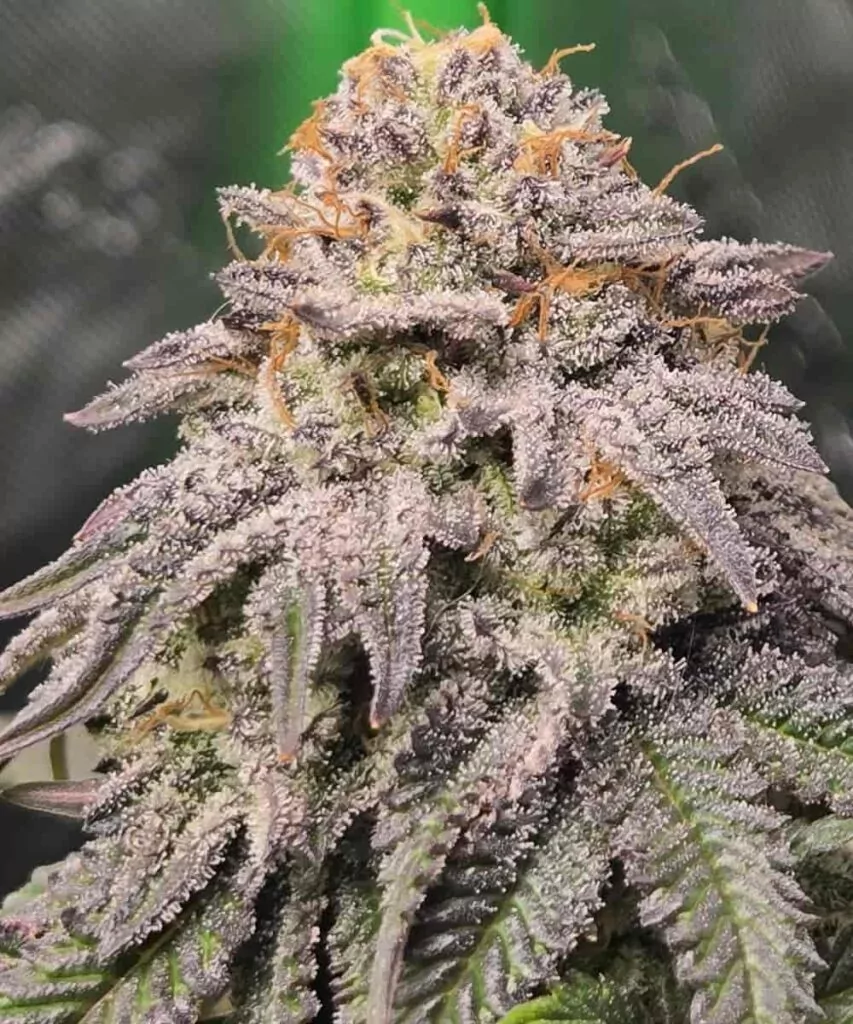


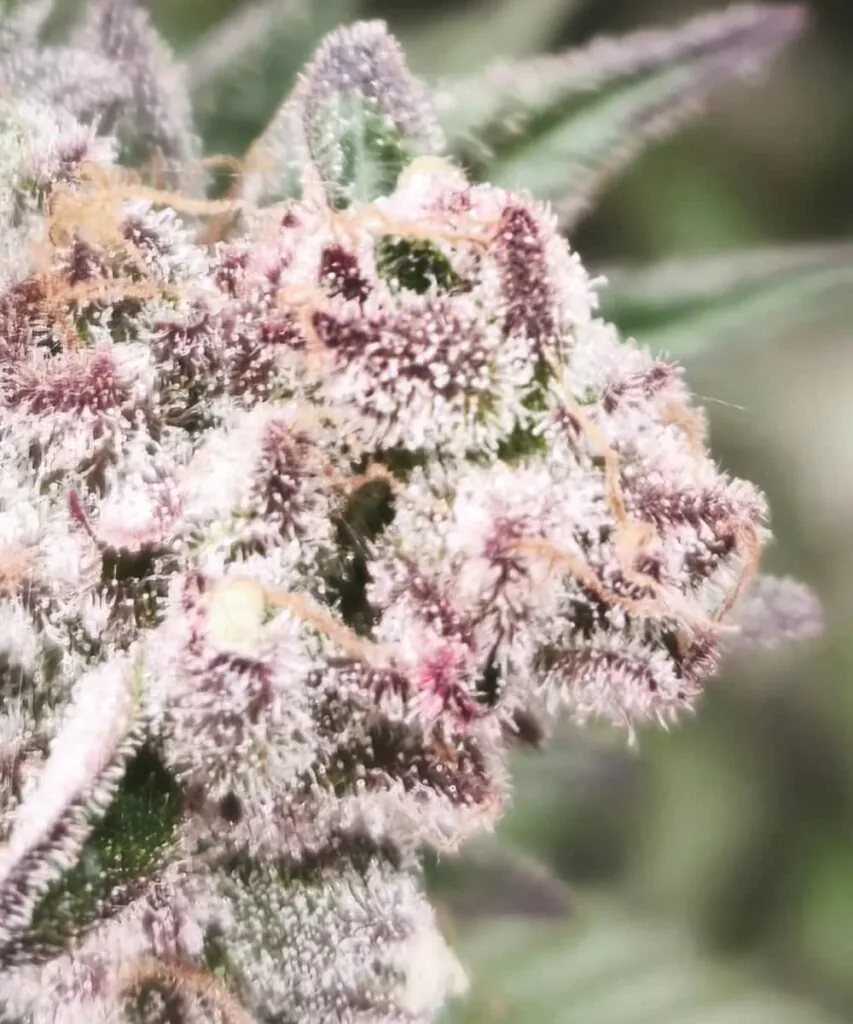
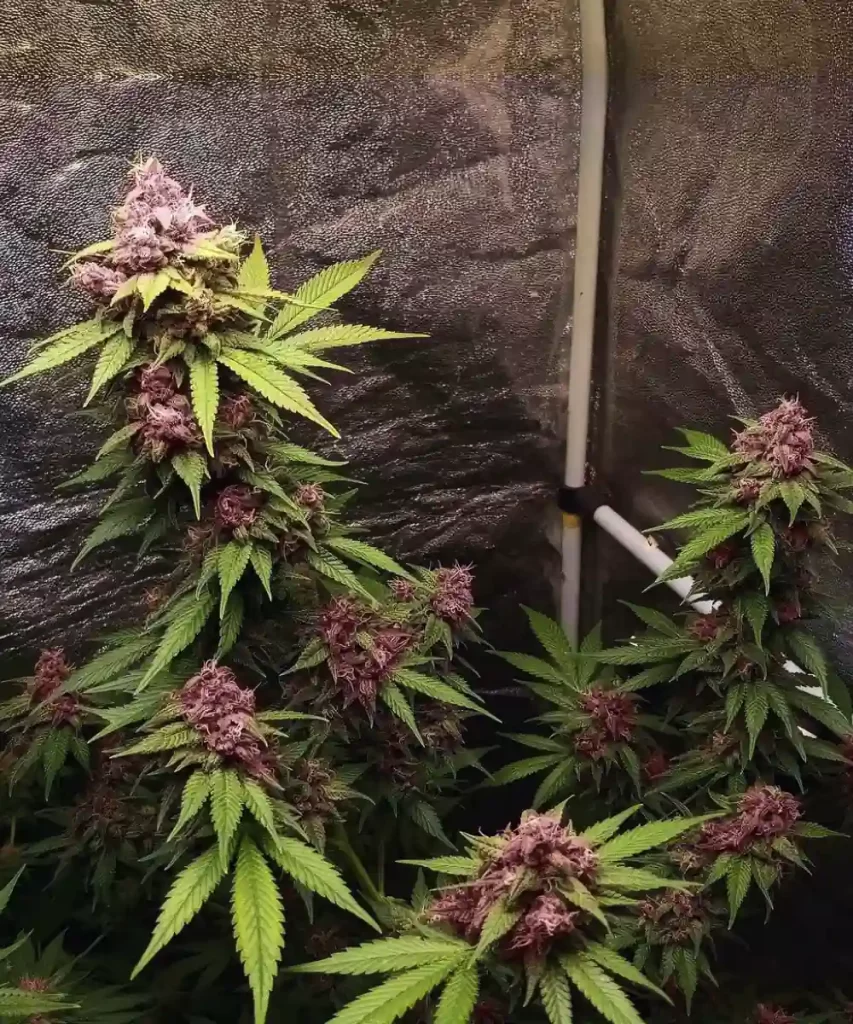
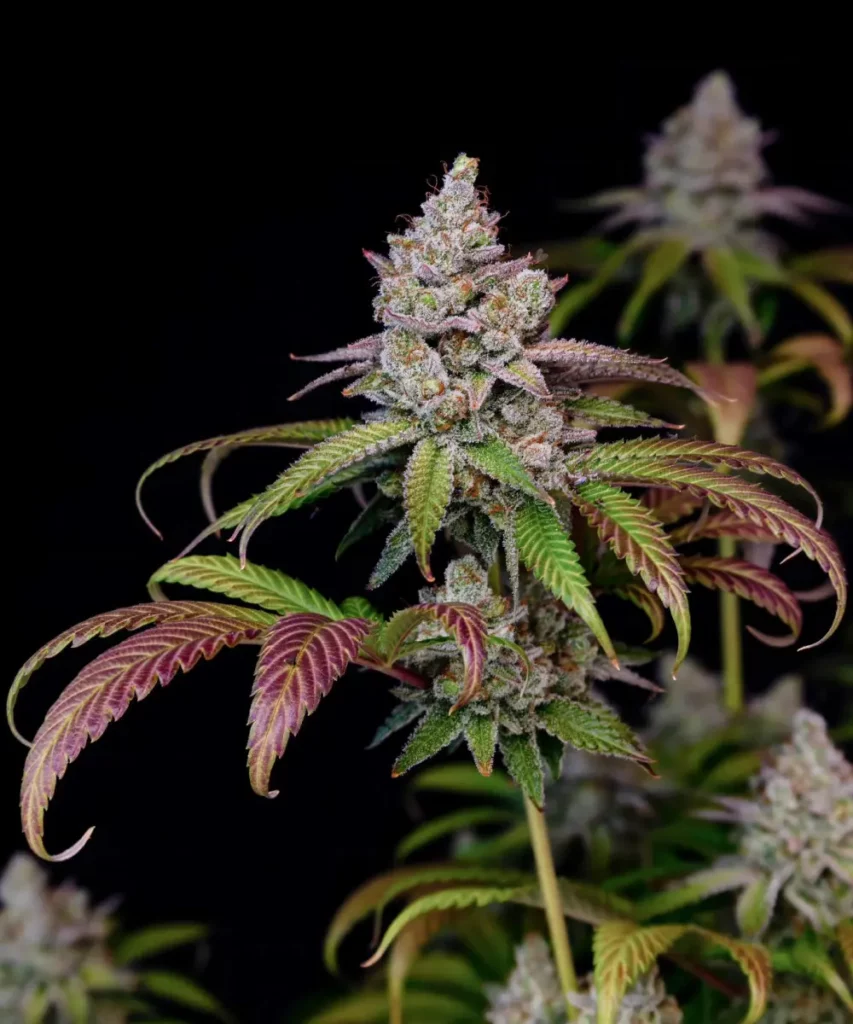
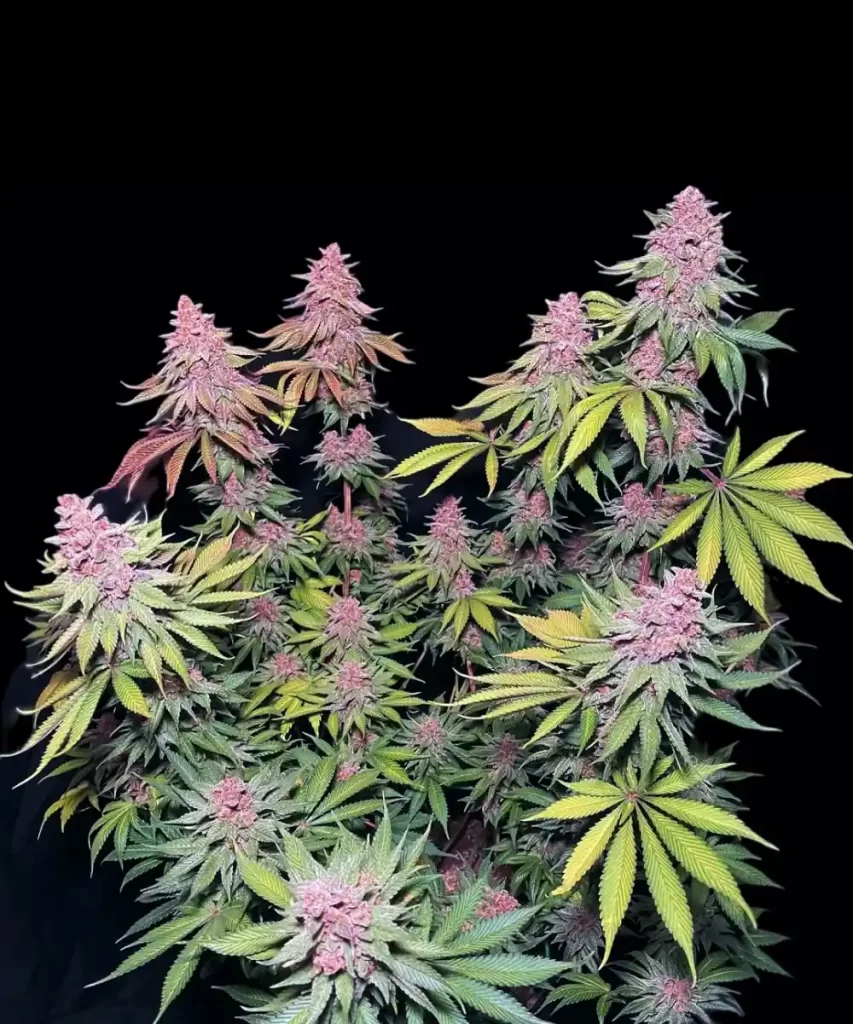

I planted 10 Super Boof seeds, and all germinated without a hitch. The plants grew strong and healthy, producing dense, frosty buds with a sweet, earthy aroma. The high is uplifting yet relaxing—a perfect balance. Impressive yield too, even with minimal effort

I’ve been growing weed for 30+ years, and to be honest, it’s quite difficult to surprise me. After a few decades of facing different strains, changing growing conditions, and solving whatever problem you could possibly think of, by then, I believe I’ve seen it all in cannabis growing.
Gary Payton defied every single one of my expectations.
The plant thrived, growing to an impressive 6 feet in what seemed like a blink of an eye. It quickly filled out with buds and displayed better smell each day, showing solid proof of superior genetics. The buds were tight, aromatic, and a source of immense pride, surpassing the outcome of many of my previous endeavors.
Hypno Seeds with their Gary Payton strain has won my complete admiration and loyalty. Outstanding genetics in this plant have truly turned what I always thought of to be an experiment with negligible expectations into one of the most satisfying grows of my long career.
Looking forward, my excitement for the next growing season is unparalleled. I can’t wait to see how much I can take these strains, especially with the attention that Gary Payton really does deserve right from the start.

TRUE MAGIC! This strain really stands out. I am trying Hypno Seeds for the first time and I surely made the right choice. I will be ordering more RS11 seeds just to keep this beauty in my garden for the upcoming season. Growing in Virginia and it’s only shown perfection by now.

Starting my latest grow, I decided to try out some Blackberry Kush from Hypno… I planted her on a whim alongside my other favorites. Hypno Seeds said it had to be a powerful plant with rich, fruity scents… Seeing is believing. She developed purplish hues and dense resin coated buds and quickly took center stage in my garden and produced much more than expected. The buds are tightly packed, literally bursting with the heady aroma. The yield? Very impressive for her conditions…
Germinated three seeds using the paper towel method with100% success rate within 48 hours. Planted in 5 gallon pots with living soil under a 315W CMH light. Plants remained compact (3.5 ft) with thick lateral branching, showing high resistance to humidity and minor nutrient fluctuations. Yield per plant: 5.8 oz of extremely dense, trichome-heavy buds. Smell profile during flower: sharp pine, pepper, and a hint of citrus. Harvested at week 9, after trichomes showed 30% amber for peak sedative effects. Smoke report: Potent. Deep relaxation without full sedation. Ideal for stress relief.


