

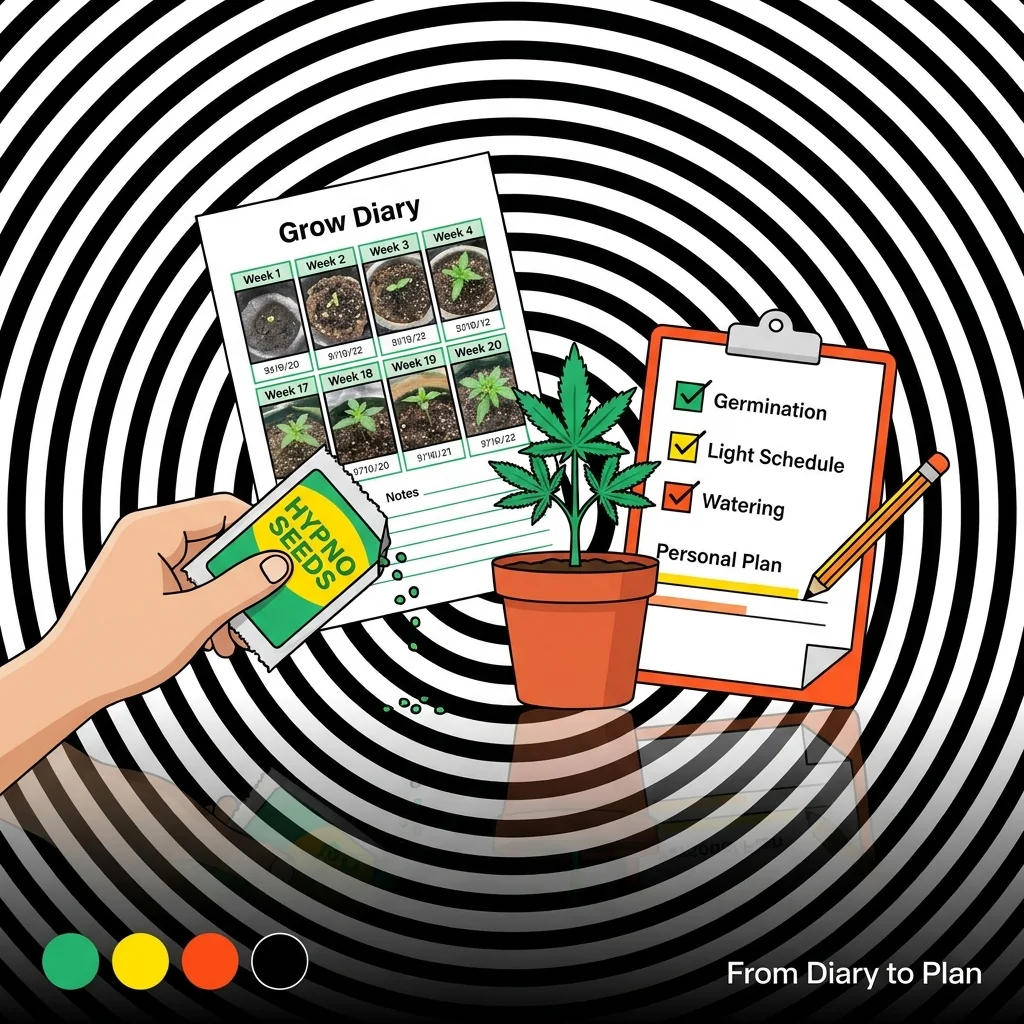
The fastest way to turn a seed bank’s week-by-week grow diary into a first grow plan is to copy the decisions, not the dates. A diary records one plant, in one room, under one set of lights. Four things carry over to your grow: the order of the phases, the signal that triggered each change, the direction of each adjustment (more light, more food, less humidity) and the plant reactions worth watching for. We breed and stabilize our own genetics in-house over multiple generations, and that is the reason a diary can work as a forecast at all. A diary only predicts your grow if the next seed from that line behaves like the last one.
- Read a diary as a sequence of phases and triggers, not a calendar. Your week 4 may be their week 5.
- Choose your seed type first. Autoflower diaries run on plant age. Feminized photoperiod diaries run on the light schedule.
- Time feeding and environment changes to visible plant signals, not week numbers.
- Harvest by trichome color, and treat the breeder’s estimate as a window.
- Keep your own diary from day one. It becomes the plan for grow number two.
About the Author: This guide comes from the Hypno Seeds team. We develop and stabilize our genetics in-house, germination-test every batch every 30 days, and read the detailed grow reports home growers send in on lines like Godfather OG, Gary Payton, RS11 and Blackberry Kush.
A week-by-week grow diary is a dated log of one plant’s growth, environment and inputs from seed to harvest. The useful part is the pattern underneath the dates, and pulling that pattern out is the first step in making a plan.
| Diary detail | Copy it? | Why |
|---|---|---|
| Order of phases | Yes | Every plant moves through germination, seedling, veg and flower in that order |
| Week numbers | Loosely | Germination alone takes two to ten days, so every later date shifts |
| Light, temperature, humidity | As targets | Your room behaves differently. Aim for the same ranges |
| Nutrient brand and dose | No | Products and water differ. Copy the trend instead |
| Plant reactions | Yes | Yellowing, clawing and stretch are the signals you’ll watch for |
Think of a diary as a recipe written at sea level when you’re cooking in the mountains. Water boils at a lower temperature at altitude, so the same “boil for ten minutes” gives a different result. The ingredients and steps transfer. The clock doesn’t. Your tent is the altitude.
Yes. The seed type decides which kind of diary you should be reading at all, because the two types switch into flower for completely different reasons.
| Autoflower | Feminized (photoperiod) | |
|---|---|---|
| What starts flowering | Plant age | Grower changes the light schedule |
| Vegetative phase | Short, about three to four weeks | Variable, set by the grower |
| Flowering phase | Strain-dependent. Check the breeder’s estimate | Typically eight to twelve weeks |
| Margin for mistakes | Smaller. The clock keeps running | Larger. Veg can be extended to recover |
| How to read its diary | Closely, week by week | By phase, anchored to the flip |
Beginners searching for the easiest strains to grow tend to split two ways. Some want the short, simple timeline of an auto. Others want the forgiveness of a photoperiod plant. Either choice is fine. Just pick a strain you can find a matching diary for.
- Blackberry Kush Auto: The Low-Fuss Starter. An autoflowering take on a well-known Kush line, suited to growers who want one light schedule from start to finish. Shop Blackberry Kush Auto
- Northern Lights: The Forgiving Photoperiod. A classic indica line with a long record among home growers, which makes matching diaries easy to find. Shop Northern Lights
- Red Pistachio Auto: The In-House Exclusive. Bred and stabilized in our own program, for beginners who want an auto you won’t see on every shelf. Shop Red Pistachio Auto
💡 Pro Tip: If you’re borrowing from a photoperiod diary, re-label its weeks as “days since flip” before comparing. That one change makes the diary line up with your plant.
With the seed type settled, the conversion itself is short: anchor to phases, then fill in your own ranges. Cannabis cultivation laws differ by state and locality, so check and follow your own before you germinate.
- Set Day 0 as the day the sprout breaks the soil, not the day you soaked the seed.
- Split the diary into seedling, veg, early flower and late flower.
- Write your environment targets for each phase.
- List the signals that end each phase, such as first pistils, stretch slowing and trichomes turning.
- Book a weekly check-in to compare your plant against the diary photos.
Here’s how a typical autoflower week by week plan looks once it’s converted:
| Phase | Typical timing | Environment | Watch for |
|---|---|---|---|
| Germination | 2-10 days | Warm and moist | Taproot, then sprout |
| Seedling and veg | About 3-4 weeks after sprouting | 18 hrs light, 22-26°C, 60-75% RH | New nodes, healthy green leaves |
| Early flower | Set by the plant’s age | Same light, humidity eased down | First pistils, stretch |
| Late flower | Strain-dependent | Drier air, good airflow | Trichome color shift |
Feeding is where copied diaries go wrong most often. The diary shows someone else’s doses, but none of their water, soil or nutrient line. Copy the curve, not the numbers.
| Phase | Feeding approach | Signal it’s working |
|---|---|---|
| Seedling | Little or nothing beyond the soil | Steady, even green |
| Veg | Start light, raise gradually | No burnt tips or clawing |
| Early flower | Shift toward bloom nutrients | Healthy stretch, pistils forming |
| Late flower | Taper off | Gradual fading of fan leaves |
Autos punish overfeeding harder because they run like a train on a fixed timetable. A delay doesn’t push back the arrival. It just shortens the time at every remaining stop. A week spent recovering from nutrient burn is a week of growth the plant never gets back.
💡 Pro Tip: Start below the label rate. If leaf tips burn, back off. Underfeeding is easier to fix than overfeeding.
Harvest is the point where a diary’s week number should matter least, because maturity is read off the plant, not the calendar. Treat the breeder’s estimate as a window to start checking.
- Clear trichomes: still developing. Wait.
- Cloudy trichomes: approaching maturity. Start checking every day or two.
- Amber trichomes appearing: the later end of the window. Many growers harvest when most heads are cloudy and some amber shows.
- Pistils: darkening and curling inward is a useful second signal, but trichomes are more reliable.
A jeweler’s loupe or clip-on phone macro lens is enough to see them. Check the buds, not the sugar leaves, which tend to turn first.
A borrowed diary gets you through grow one. Your own diary is what makes grow two easier. A notebook works fine, and a grow diary app makes photos and reminders easier to manage. Log these every time:
- Date and day count from sprout
- Temperature and humidity highs and lows
- Water volume, feed and pH
- One photo from the same angle each week
- Anything that changed: training, a new leaf color, a heat spike
Future you won’t remember which Tuesday the leaves started clawing. Future you barely remembers where the pH pen went.
A diary assumes every seed sprouted, so a realistic plan needs a seed count with room for loss. We hold our batches to a strict line: every batch is germination-tested every 30 days, any batch below 95 percent is pulled, and a germination guarantee with a replacement policy backs every order. It’s still smart to budget one spare seed per planned plant.
When you browse feminized seeds for sale, a small pack is enough for a first run. Many first-timers start from our top picks. Bulk feminized seeds make more sense later, once your own diary shows which strain suits your space and you want to repeat it across several grows.
How long is a typical weed grow timeline?
Germination takes two to ten days. Autoflowers then veg for about three to four weeks before flowering on their own. Photoperiod plants veg as long as the grower chooses, then flower for roughly eight to twelve weeks.
Can I follow a diary for a different strain?
Yes, for phase order and plant signals. No, for timing, height and feeding doses.
Is an autoflower easier than feminized for a first grow?
Autos are shorter and need only one light schedule. Feminized photoperiods give you more time to fix mistakes.
What if my plant falls behind the diary?
Compare phases, not weeks. A small lag is normal. A big one usually points to temperature, light intensity or overwatering.
What conditions do seedlings need?
Aim for 18 hours of light, 22-26°C and 60-75 percent relative humidity.
Do I need a grow diary app?
No. Consistent notes matter more than the tool you use.
Hypno Seeds is a US cannabis seed breeder that develops and stabilizes its own genetics in-house over multiple generations, aiming for consistent growth, yield and terpene profiles. That consistency is what lets a grow diary from one of our lines serve as a useful forecast for the next grower. Every batch is germination-tested every 30 days, and every seed is hand-inspected for maturity and shell integrity before shipping. Orders are dispatched within 24 hours from our climate-controlled warehouse in Las Vegas, NV, with tracked delivery in 2-5 business days.
Ready to build your first plan around a stable line? Explore our genetics and grow resources at http://hypnoseeds.com, or browse the shop to find your starter strain.
The best first grow plan isn’t the one that matches the diary perfectly. It’s the one that teaches you to read your own plant.


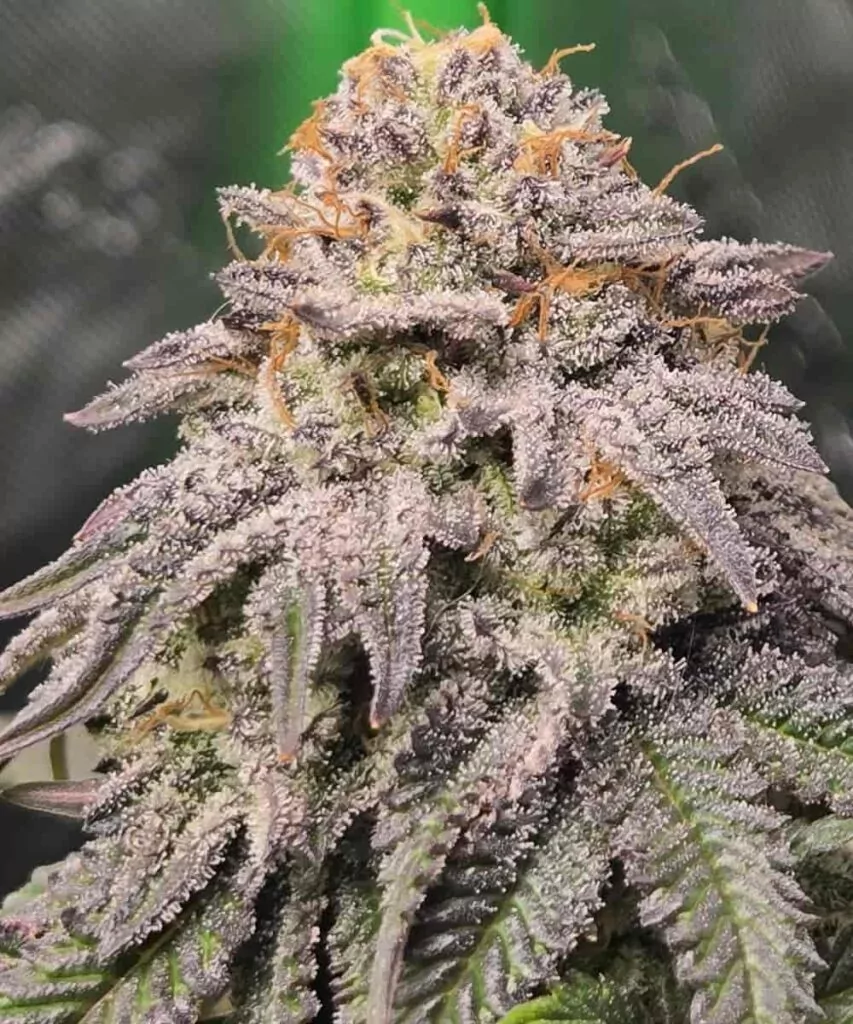


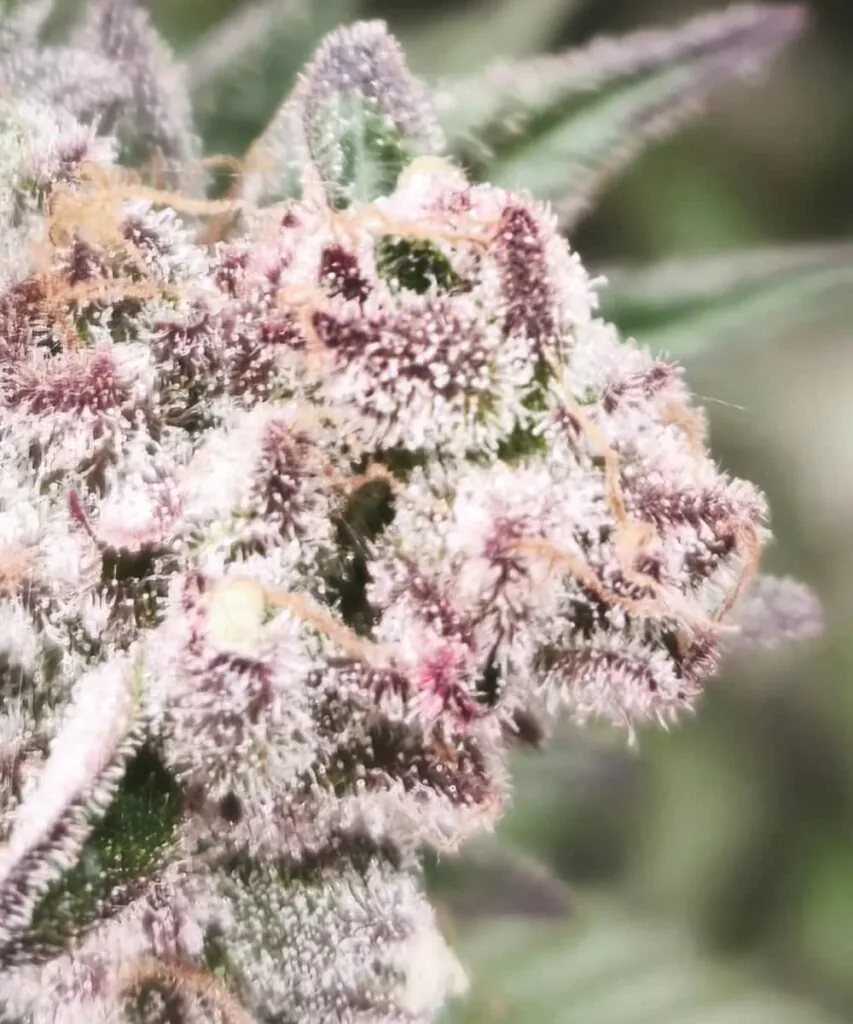
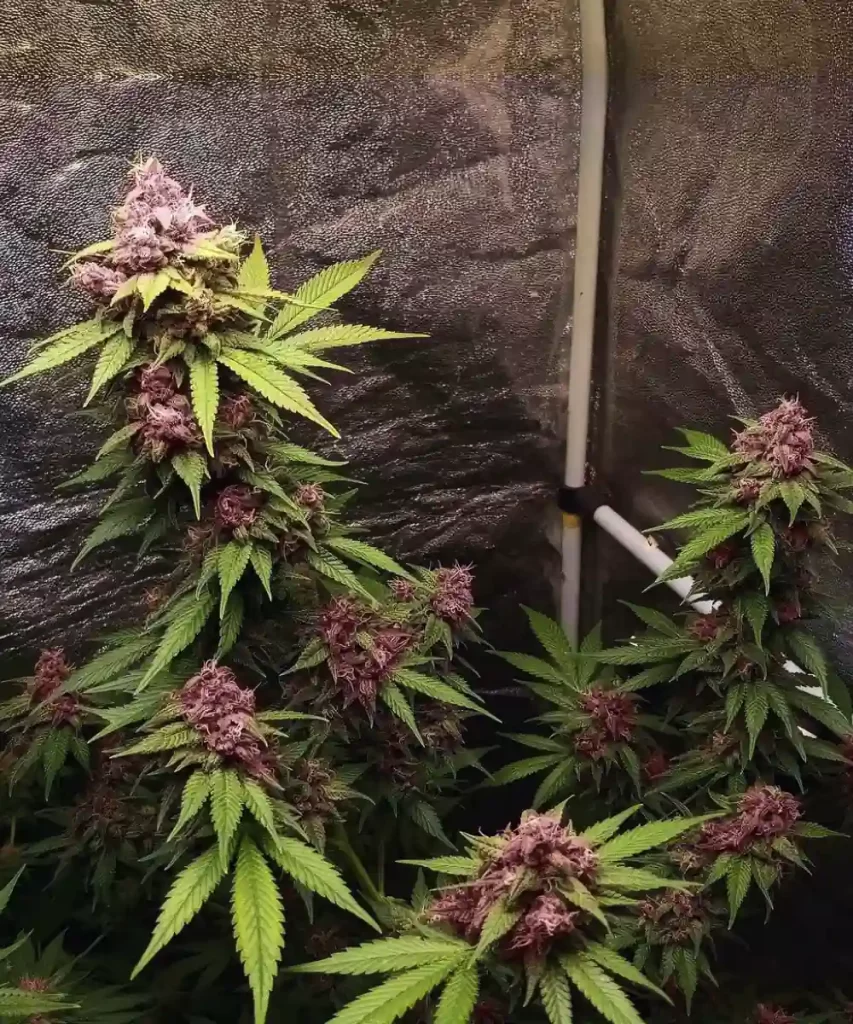
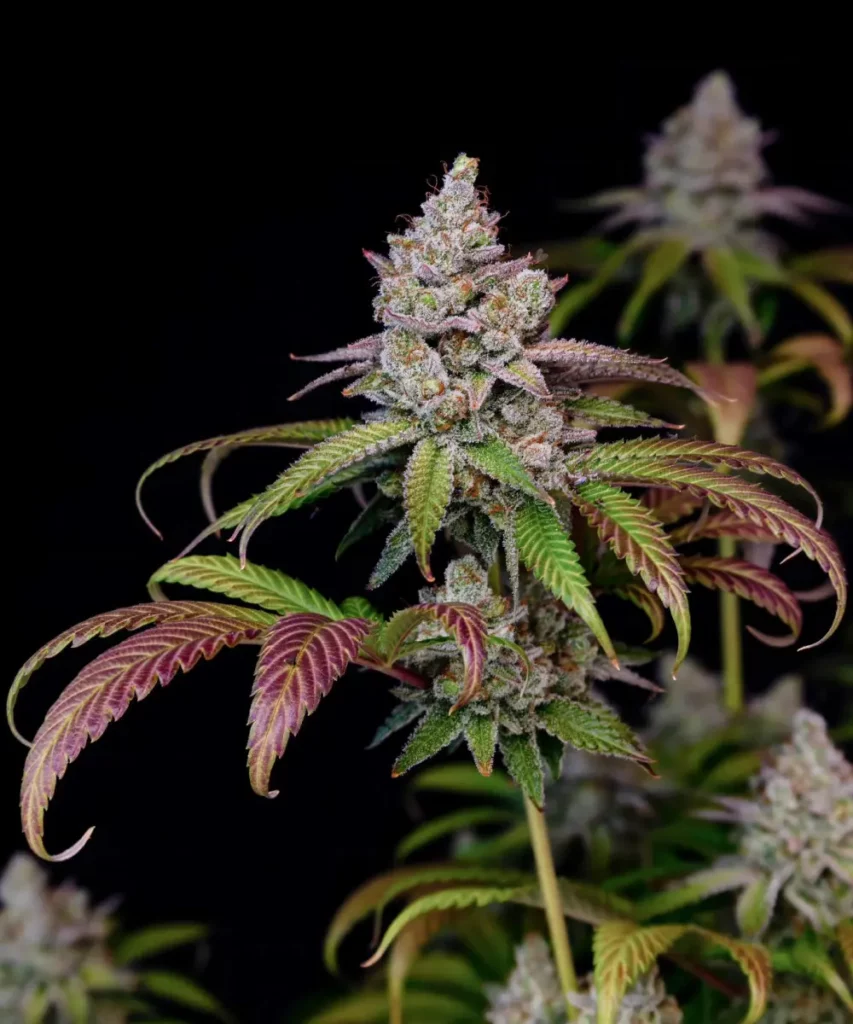
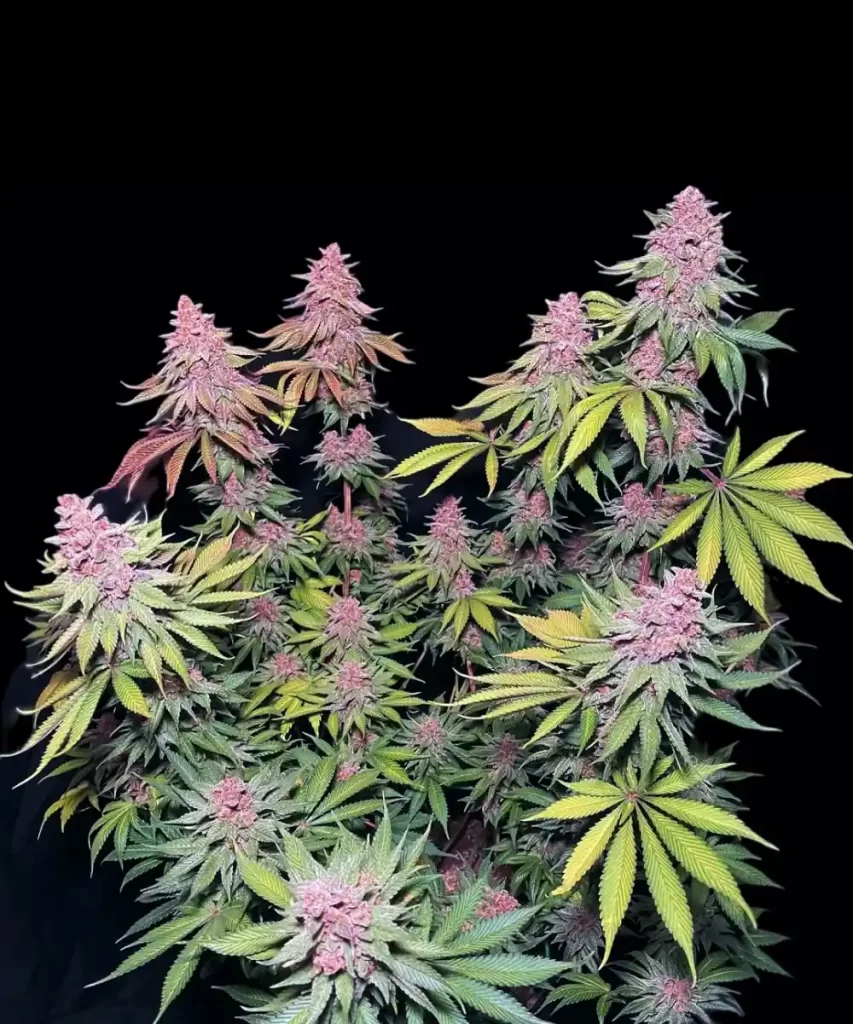

I planted 10 Super Boof seeds, and all germinated without a hitch. The plants grew strong and healthy, producing dense, frosty buds with a sweet, earthy aroma. The high is uplifting yet relaxing—a perfect balance. Impressive yield too, even with minimal effort

I’ve been growing weed for 30+ years, and to be honest, it’s quite difficult to surprise me. After a few decades of facing different strains, changing growing conditions, and solving whatever problem you could possibly think of, by then, I believe I’ve seen it all in cannabis growing.
Gary Payton defied every single one of my expectations.
The plant thrived, growing to an impressive 6 feet in what seemed like a blink of an eye. It quickly filled out with buds and displayed better smell each day, showing solid proof of superior genetics. The buds were tight, aromatic, and a source of immense pride, surpassing the outcome of many of my previous endeavors.
Hypno Seeds with their Gary Payton strain has won my complete admiration and loyalty. Outstanding genetics in this plant have truly turned what I always thought of to be an experiment with negligible expectations into one of the most satisfying grows of my long career.
Looking forward, my excitement for the next growing season is unparalleled. I can’t wait to see how much I can take these strains, especially with the attention that Gary Payton really does deserve right from the start.

TRUE MAGIC! This strain really stands out. I am trying Hypno Seeds for the first time and I surely made the right choice. I will be ordering more RS11 seeds just to keep this beauty in my garden for the upcoming season. Growing in Virginia and it’s only shown perfection by now.

Starting my latest grow, I decided to try out some Blackberry Kush from Hypno… I planted her on a whim alongside my other favorites. Hypno Seeds said it had to be a powerful plant with rich, fruity scents… Seeing is believing. She developed purplish hues and dense resin coated buds and quickly took center stage in my garden and produced much more than expected. The buds are tightly packed, literally bursting with the heady aroma. The yield? Very impressive for her conditions…
Germinated three seeds using the paper towel method with100% success rate within 48 hours. Planted in 5 gallon pots with living soil under a 315W CMH light. Plants remained compact (3.5 ft) with thick lateral branching, showing high resistance to humidity and minor nutrient fluctuations. Yield per plant: 5.8 oz of extremely dense, trichome-heavy buds. Smell profile during flower: sharp pine, pepper, and a hint of citrus. Harvested at week 9, after trichomes showed 30% amber for peak sedative effects. Smoke report: Potent. Deep relaxation without full sedation. Ideal for stress relief.


