


| Attribute | Details |
| Strain Type | Balanced Hybrid (50% Indica / 50% Sativa) |
| Genetics | Green Ribbon x Granddaddy Purple x Tahoe Alien |
| Breeder | Alien Genetics (California, ~2006) |
| THC Range | 21% – 25% |
| Flowering Time | 8 – 9 weeks indoors |
| Indoor Yield | 450 – 500 g/m² |
| Outdoor Yield | 500 – 600 g/plant |
| Grow Difficulty | Moderate |
| Best Training Method | Topping + Lollipopping |
| Dominant Terpenes | Limonene, Myrcene, Caryophyllene |
| Harvest Outdoor | Mid-October |
There are strains you grow because they’re easy. There are strains you grow because they’re trendy. And then there’s Fruity Pebbles — a strain you grow because nothing else on Earth smells like a bowl of sugary tropical cereal straight out of the bag.
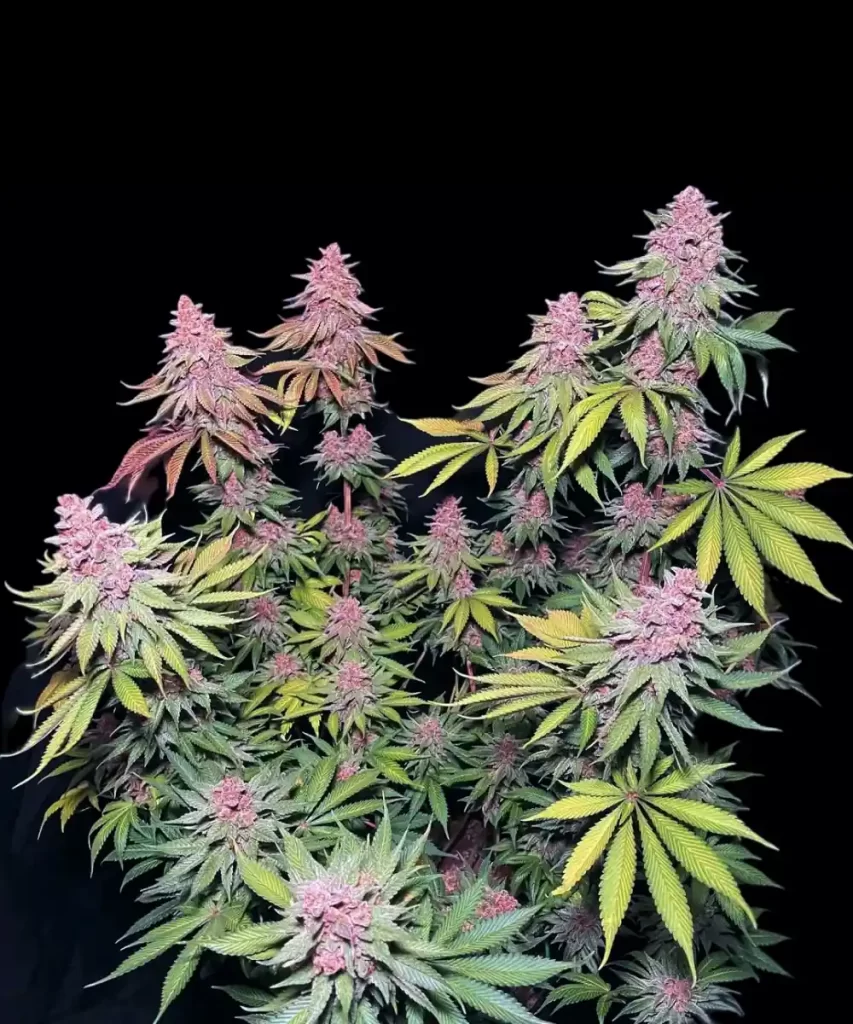
When Alien Genetics first released FPOG as a limited-edition drop in the mid-2000s, packs were reportedly selling for $1,000 to $1,500 [1]. That kind of price tag doesn’t happen by accident. The strain earned its legendary status through an unmatched terpene profile, stunning purple-pink-green bud structure, and a perfectly balanced high that hits both the head and body without overwhelming either.
Today, Fruity Pebbles genetics are more accessible than they were a decade ago — but growing this strain to its full potential still requires specific knowledge. It’s a vigorous, leafy plant that will punish lazy growers with airy, underdeveloped buds. However, if you put in the work (especially with training and environmental control), FPOG will reward you with some of the most flavorful, visually stunning flower you’ve ever harvested.
This guide covers everything: genetics, terpenes, a full week-by-week grow diary, feeding schedules, VPD targets, and the common mistakes that trip up even experienced cultivators.
Understanding the parent strains helps you predict how FPOG will behave in your garden. Alien Genetics didn’t just throw three random strains together — each parent was chosen for a specific purpose.
Granddaddy Purple (GDP) is the indica anchor. It contributes the dense bud structure, the deep purple and blue hues that emerge during late flower, and the heavy body relaxation on the effects side. If your Fruity Pebbles plant develops stunning colors during the final weeks, thank GDP.
Green Ribbon is the sativa counterweight. This is where the bright, euphoric cerebral energy comes from. Green Ribbon also contributes the tangy, citrusy top notes in the aroma and the vigorous vegetative growth that makes FPOG stretch aggressively in early flower.
Tahoe Alien (a Tahoe OG Kush cross) is the backbone. It provides the robust plant structure, the high THC potency ceiling, and the classic OG gassiness that lurks underneath the fruity sweetness. Tahoe Alien is also why FPOG develops such a thick trichome coating — the resin production genes are strong in this lineage [1] [2].
The result of this three-way cross is a true 50/50 hybrid that grows like a sativa (tall, stretchy, vigorous) but flowers like an indica (dense, compact buds with heavy resin).
Let’s be honest — this is the reason most people grow Fruity Pebbles. The flavor is unlike anything else in cannabis. It genuinely tastes like tropical, sugary cereal with layers of fresh berries, citrus zest, and a subtle creamy sweetness on the exhale.
This profile is driven by three dominant terpenes working in harmony:
| Terpene | Aroma Contribution | Effect Contribution |
| Limonene | Bright citrus, lemon zest | Mood elevation, stress relief |
| Myrcene | Tropical fruit, ripe mango | Physical relaxation, sedation |
| Caryophyllene | Black pepper, warm spice | Anti-anxiety, pain relief |
The key to preserving this terpene profile during harvest is a slow dry (10-14 days at 60°F and 60% humidity) followed by a minimum 2-week cure in sealed jars. Rush the dry, and you’ll lose the delicate citrus and tropical notes that make this strain special.
The high from Fruity Pebbles unfolds in two distinct phases. The first 20-30 minutes are dominated by a clear, euphoric head rush — you’ll feel creative, social, and genuinely happy. This is the Green Ribbon genetics at work.
After about an hour, the Granddaddy Purple side takes over. A warm, soothing body relaxation settles in, melting tension from your shoulders and legs without putting you into full couch-lock. Most users describe it as the perfect “evening wind-down” strain — uplifting enough to enjoy a movie or conversation, relaxing enough to drift into sleep when you’re ready [2].
If you’re deciding between FPOG and other popular sweet strains, this comparison will help you choose based on your growing conditions and goals.
| Feature | Fruity Pebbles (FPOG) | Runtz | Zkittlez |
| Dominant Flavor | Tropical cereal, berries | Sugary candy, gas | Grape, sour citrus |
| THC Range | 21 – 25% | 25 – 29% | 18 – 23% |
| Flowering Time | 8 – 9 weeks | 8 – 10 weeks | 7 – 8 weeks |
| Plant Height | Tall (heavy stretch) | Medium | Short, bushy |
| Yield Potential | 450 – 500 g/m² | 400 – 450 g/m² | 400 – 500 g/m² |
| Training Needed | Heavy (topping + lollipop) | Moderate (LST) | Light (natural shape) |
| Color Expression | Purple, blue, pink | Purple, green | Purple, orange |
| Best For | Balanced euphoria + relaxation | Heavy relaxation, sleep | Daytime creativity |
| Grow Difficulty | Moderate | Moderate | Easy |
The takeaway: Fruity Pebbles is the best choice if you want maximum flavor complexity and a balanced high. Runtz hits harder but lacks the nuanced tropical profile. Zkittlez is easier to grow but doesn’t produce the same visual spectacle or yield ceiling.
If you enjoy growing Runtz or Purple Punch, you’ll love the challenge and reward of Fruity Pebbles.
Here’s exactly how to take Fruity Pebbles from seed to harvest, broken into clear stages with actionable targets for each phase.
Start your seeds using the paper towel method or directly in a small pot of light seedling mix. Fruity Pebbles germinates reliably within 48-72 hours.
During the seedling stage, keep conditions warm and humid. The plant will develop its first 2-3 sets of true leaves by the end of Week 2. Don’t feed anything beyond plain, pH-balanced water (6.0-6.5 pH) during this stage — the seedling mix contains enough nutrients.
Environment targets:
This is where FPOG starts showing its sativa-leaning growth pattern. Expect rapid vertical growth and wide, fan-shaped leaves. By the end of Week 3, the plant should have 5-6 nodes.
Begin LST at Week 3. Gently bend the main stem at a 90-degree angle and secure it with soft plant ties. This forces the lower branches to grow upward and creates a flat, even canopy. FPOG responds extremely well to early LST because of its naturally strong lateral branching.
Top the plant at Week 4 (above the 4th or 5th node). This breaks apical dominance and creates two main colas instead of one. Combined with the LST you started the previous week, you’ll now have a plant developing 6-8 even tops.
Environment targets:
This is your final week of vegetative growth before flipping to flower. Use it wisely — this is the most important defoliation window.
Lollipop aggressively. Strip away the entire bottom third of the plant. Remove any small, weak branches that won’t reach the canopy and any large fan leaves that are blocking light to bud sites. FPOG produces an enormous amount of foliage, and if you don’t thin it out now, you’ll end up with poor airflow, increased mold risk, and wasted energy going to popcorn buds that aren’t worth trimming [3].
After lollipopping, give the plant 2-3 days to recover before flipping your lights to 12/12.
Environment targets:
Welcome to the stretch. When you flip FPOG to 12/12, expect the plant to nearly double in height over the next 10-14 days. This is the Green Ribbon genetics expressing themselves. Don’t panic — this is normal for this strain.
During the stretch, transition your nutrients from a vegetative formula (high nitrogen) to a bloom formula (high phosphorus and potassium). The plant is building its flower structure now and needs the building blocks for bud development.
Continue tucking and training any branches that outgrow the canopy. You want all tops at the same height to maximize light distribution.
Environment targets:
This is when Fruity Pebbles starts to show why it earned its legendary reputation. The buds begin stacking rapidly, developing dense, rock-hard calyxes coated in a thick layer of frosty trichomes. The tropical cereal aroma will start filling your grow space — your carbon filter is going to work overtime.
Do a second defoliation at the start of Week 8. Remove any fan leaves that have grown back and are blocking light or airflow to the developing buds. Be less aggressive than your pre-flip defoliation — remove only what’s clearly blocking bud sites.
At this stage, the plant is drinking heavily. Monitor your runoff EC to ensure you’re not overfeeding. If you see burnt leaf tips, back off the nutrients by 10-15%.
Environment targets:
The final two weeks are all about ripening and bringing out the colors. This is where you can unlock the full visual potential of the Granddaddy Purple genetics.
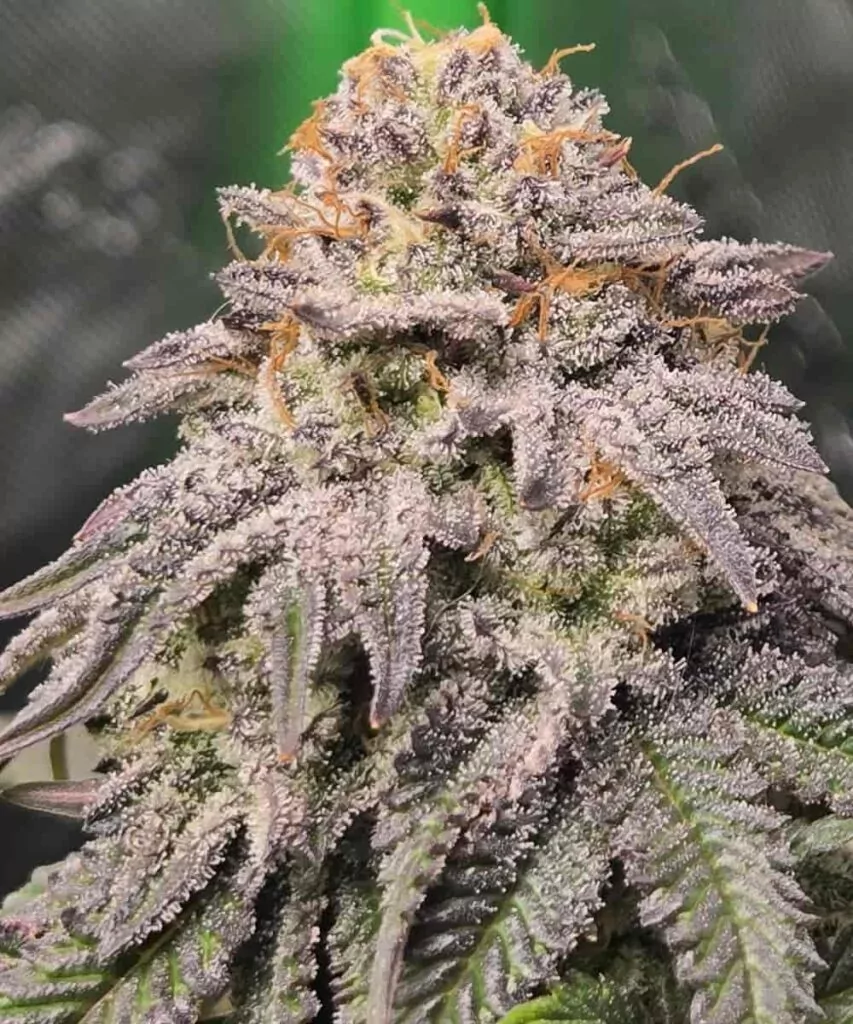
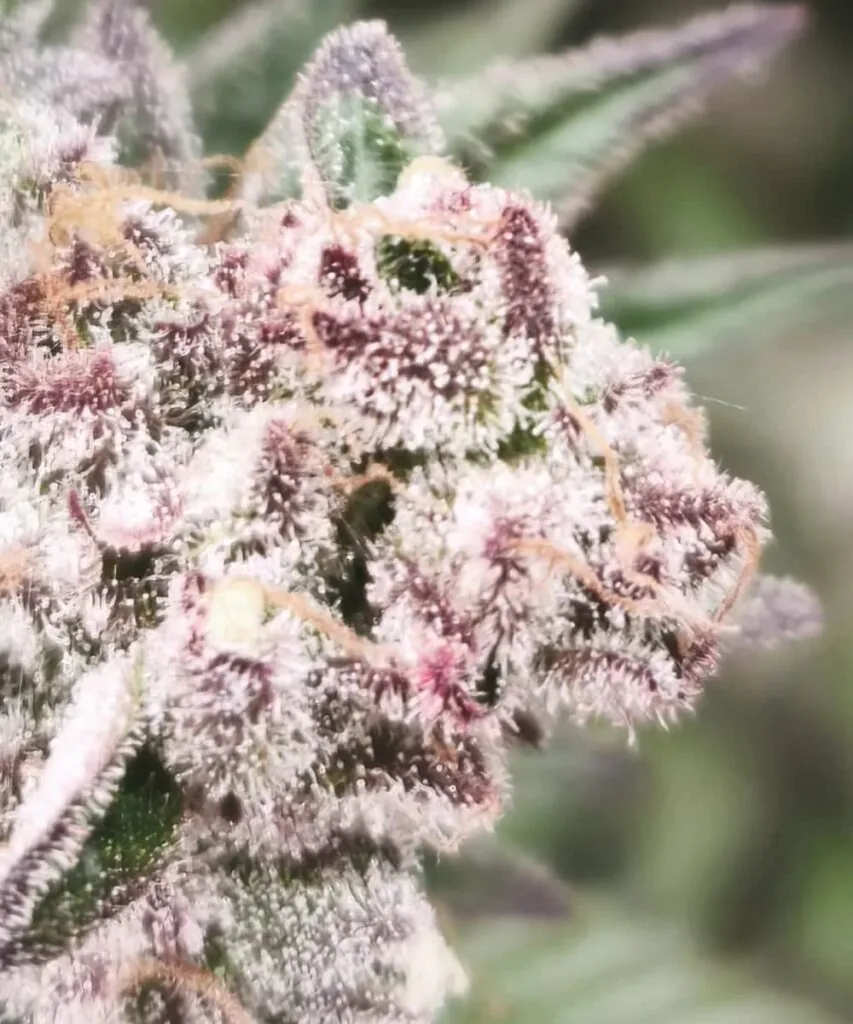
Drop your nighttime temperatures to 60-65°F. This temperature differential triggers anthocyanin production, which turns the buds deep purple, blue, and sometimes pink. The contrast between the frosty white trichomes and the dark purple calyxes is what makes FPOG one of the most photogenic strains in existence.
Begin flushing with plain water at the start of Week 10. Run plain, pH-balanced water (no nutrients) for the final 10-14 days. This forces the plant to consume its stored nutrients, resulting in a cleaner, smoother smoke and better flavor expression.
When to harvest: Check your trichomes daily with a jeweler’s loupe or digital microscope. For the best balance of euphoria and relaxation, harvest when you see:
If you prefer a more energetic, cerebral high, harvest earlier (mostly cloudy, minimal amber). For heavier sedation, let more trichomes turn amber (20-30%).
Environment targets:
For growers who want the full environmental data in one place, here’s the complete reference table.
| Stage | Weeks | Day Temp | Night Temp | Humidity | VPD (kPa) | EC Target | pH |
| Seedling | 1–2 | 75–80°F | 70°F | 65–70% | 0.4–0.8 | 0.4 | 6.0–6.5 |
| Early Veg | 3–4 | 72–78°F | 68°F | 55–60% | 0.8–1.0 | 0.8–1.0 | 6.0–6.5 |
| Late Veg | 5 | 72–78°F | 68°F | 55–60% | 1.0–1.2 | 1.2–1.4 | 6.0–6.5 |
| Early Flower | 6–7 | 70–75°F | 65°F | 45–50% | 1.2–1.4 | 1.4–1.6 | 6.0–6.3 |
| Mid Flower | 8–9 | 70–75°F | 65°F | 45–50% | 1.2–1.4 | 1.6–1.8 | 6.0–6.3 |
| Late Flower | 10–11 | 68–72°F | 60–65°F | 40–45% | 1.4–1.6 | 0 (flush) | 6.0–6.5 |
Even experienced growers make these errors with FPOG. Avoid them and you’ll be ahead of 90% of cultivators attempting this strain.
Mistake #1: Skipping the lollipop. This is the single biggest yield killer with Fruity Pebbles. The plant produces so much foliage that light simply cannot penetrate to the lower bud sites. If you don’t strip the bottom third, you’ll harvest a pile of loose, airy popcorn buds instead of dense top colas. Lollipop hard at Week 5, and don’t feel guilty about it.
Mistake #2: Overfeeding in flower. FPOG is a moderate feeder with a low tolerance for excess nutrients. Many growers push EC past 2.0 during peak flower because they’re used to heavier-feeding strains. With Fruity Pebbles, anything above 1.8 EC will cause burnt tips and can lock out calcium and magnesium. Less is more with this strain.
Mistake #3: Not managing the stretch. If you flip to 12/12 when your plant is already tall, it will outgrow your tent. FPOG can double in height during the first two weeks of flower. Plan accordingly — flip when the plant is no more than 50% of your maximum desired height.
Mistake #4: Harvesting too early. The tropical cereal flavor only fully develops in the final 7-10 days of ripening. Many growers get impatient and chop at Week 8 when the buds look “done.” Wait for the trichomes to tell you — the extra week makes an enormous difference in flavor and potency.
Mistake #5: Rushing the dry. Fruity Pebbles’ complex terpene profile is extremely sensitive to heat. If you dry your buds in less than 7 days (too warm, too dry), you’ll lose the delicate tropical and citrus notes and be left with a generic “hay” smell. Aim for a 10-14 day dry at 60°F and 60% humidity, followed by a minimum 2-week jar cure.
Fruity Pebbles proves that the classics earn their reputation for a reason. If you’re looking for a strain that delivers unmatched flavor, stunning bag appeal, and a perfectly balanced high — and you’re willing to put in the training work — FPOG belongs in your garden.
Looking for strains with a similar dessert-like terpene profile? Explore our fruity strain collection or check out our Runtz grow diary for another sweet option.





I planted 10 Super Boof seeds, and all germinated without a hitch. The plants grew strong and healthy, producing dense, frosty buds with a sweet, earthy aroma. The high is uplifting yet relaxing—a perfect balance. Impressive yield too, even with minimal effort

I’ve been growing weed for 30+ years, and to be honest, it’s quite difficult to surprise me. After a few decades of facing different strains, changing growing conditions, and solving whatever problem you could possibly think of, by then, I believe I’ve seen it all in cannabis growing.
Gary Payton defied every single one of my expectations.
The plant thrived, growing to an impressive 6 feet in what seemed like a blink of an eye. It quickly filled out with buds and displayed better smell each day, showing solid proof of superior genetics. The buds were tight, aromatic, and a source of immense pride, surpassing the outcome of many of my previous endeavors.
Hypno Seeds with their Gary Payton strain has won my complete admiration and loyalty. Outstanding genetics in this plant have truly turned what I always thought of to be an experiment with negligible expectations into one of the most satisfying grows of my long career.
Looking forward, my excitement for the next growing season is unparalleled. I can’t wait to see how much I can take these strains, especially with the attention that Gary Payton really does deserve right from the start.

TRUE MAGIC! This strain really stands out. I am trying Hypno Seeds for the first time and I surely made the right choice. I will be ordering more RS11 seeds just to keep this beauty in my garden for the upcoming season. Growing in Virginia and it’s only shown perfection by now.

Starting my latest grow, I decided to try out some Blackberry Kush from Hypno… I planted her on a whim alongside my other favorites. Hypno Seeds said it had to be a powerful plant with rich, fruity scents… Seeing is believing. She developed purplish hues and dense resin coated buds and quickly took center stage in my garden and produced much more than expected. The buds are tightly packed, literally bursting with the heady aroma. The yield? Very impressive for her conditions…
Germinated three seeds using the paper towel method with100% success rate within 48 hours. Planted in 5 gallon pots with living soil under a 315W CMH light. Plants remained compact (3.5 ft) with thick lateral branching, showing high resistance to humidity and minor nutrient fluctuations. Yield per plant: 5.8 oz of extremely dense, trichome-heavy buds. Smell profile during flower: sharp pine, pepper, and a hint of citrus. Harvested at week 9, after trichomes showed 30% amber for peak sedative effects. Smoke report: Potent. Deep relaxation without full sedation. Ideal for stress relief.


