


| Attribute | Details |
| Strain Type | Sativa-Dominant Hybrid (60% Sativa / 40% Indica) |
| Genetics | Hella Jelly x White Runtz |
| Breeder | Humboldt Seed Company (HSC) |
| THC Range | 30% – 35% |
| Flowering Time | 55 days (8 weeks) indoors |
| Indoor Yield | 450 – 500 g/m² (with training) |
| Outdoor Yield | 500+ g/plant |
| Grow Difficulty | Easy (Beginner Friendly) |
| Best Training Method | Topping + Heavy LST |
| Dominant Terpenes | Caryophyllene, Limonene, Myrcene |
| Harvest Outdoor | Late September to Early October |
If you are searching for information on the Jelly Donut strain, you need to know a crucial fact right away: there are two different strains operating under this name. One is a moderate-THC indica cross from Raw Genetics. The other—the one currently taking the cannabis world by storm—is Jelly Donutz from Humboldt Seed Company.
This guide focuses entirely on the Humboldt Seed Company version, a powerhouse sativa-dominant hybrid that consistently tests between 30% and 35% THC.
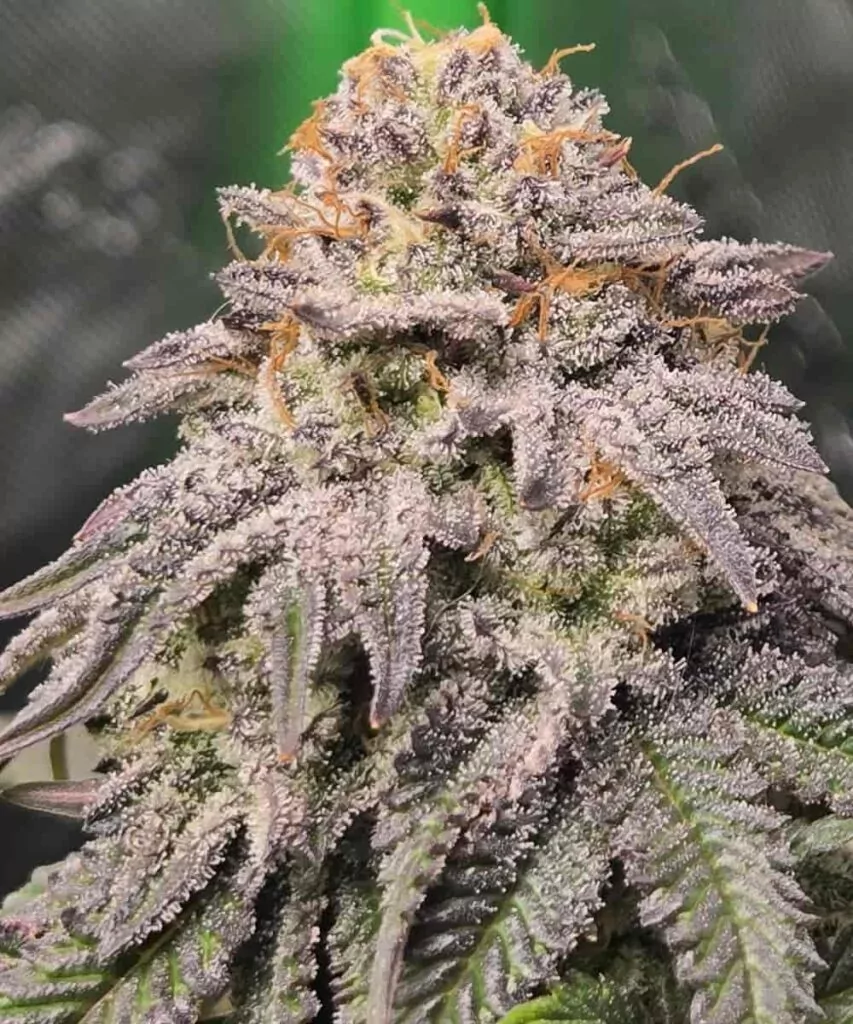
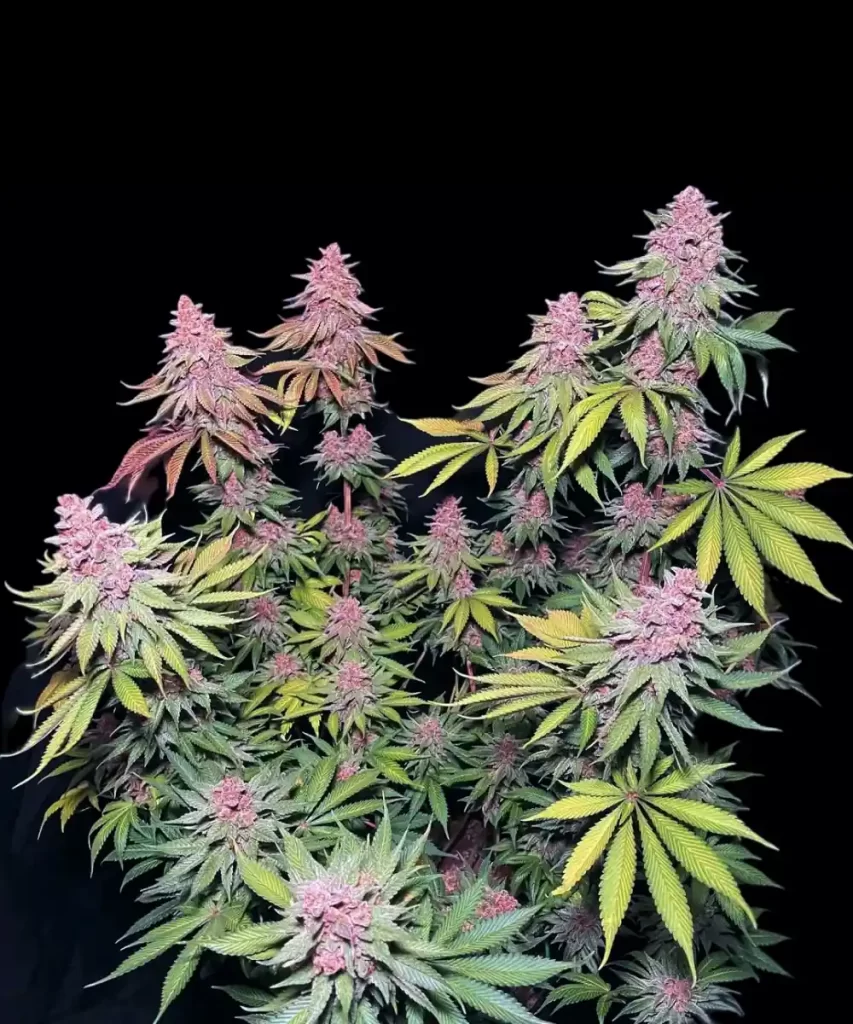
Bred to be the ultimate dessert strain, Jelly Donut offers a terpene profile that smells exactly like pink cotton candy, caramel, and sweet fuel. But what truly sets it apart for growers is its unique growth pattern. It is remarkably easy to grow, highly resistant to mold, and finishes flowering in an incredibly fast 55 days.
However, growing this strain requires patience. It exhibits slow vegetative growth and unremarkable early flower development—until day 30 of bloom, when the buds suddenly explode in size and resin production.
In this 2026 grow guide, we will break down everything you need to know to cultivate this elite genetic, from managing its tall, vertical structure to specific EC feeding targets that will push those THC levels past the 30% mark.
The creation of Jelly Donut was not a happy accident. It was the result of a massive, three-year pheno-hunt involving over 800 plants across multiple farms in the Emerald Triangle. The breeders were looking for a specific combination of candy-sweet terpenes, high yield, and astronomical THC. They found it by crossing two modern legends.
Hella Jelly: Formerly known as Jelly Rancher, this sativa-dominant workhorse provides the fast-flowering nature, incredible hybrid vigor, and heavy yield potential. It is also responsible for the strain’s strong resistance to gray mold and powdery mildew, making it a dream for outdoor growers.
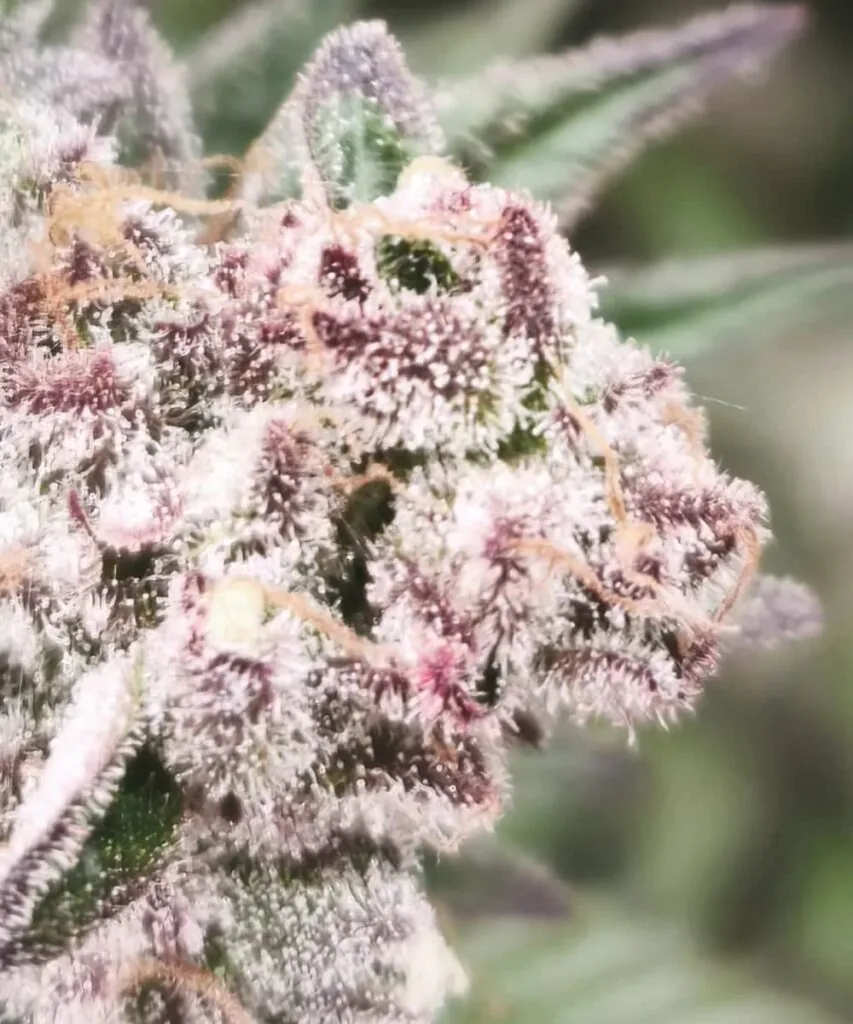
White Runtz: As a highly sought-after phenotype of the Gelato x Zkittlez cross, White Runtz brings extreme potency and visual bag appeal. It contributes the ridiculous resin production that coats Jelly Donut in a thick layer of frost, as well as the complex, sweet-gas terpene profile.
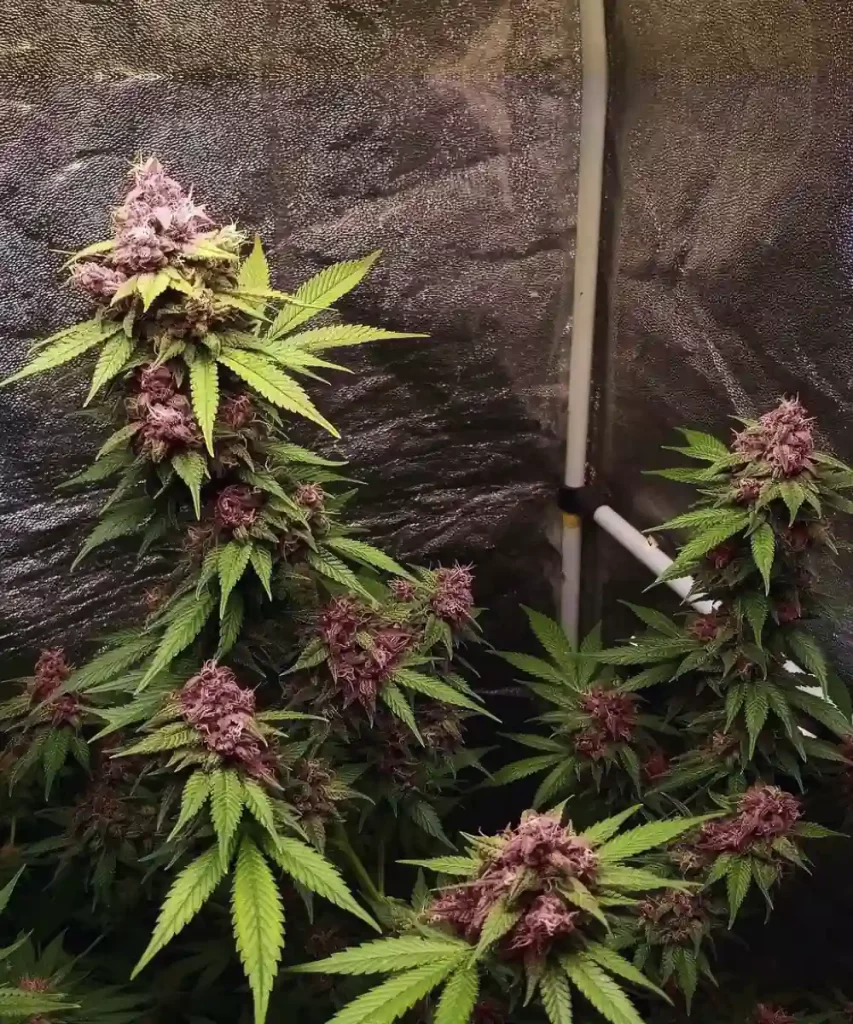
The resulting hybrid leans slightly sativa (60/40), which dictates how it grows in the tent. You can expect a plant that builds itself tall and vertical, with surprisingly strong branches capable of supporting dense, heavy colas without the need for extensive trellising.
Jelly Donut is a dessert strain in the truest sense. It moves away from the earthy, piney flavors of old-school genetics and delivers a straight hit of sugary sweetness.
The dominant terpenes—Caryophyllene, Limonene, and Myrcene—work together to create an aroma of strawberry malted milkshakes, pink cotton candy, and caramel. Underneath that intense sweetness is a sharp, gaseous fuel note inherited from the Runtz lineage. This complex profile makes it an exceptional candidate for solventless extraction and rosin pressing.
Despite its sweet flavor, Jelly Donut hits with serious force. Testing regularly between 30% and 35% THC, it is not a strain for novices.
The high begins with a rapid, heart-racing cerebral onset typical of strong sativas. It provides a rush of upbeat, energizing euphoria that makes it perfect for social events, creative projects, or physical activities. Unlike heavy indicas, it does not induce couch-lock or extreme sedation. Instead, the high lasts for hours without the dreaded burnout crash, eventually settling into a comfortable, functional relaxation.
How does Jelly Donut compare to other popular sweet strains in the same genetic family?
| Feature | Jelly Donut (HSC) | Runtz | Gelato 33 |
| Dominant Flavor | Cotton Candy, Caramel, Fuel | Sugary Candy, Gas | Sweet Citrus, Earth, Mint |
| THC Range | 30 – 35% | 25 – 29% | 20 – 25% |
| Flowering Time | 55 days (8 weeks) | 8 – 9 weeks | 8 – 9 weeks |
| Plant Structure | Tall, Vertical, Strong Branches | Medium, Bushy | Medium, Dense |
| Yield Potential | High | Moderate | Moderate |
| Primary Effect | Energizing, Upbeat, Cerebral | Heavy Relaxation, Euphoria | Balanced, Relaxing |
| Grow Difficulty | Easy (Mold Resistant) | Moderate | Moderate |
The Takeaway: Jelly Donut is the clear winner for growers seeking maximum THC and a faster harvest time. It is also significantly easier to grow than standard Runtz or Gelato, thanks to the vigorous Hella Jelly genetics that provide robust mold resistance and strong stems.
Because of its sativa dominance, Jelly Donut wants to grow tall and vertical. If left untrained, you will end up with one massive central cola and a lot of underdeveloped lower branches. To maximize yield in an indoor tent, you must intervene early.
Early Topping: You should top the plant at Week 4 of vegetative growth (above the 4th or 5th node). This breaks apical dominance and forces the plant to distribute its energy to multiple main colas instead of just one.
Heavy Low Stress Training (LST): After topping, tie down the lateral branches to widen the canopy. The goal is to create a flat, even table of bud sites before flipping to flower. Because the branches are naturally strong and stable, they respond very well to LST and will quickly turn upward toward the light.
Here is exactly what to expect when cultivating Jelly Donut from seed to harvest.
Jelly Donut seedlings start a bit slower than typical indica hybrids. Do not be alarmed if early growth seems sluggish; the plant is focusing its energy on developing a robust root system.
Keep the environment warm and humid. Start your nutrient strength very low. A common mistake is pushing EC too high too early. Begin with an EC of 0.4 to 0.6 (around 200-300 ppm) and let the plant dictate when it is ready for more.
Environment targets:
During Weeks 3 and 4, the vegetative growth will remain steady but not explosive. The plant will begin to build its tall, vertical structure.
This is the critical window for training. Top the plant at the end of Week 4 and begin tying down the branches. Increase your nutrient strength gradually, bumping the EC up by 0.1 or 0.2 every few feedings. The strong Hella Jelly genetics mean the plant can handle a healthy nitrogen feed during this stage to support leaf development.
Environment targets:
Before switching to a 12/12 light cycle, you need to clean up the canopy. While Jelly Donut does not produce as much dense, overlapping foliage as a pure indica, it still benefits from a thorough lollipopping.
Strip the bottom third of the plant, removing all small, spindly branches that will not reach the upper canopy. This directs all the plant’s energy into the top colas, which is essential for hitting that 35% THC potential.
Environment targets:
When you flip to 12/12, the plant will stretch, but the stretch is typically less than average for a sativa-dominant strain. You can expect it to increase in height by about 50%.
Transition to a bloom nutrient formula higher in phosphorus and potassium. During these first two weeks of flower, bud development will seem incredibly slow and unremarkable. Many growers panic at this stage, thinking they have done something wrong. Be patient—this is just how the strain operates.
Environment targets:
Right around day 30 of the bloom phase (Week 8 overall), the magic happens. The previously small, unremarkable buds will suddenly bulk up, fill in, and explode with dense resin glands.
This is when the plant needs maximum light intensity and peak nutrients. Push your LED lights to 900-1000 PPFD if your environment can handle it. Slowly increase your feeding strength, aiming for a peak EC of 1.8 to 2.0. The White Runtz genetics will start expressing themselves, coating the flowers in a ridiculous layer of trichomes.
Environment targets:
Jelly Donut is a fast finisher, typically ready to harvest by day 55 of flower (end of Week 11 overall).
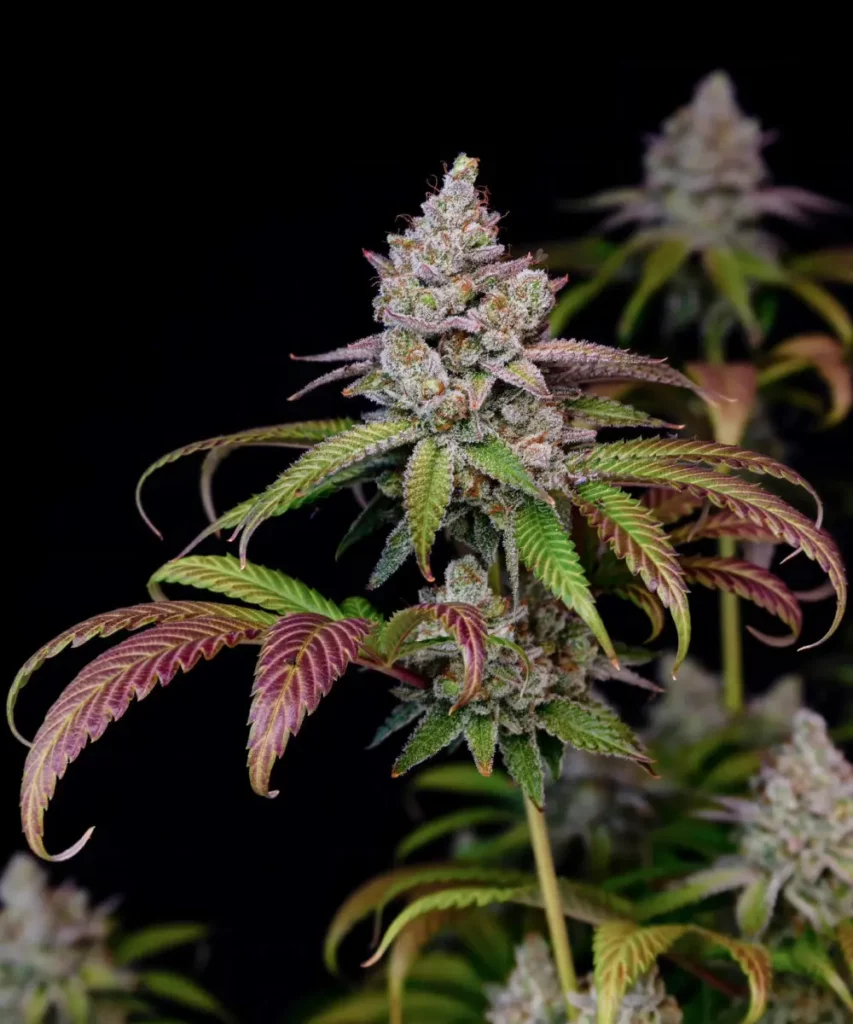
During the final two weeks, drop your nighttime temperatures to 60-65°F. This slight chill mimics the onset of autumn and encourages the plant to express stunning purple, pink, and dark green hues. It also signals the plant to push out one final surge of resin production for protection.
Begin a 7-10 day flush with plain, pH-balanced water. To preserve the energizing, upbeat sativa effects, do not let the trichomes turn completely amber. Harvest when 70-80% of the trichomes are milky/cloudy and only 10-20% are amber.
Environment targets:
| Stage | Weeks | Day Temp | Night Temp | Humidity | VPD (kPa) | EC Target | pH (Soil) |
| Seedling | 1–2 | 75–80°F | 70°F | 65–70% | 0.4–0.8 | 0.4–0.6 | 6.0–6.5 |
| Veg | 3–5 | 75–80°F | 68–72°F | 60–65% | 0.8–1.1 | 1.0–1.4 | 6.0–6.5 |
| Early Flower | 6–7 | 72–77°F | 65–68°F | 50–55% | 1.1–1.3 | 1.4–1.6 | 6.0–6.5 |
| Mid Flower | 8–9 | 72–77°F | 65–68°F | 45–50% | 1.2–1.5 | 1.8–2.0 | 6.0–6.5 |
| Flush | 10–11 | 68–75°F | 60–65°F | 40–45% | 1.4–1.6 | 0 | 6.0–6.5 |
Mistake #1: Panicking during early flower.
Because bud development seems slow and unremarkable until day 30 of bloom, many growers assume they have a nutrient deficiency and start overfeeding. Do not do this. Trust the genetics; the buds will bulk up dramatically in the second half of flower.
Mistake #2: Letting it grow straight up.
Jelly Donut wants to grow tall and vertical. If you do not top the plant and apply LST during the vegetative stage, you will end up with a single, tall main cola and poor overall yield. Spread the canopy early.
Mistake #3: Harvesting too late.
This strain is prized for its upbeat, energizing, cerebral high. If you wait too long to harvest and allow the trichomes to turn mostly amber, the THC degrades into CBN, resulting in a heavier, sedative effect that masks the true nature of the strain.
Mistake #4: Inadequate light intensity.
To reach that 35% THC potential, the plant needs intense light during the mid-to-late flowering stage. If your canopy is not receiving at least 800-900 PPFD during weeks 8 and 9, you are leaving potency and yield on the table.
Jelly Donut represents the pinnacle of modern cannabis breeding—insane THC levels, dessert-like terpenes, and robust, mold-resistant growth. If you want a fast-finishing sativa hybrid that smells like a bakery and hits like a freight train, this is the strain for your next run.
Looking for other sweet, high-potency strains? Check out our Runtz grow diary or explore our full hybrid seed collection at hypnoseeds.com.





I planted 10 Super Boof seeds, and all germinated without a hitch. The plants grew strong and healthy, producing dense, frosty buds with a sweet, earthy aroma. The high is uplifting yet relaxing—a perfect balance. Impressive yield too, even with minimal effort

I’ve been growing weed for 30+ years, and to be honest, it’s quite difficult to surprise me. After a few decades of facing different strains, changing growing conditions, and solving whatever problem you could possibly think of, by then, I believe I’ve seen it all in cannabis growing.
Gary Payton defied every single one of my expectations.
The plant thrived, growing to an impressive 6 feet in what seemed like a blink of an eye. It quickly filled out with buds and displayed better smell each day, showing solid proof of superior genetics. The buds were tight, aromatic, and a source of immense pride, surpassing the outcome of many of my previous endeavors.
Hypno Seeds with their Gary Payton strain has won my complete admiration and loyalty. Outstanding genetics in this plant have truly turned what I always thought of to be an experiment with negligible expectations into one of the most satisfying grows of my long career.
Looking forward, my excitement for the next growing season is unparalleled. I can’t wait to see how much I can take these strains, especially with the attention that Gary Payton really does deserve right from the start.

TRUE MAGIC! This strain really stands out. I am trying Hypno Seeds for the first time and I surely made the right choice. I will be ordering more RS11 seeds just to keep this beauty in my garden for the upcoming season. Growing in Virginia and it’s only shown perfection by now.

Starting my latest grow, I decided to try out some Blackberry Kush from Hypno… I planted her on a whim alongside my other favorites. Hypno Seeds said it had to be a powerful plant with rich, fruity scents… Seeing is believing. She developed purplish hues and dense resin coated buds and quickly took center stage in my garden and produced much more than expected. The buds are tightly packed, literally bursting with the heady aroma. The yield? Very impressive for her conditions…
Germinated three seeds using the paper towel method with100% success rate within 48 hours. Planted in 5 gallon pots with living soil under a 315W CMH light. Plants remained compact (3.5 ft) with thick lateral branching, showing high resistance to humidity and minor nutrient fluctuations. Yield per plant: 5.8 oz of extremely dense, trichome-heavy buds. Smell profile during flower: sharp pine, pepper, and a hint of citrus. Harvested at week 9, after trichomes showed 30% amber for peak sedative effects. Smoke report: Potent. Deep relaxation without full sedation. Ideal for stress relief.


