

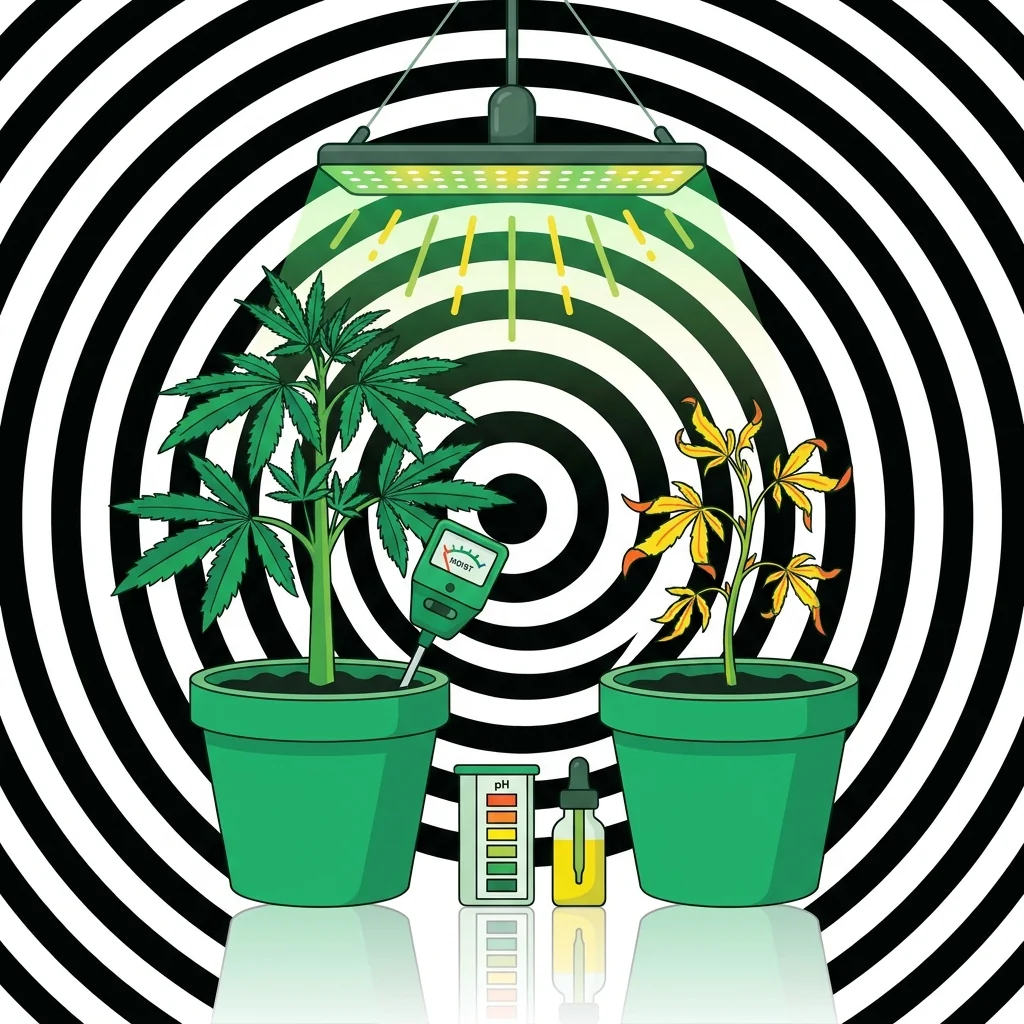
Is it the seed or the setup? Most of the time, it’s the setup. Genetics become the likely culprit only when a plant struggles from day one, ignores corrections, and lags behind its siblings in identical conditions. At Hypno Seeds, we breed and stabilize our own lines in-house and germination-test every batch every 30 days. That gives us a clear view of what stable genetics should do, and what usually goes wrong in the grow room instead.
About the Author: This guide comes from the Hypno Seeds breeding team, which develops and stabilizes its own cannabis genetics over multiple generations and pulls any seed batch that tests below a 95% germination rate.
The fastest way to separate seed from setup is to treat your grow like a controlled experiment: same room, same feed, same light, with genetics as the only variable. A weed plant growing slow on its own tells you little. One growing slow next to thriving siblings tells you a lot.
| Clue | Points to a grow problem | Points to genetics |
|---|---|---|
| Plants affected | Most or all in the space | One plant, siblings healthy |
| Onset | After a change (repot, new feed, heat wave) | From germination onward |
| Response to a fix | New growth looks healthier | No change in new growth |
| Symptom pattern | Logical (old leaves first, edges, tips) | Random: twisted leaves, erratic structure |
💡 Pro Tip: New growth is your scorecard. Damaged leaves rarely recover, so judge any fix by the leaves that emerge after it.
Work through the table below. A crowded pot can mimic several of these problems, so check root space too.
| Problem | What you see | Why it happens |
|---|---|---|
| Overwatering | Droopy, firm leaves; slow growth | Soaked medium pushes out the oxygen roots need |
| Low light | Stretched stems, long gaps between nodes | The plant spends energy reaching instead of building |
| Temperature stress | Curling leaves, slowed growth | Heat or cold slows the plant’s metabolism |
| Cannabis nutrient deficiency | Uniform yellowing (nitrogen), brown edges (potassium) | Missing raw materials for new tissue |
| Cannabis nutrient lockout | Deficiency signs despite regular feeding | Off pH or salt buildup blocks uptake |
| Cannabis root bound | Wilting soon after watering, circling roots | No room for new roots, so uptake can’t keep pace |
These problems shrink plants dramatically. A 2023 study in the journal Plants found nitrogen deficiency reduced aboveground vegetative fresh weight by 73% compared to control plants. That’s a size loss easily blamed on the seed. Light is just as decisive: a 2023 Utah State University thesis reported that cannabis flower yield rose linearly with light intensity up to 1500 micromoles per square meter per second.
Lockout confuses growers most. Think of pH as the lock on a pantry door: the shelves can be fully stocked, but if pH is off, roots can’t get in. Feeding harder only piles more salt on the shelves. The fix is correcting pH and flushing, not adding nutrients.
Seedlings follow the same rule as mature plants, with a smaller margin for error. A cannabis seedling not growing is almost always reacting to its first environment. (Cannabis cultivation laws differ by state and locality, and growers must check and follow their own.)
Seed viability is the one seed-side factor here. Fresh, properly stored seeds from a tested batch should mostly sprout, so a pack that mostly fails or sprouts uniformly weak points to age, storage or genetic weakness rather than your technique.
Once the environment checks out, the remaining suspects are genetic, and they break environmental logic:
Two traits get misread as bad genetics. Phenotype variation means a shorter, bushier sibling is a different expression, not a weaker plant. Color is the other: purple strains can turn violet naturally. A deficiency comes with slow growth and dying tissue; genetic color shows up on a vigorous plant.
The diagnosis is identical, but the cost of delay isn’t, which is where feminized seeds vs autoflowers matters. Photoperiod feminized seeds stay in veg until you change the light schedule, so a stalled plant can recover before you flip. Autoflowers move to flower on an internal clock. Early stress eats into their only veg window, leaving a smaller plant even after the fix.
💡 Pro Tip: Start an autoflower like Red Pistachio Auto in its final container. Every transplant costs root recovery days an auto can’t make up.
Everything above assumes the seed started with a fair chance, and that depends on breeding. Stabilization means selecting a line over multiple generations until siblings express the same traits reliably. Unstable lines produce exactly the sibling inconsistency that makes diagnosis hard.
When comparing seed breeders, ask:
We develop our lines in-house, including exclusives like Red Chile Truffle and Sticky Kitty Trippy Punch, hand-inspect every seed, and pull batches below 95%. Stable genetics don’t guarantee a great harvest. They remove the seed as a variable.
How long should I wait before blaming genetics?
Until new growth emerges after correcting the environment. If fresh leaves still come in weak while siblings thrive, suspect genetics.
Can a nutrient deficiency look like bad genetics?
Yes. Deficiencies sharply reduce size, and lockout causes deficiency symptoms even with regular feeding. Check pH first.
How do I know if my plant is root bound?
Roots circling the container or poking from drainage holes, plus wilting soon after watering.
Can a stunted autoflower recover?
It can resume healthy growth, but lost veg time usually means a smaller final plant.
Why are all my seedlings slow at once?
When every seedling stalls together, the shared environment is the cause: usually overwatering, cold medium or light placement.
Hypno Seeds is a US-based cannabis breeder that develops and stabilizes its own genetics in-house rather than reselling third-party stock. Every batch is germination-tested every 30 days, batches below 95% are pulled, and every seed is hand-inspected for maturity and shell integrity. Orders dispatch within 24 hours from a climate-controlled Las Vegas, NV warehouse, with tracked, discreet delivery in 2-5 business days.
Most of the time, the plant isn’t failing you. It’s telling you what it needs. When you’re ready to start with genetics you can rule out, explore stabilized lines at hypnoseeds.com or browse the full shop.


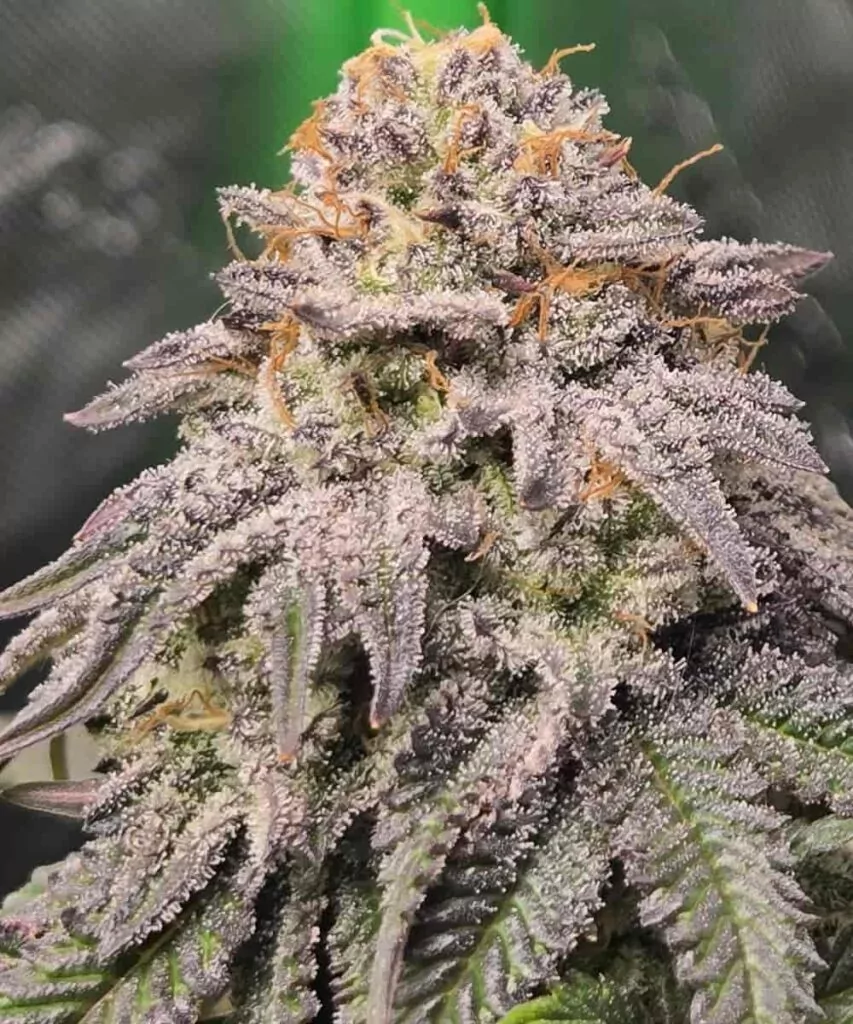


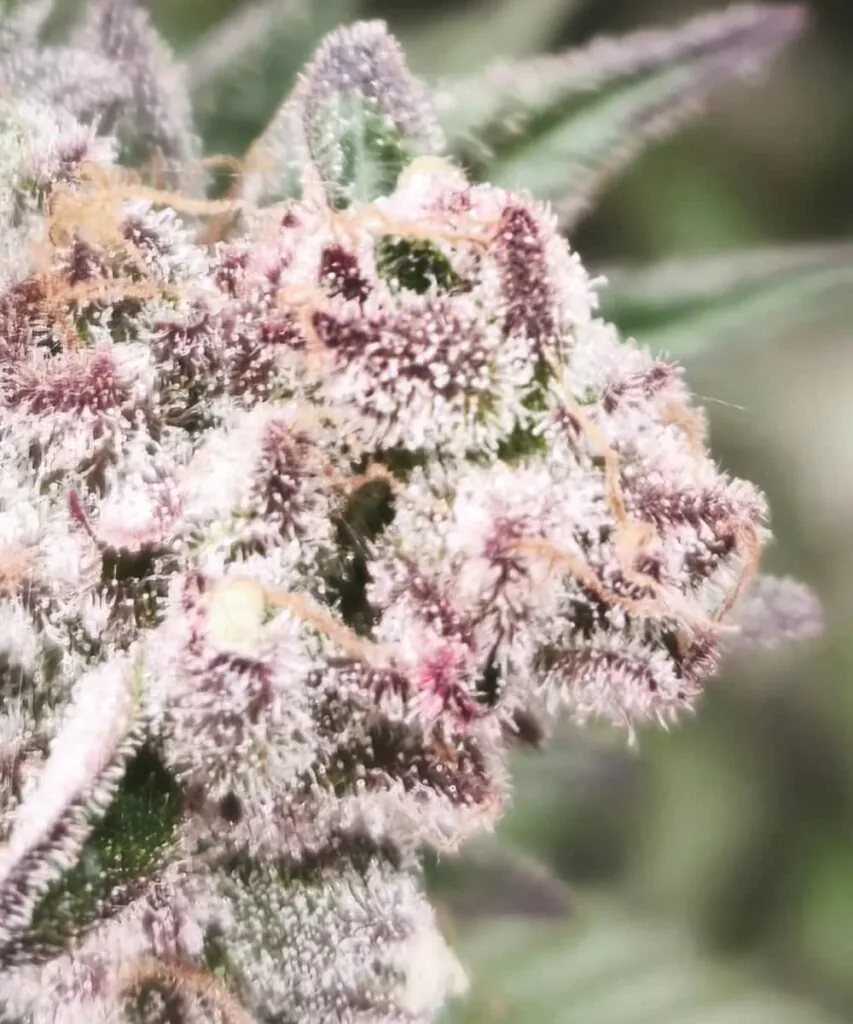
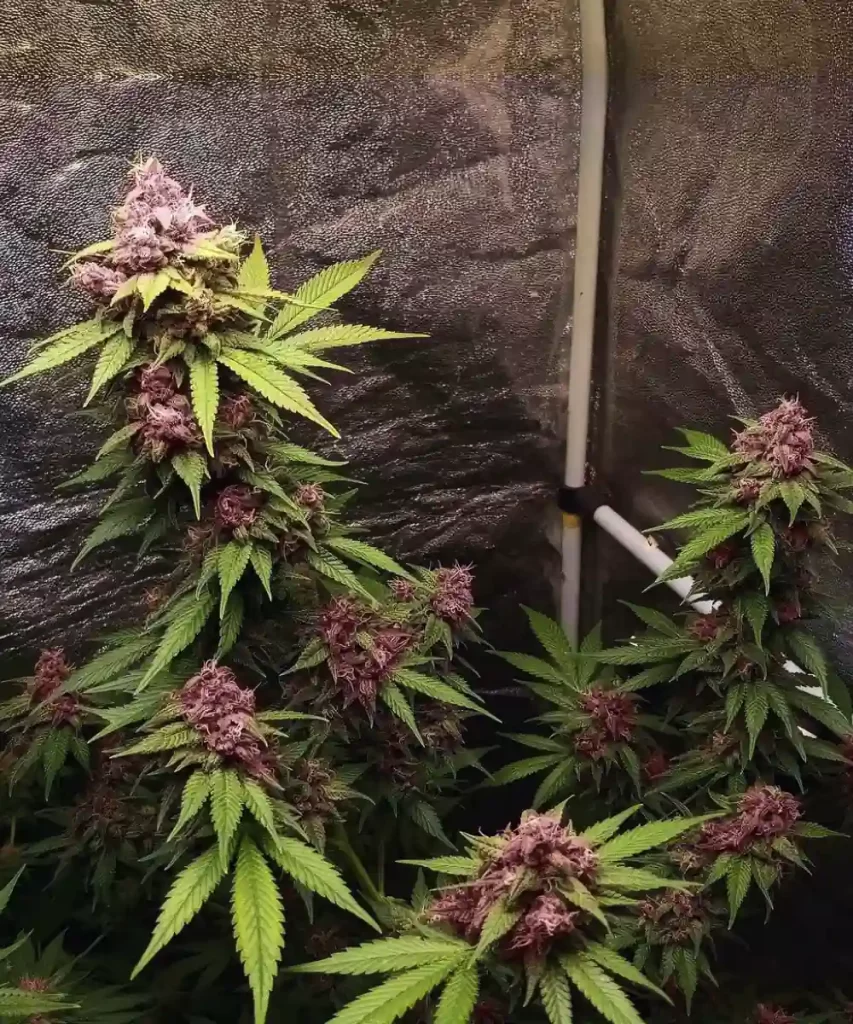
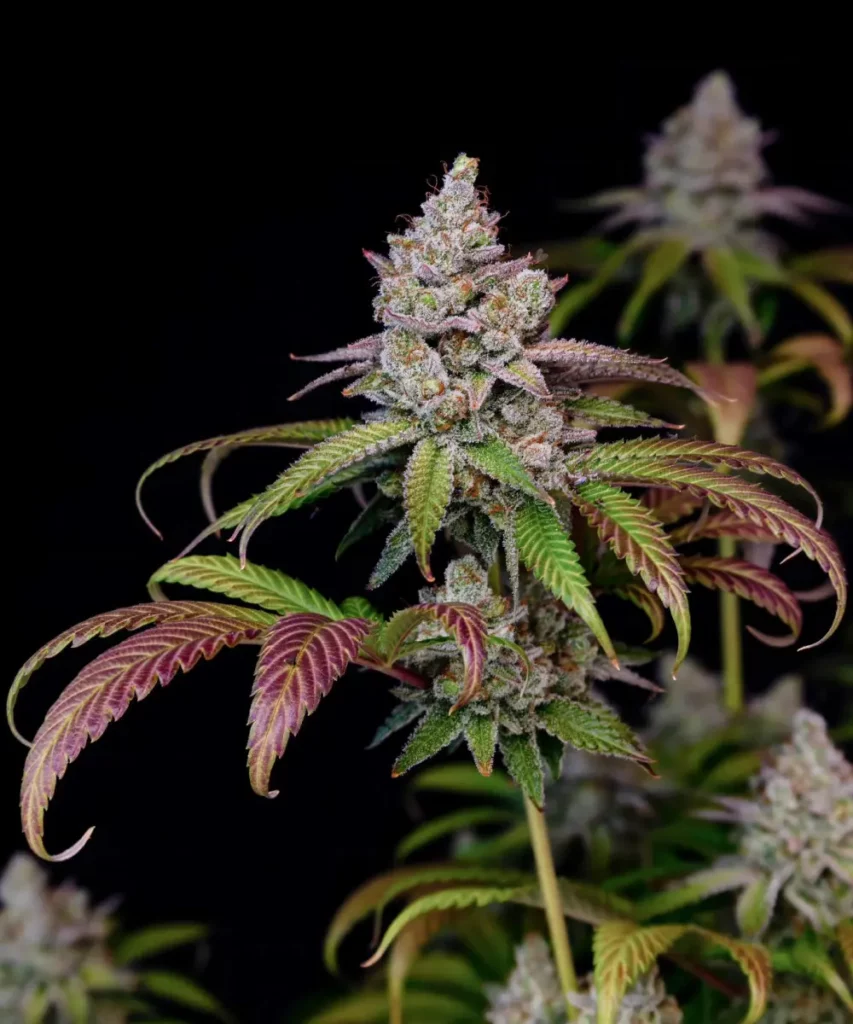
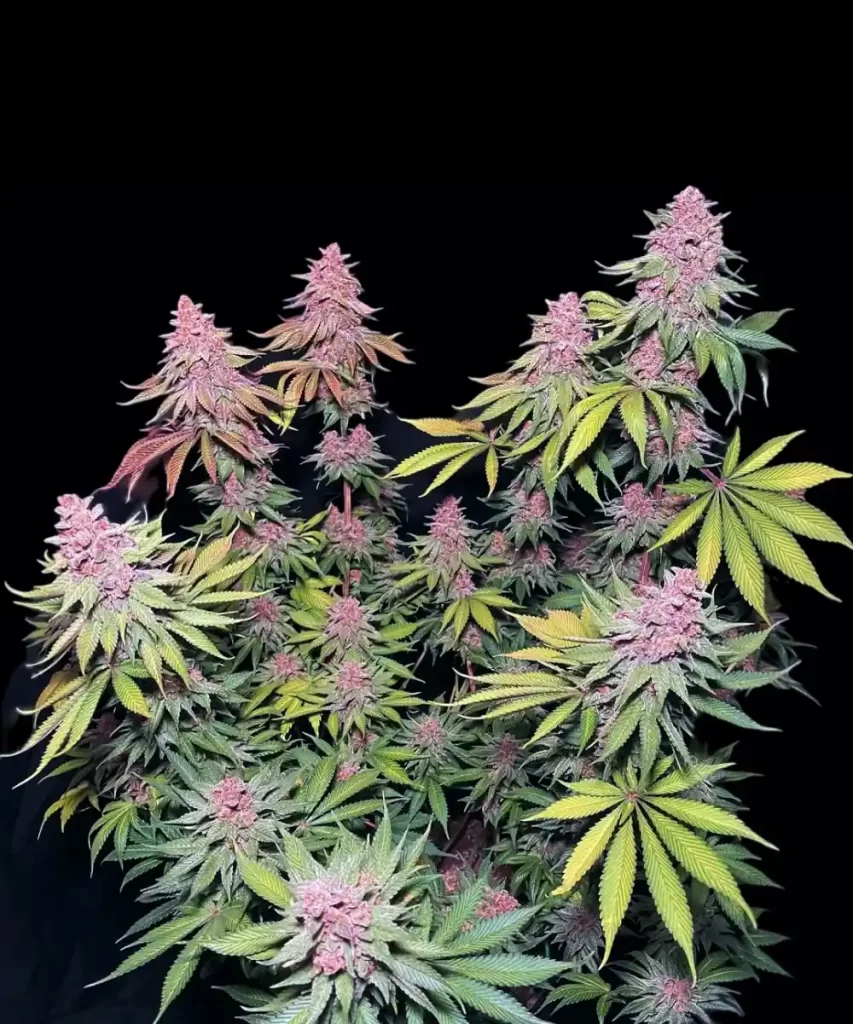

I planted 10 Super Boof seeds, and all germinated without a hitch. The plants grew strong and healthy, producing dense, frosty buds with a sweet, earthy aroma. The high is uplifting yet relaxing—a perfect balance. Impressive yield too, even with minimal effort

I’ve been growing weed for 30+ years, and to be honest, it’s quite difficult to surprise me. After a few decades of facing different strains, changing growing conditions, and solving whatever problem you could possibly think of, by then, I believe I’ve seen it all in cannabis growing.
Gary Payton defied every single one of my expectations.
The plant thrived, growing to an impressive 6 feet in what seemed like a blink of an eye. It quickly filled out with buds and displayed better smell each day, showing solid proof of superior genetics. The buds were tight, aromatic, and a source of immense pride, surpassing the outcome of many of my previous endeavors.
Hypno Seeds with their Gary Payton strain has won my complete admiration and loyalty. Outstanding genetics in this plant have truly turned what I always thought of to be an experiment with negligible expectations into one of the most satisfying grows of my long career.
Looking forward, my excitement for the next growing season is unparalleled. I can’t wait to see how much I can take these strains, especially with the attention that Gary Payton really does deserve right from the start.

TRUE MAGIC! This strain really stands out. I am trying Hypno Seeds for the first time and I surely made the right choice. I will be ordering more RS11 seeds just to keep this beauty in my garden for the upcoming season. Growing in Virginia and it’s only shown perfection by now.

Starting my latest grow, I decided to try out some Blackberry Kush from Hypno… I planted her on a whim alongside my other favorites. Hypno Seeds said it had to be a powerful plant with rich, fruity scents… Seeing is believing. She developed purplish hues and dense resin coated buds and quickly took center stage in my garden and produced much more than expected. The buds are tightly packed, literally bursting with the heady aroma. The yield? Very impressive for her conditions…
Germinated three seeds using the paper towel method with100% success rate within 48 hours. Planted in 5 gallon pots with living soil under a 315W CMH light. Plants remained compact (3.5 ft) with thick lateral branching, showing high resistance to humidity and minor nutrient fluctuations. Yield per plant: 5.8 oz of extremely dense, trichome-heavy buds. Smell profile during flower: sharp pine, pepper, and a hint of citrus. Harvested at week 9, after trichomes showed 30% amber for peak sedative effects. Smoke report: Potent. Deep relaxation without full sedation. Ideal for stress relief.


