

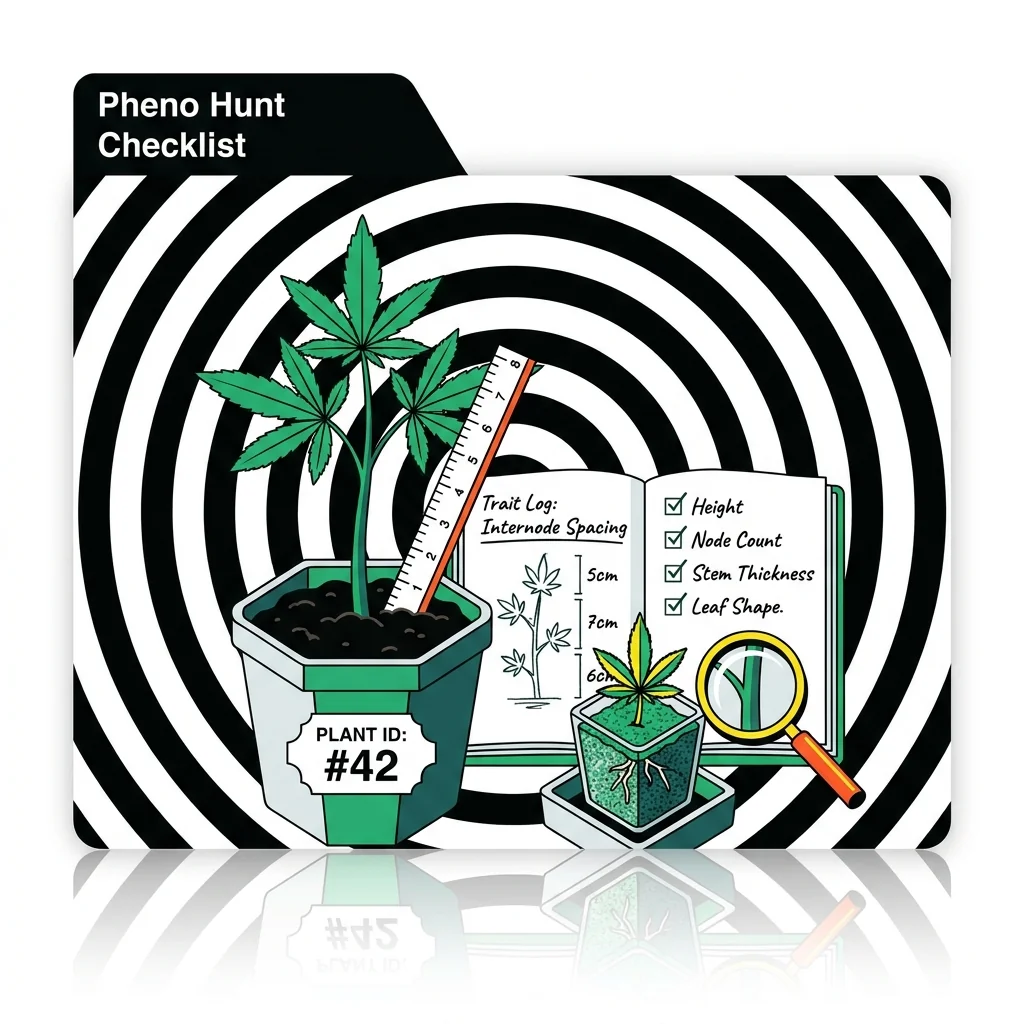
Before a pheno hunt starts, record the traits you can never go back and measure: germination speed, seedling vigor, internode spacing, stem thickness, branching pattern, leaf shape, stem-rub aroma, early pest or mildew spots, height at flip, and each plant’s exact spot in the room. Flowering traits such as resin, terpene profile and yield decide the winner. The pre-flower baseline is what lets you trust that result and match the winning plant to the right clone. At Hypno Seeds, we develop and stabilize our own genetics in-house over multiple generations, so careful selection is part of how our lines are stabilized. This checklist applies that same discipline to a home grow.
- Log vegetative traits from day one. Once the room flips to flower, you can’t reconstruct them.
- Record each plant’s position, pot and light intensity so environment isn’t mistaken for genetics.
- Clone and label every candidate before flowering, and note how fast each clone roots.
- Finish with measured flower data: stretch, flowering days, density, mold response and cannabis yield per plant.
- Score every plant on the same scale so the keeper is picked by data, not by the last plant you smelled.
About the Author: This guide comes from the Hypno Seeds breeding team. The team develops and stabilizes proprietary strains in-house and selects keeper plants across multiple generations before a line is released.
A pheno hunt means growing multiple plants from the same seed stock, watching how each one expresses its genetics, and keeping the individual with the best traits. The standard method has four steps:
- Germinate a batch.
- Clone each plant before flowering.
- Evaluate the originals through harvest.
- Keep the winning clone as a mother.
Commercial hunts can get enormous.
Here’s the catch. The flowering traits that decide the winner show up weeks after you’ve already committed to your clones. A thin pre-flower record leaves you with a great plant and no proof of which cutting it came from.
Breeders can measure many standard characteristics, including main stem height, internode length, stem diameter, flowering time and cannabinoid content. You don’t need all of them. You need the ones that predict a good keeper.
Cannabis cultivation laws differ by state and locality, and growers must check and follow their own.
The vegetative record is the part most growers skip. It’s also the only data you can collect on every plant before you commit to clones.
| Trait | How to Record | Why It Matters |
|---|---|---|
| Germination speed | Days to taproot and to surface | Flags slow starters early |
| Seedling vigor | 1-5 score at week two | Spots plants lagging the group |
| Internode spacing | cm between nodes on the main stem | Predicts canopy density and airflow needs |
| Stem diameter | mm at the base | Shows whether the plant can carry heavy colas |
| Branching pattern | Apical or bushy, side-branch count | Tells you how well the plant suits training |
| Leaf shape and color | Broad or narrow, shade of green | Helps you spot off-types in a line |
| Stem-rub aroma | Short scent notes | Gives an early hint of terpene direction |
| Pest or mildew spots | Date, location, severity | Acts as your first resilience filter |
| Height at flip | cm | Gives you the baseline for measuring stretch |
💡 Pro Tip: Photograph every plant weekly from the same angle and distance. A photo log settles arguments your notes can’t.
A related question is whether a plant’s numbers belong to its genetics or to its spot in the tent. Every phenotype is genetics expressed through an environment, so your record needs both.
Think of a staggered-start race. If you don’t know where each runner started, the finish times can’t tell you who was fastest. A plant sitting in the light’s hot spot started the race a few meters ahead.
For every plant, log:
- Grid position, plus the date of any rotation
- Light intensity at the canopy, if you have a meter
- Pot size and medium
- Feeding or watering changes
- Stress events such as heat spikes, overwatering or a snapped branch
With the baseline set, the next step makes the hunt repeatable: tying every flowering plant to a living backup. Clone each candidate before the flip so you can keep the winner after the originals are harvested.
- Matching IDs: Put the same code on the mother pot, the clone and the notebook.
- Cut date and days to root: Fast rooting makes a mother plant far easier to maintain.
- Clone health: Note any yellowing or wilting, and how quickly the clone recovers.
Your memory is not a database. A marker scrawl on a cup you’ll knock over in week three isn’t much better.
Starting from feminized seeds removes the sexing step, so every plant is a candidate. Autoflower hunts work differently. Autos flower on age rather than light schedule, and their clones generally run on the parent’s timeline and stay small. Most growers therefore record autos for seed selection rather than for keeping a mother.
The flowering record is where the pre-flower baseline pays off, because every finish number now has a clean starting point to compare against.
| Trait | Unit or Scale |
|---|---|
| Stretch | % height gain over height at flip |
| Flowering time | Days from flip to harvest |
| Intersex flowers | Yes or no, with date |
| Bud density and calyx-to-leaf ratio | 1-5 scales |
| Trichome density | Visual 1-5 rating or loupe count |
| Terpene profile | Descriptors, or lab % if tested |
| Potency | Lab-tested cannabinoid % |
| Sap sugar (optional) | Brix reading |
| Yield | Dry grams per plant and per sq ft |
Three of these traits deserve extra care:
- Potency: THC is a trait of the mature flower. It depends on genetics and grow conditions, and only a lab test measures it reliably.
- Yield: Cannabis yield per plant only means something next to veg time and footprint.
- Mold resistance: Mold resistant strains are found by recording, not guessing. Log where any botrytis or powdery mildew appeared. A plant that stayed clean in a low-airflow corner tells you more than one parked under the fan.
A record only becomes a decision when every plant is scored the same way. Use a weighted scorecard:
- Pick five or six traits that match your goal.
- Weight them. Mold response might count double in a humid climate.
- Score on a 1-5 scale, blind to plant IDs where possible.
- Disqualify outright for dealbreakers such as intersex flowers or recurring mold.
- Keep the top two clones for a second run.
💡 Pro Tip: A single run can flatter a plant that got a lucky spot. Confirm your keeper on a second grow before you treat it as a mother.
How many plants should a home pheno hunt include?
Grow as many as your space allows without crowding. More plants show more variation. A stabilized line will show less of it, which makes each plant easier to read.
When should I take clones?
Take them during late veg, before you flip to flower, once the plant has enough healthy lower branches.
What is the single most important thing to record?
A plant ID that matches its clone ID. Without that link, even perfect flowering data can’t be acted on.
Does stem-rub aroma predict final terpenes?
It gives a useful early hint, not a guarantee. Confirm it against your notes at harvest.
How do I compare yield fairly?
Record dry weight alongside veg time and canopy footprint, then compare grams per square foot.
Can I pheno hunt autoflowers?
Yes, but you’d usually be recording for seed selection rather than keeping a clone as a mother.
Hypno Seeds is a US-based breeder that develops and stabilizes its own genetics in-house over multiple generations. Its exclusive strains include Red Chile Truffle, Sticky Kitty Trippy Punch and Red Pistachio Auto. Because selection happens across generations before release, growers can expect more consistent growth, yield and terpene profiles, which makes a home hunt easier to read. Every batch is germination-tested every 30 days and pulled if it falls below a 95% success rate, and orders ship within 24 hours from Las Vegas, NV, typically arriving in 2-5 business days.
If terpene expression tops your scorecard, the Flavor Collection is a natural place to start. The best keeper is usually found in the notebook before it’s found at harvest.
- Pheno Hunting And Cloning: How To Keep Your Best Plant


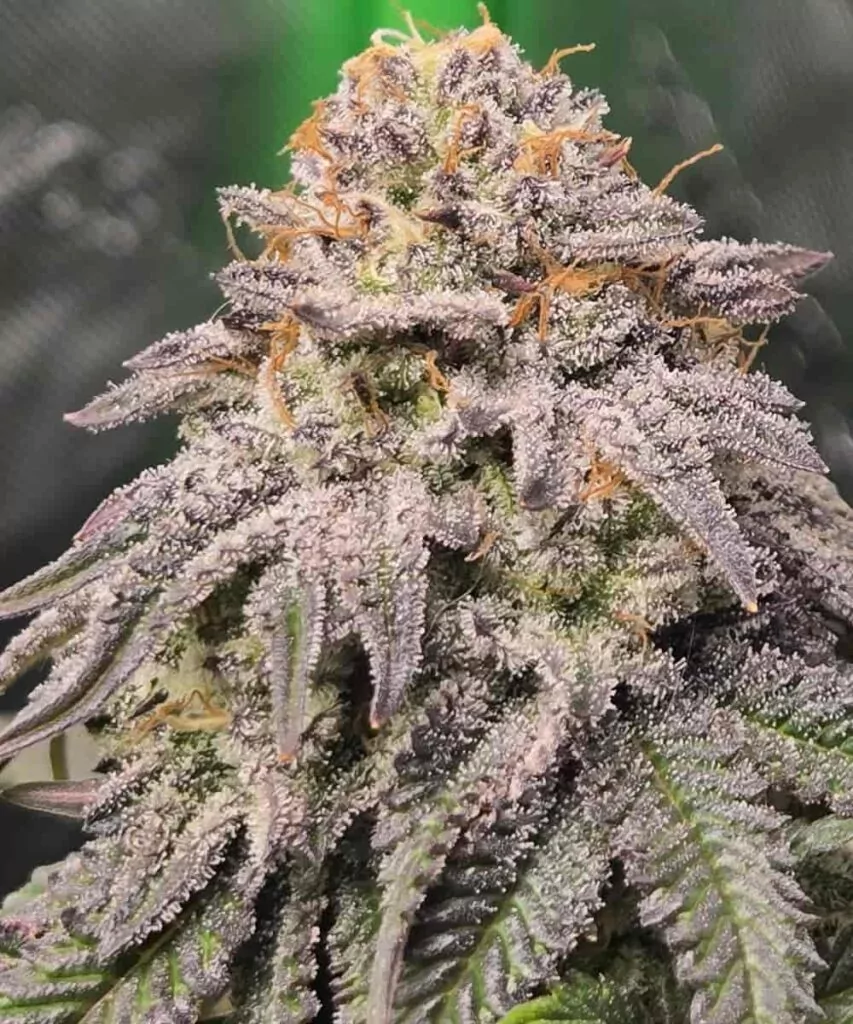


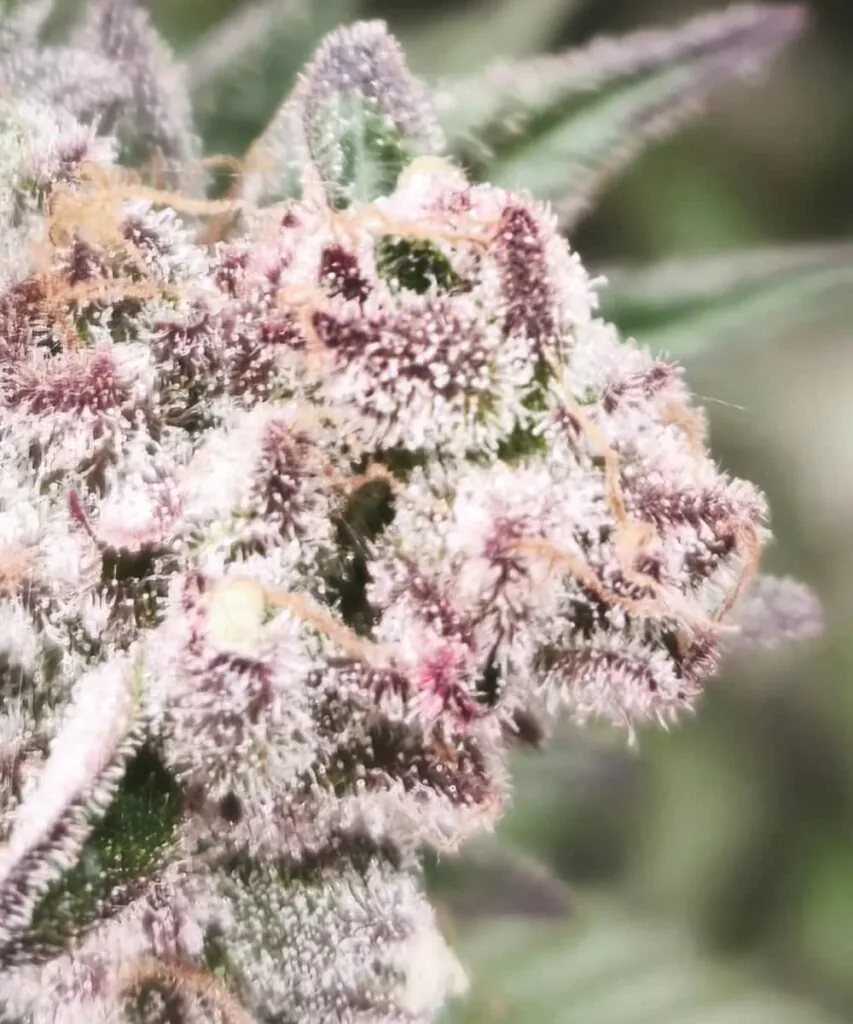
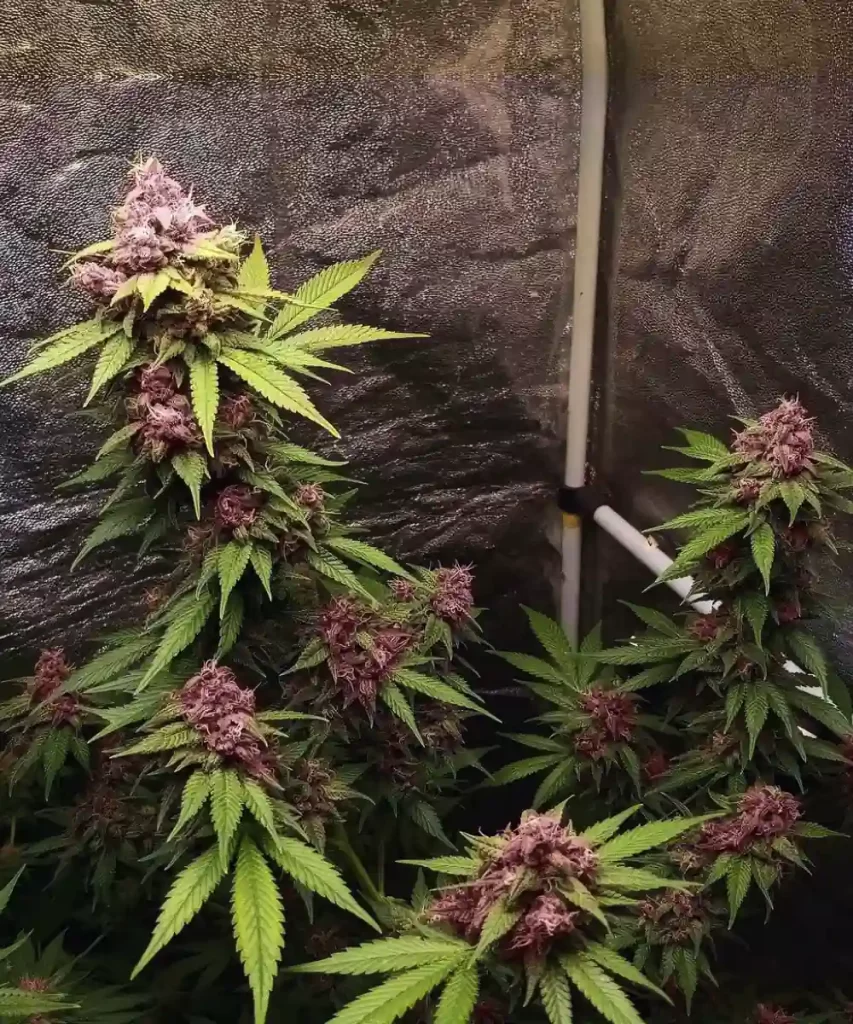
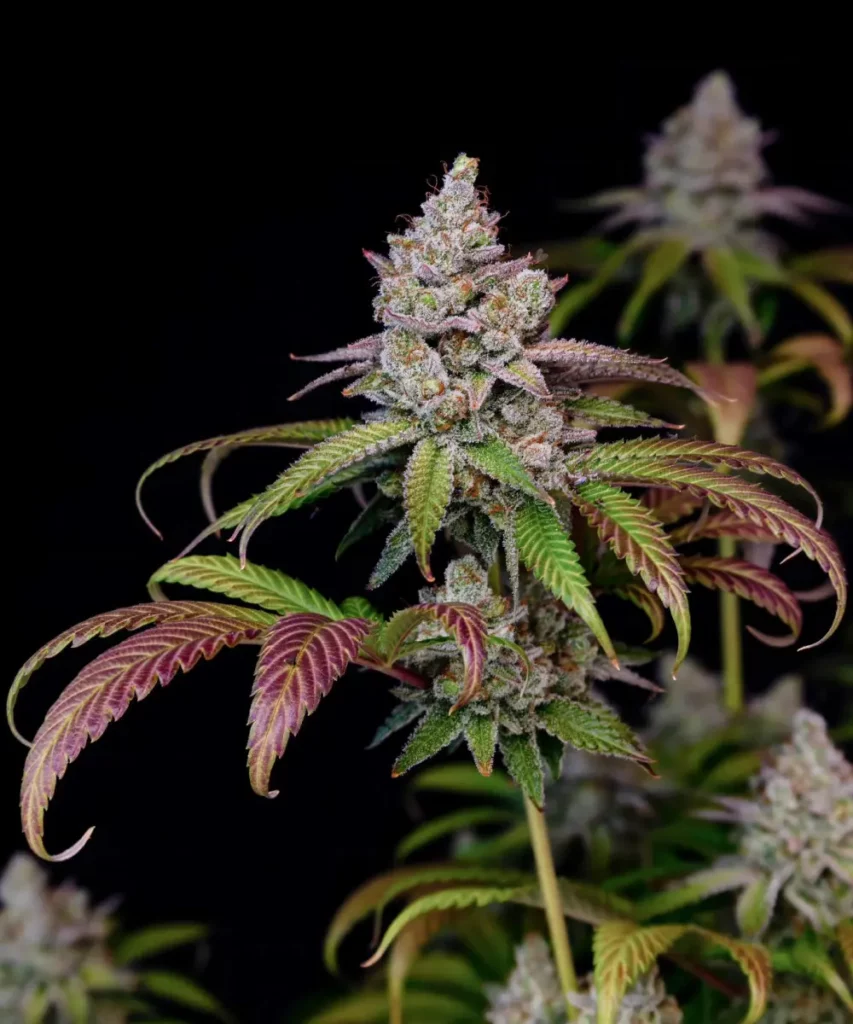
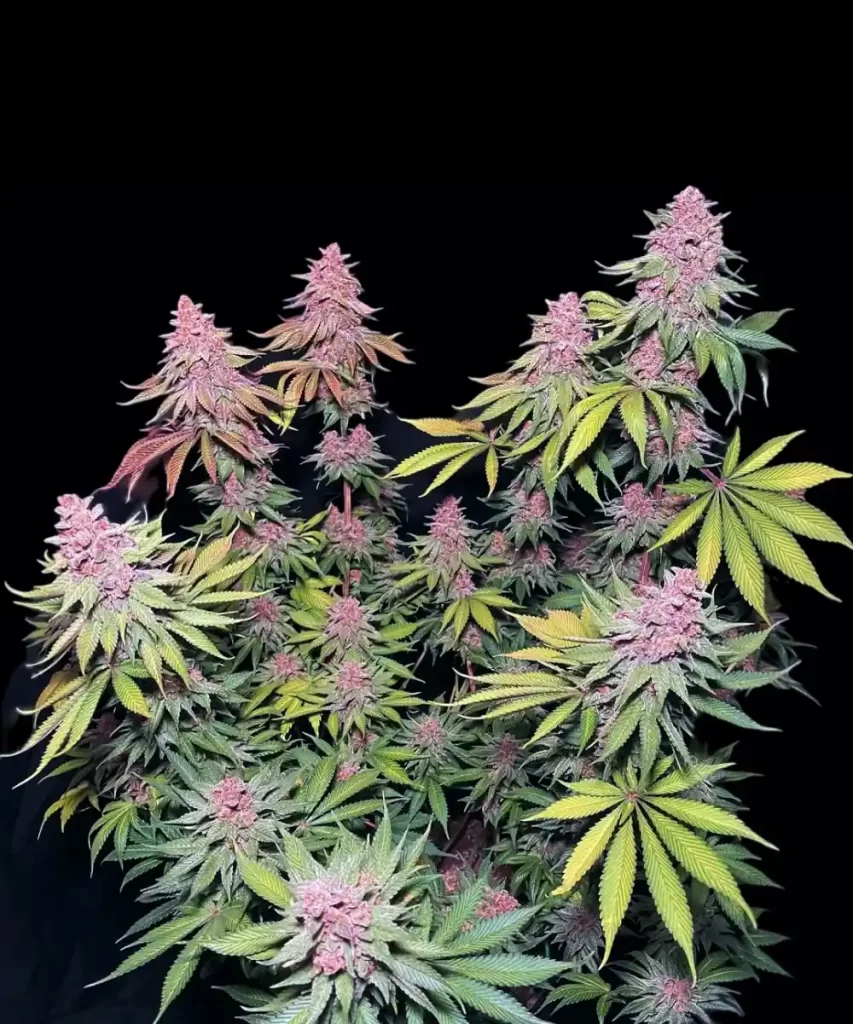

I planted 10 Super Boof seeds, and all germinated without a hitch. The plants grew strong and healthy, producing dense, frosty buds with a sweet, earthy aroma. The high is uplifting yet relaxing—a perfect balance. Impressive yield too, even with minimal effort

I’ve been growing weed for 30+ years, and to be honest, it’s quite difficult to surprise me. After a few decades of facing different strains, changing growing conditions, and solving whatever problem you could possibly think of, by then, I believe I’ve seen it all in cannabis growing.
Gary Payton defied every single one of my expectations.
The plant thrived, growing to an impressive 6 feet in what seemed like a blink of an eye. It quickly filled out with buds and displayed better smell each day, showing solid proof of superior genetics. The buds were tight, aromatic, and a source of immense pride, surpassing the outcome of many of my previous endeavors.
Hypno Seeds with their Gary Payton strain has won my complete admiration and loyalty. Outstanding genetics in this plant have truly turned what I always thought of to be an experiment with negligible expectations into one of the most satisfying grows of my long career.
Looking forward, my excitement for the next growing season is unparalleled. I can’t wait to see how much I can take these strains, especially with the attention that Gary Payton really does deserve right from the start.

TRUE MAGIC! This strain really stands out. I am trying Hypno Seeds for the first time and I surely made the right choice. I will be ordering more RS11 seeds just to keep this beauty in my garden for the upcoming season. Growing in Virginia and it’s only shown perfection by now.

Starting my latest grow, I decided to try out some Blackberry Kush from Hypno… I planted her on a whim alongside my other favorites. Hypno Seeds said it had to be a powerful plant with rich, fruity scents… Seeing is believing. She developed purplish hues and dense resin coated buds and quickly took center stage in my garden and produced much more than expected. The buds are tightly packed, literally bursting with the heady aroma. The yield? Very impressive for her conditions…
Germinated three seeds using the paper towel method with100% success rate within 48 hours. Planted in 5 gallon pots with living soil under a 315W CMH light. Plants remained compact (3.5 ft) with thick lateral branching, showing high resistance to humidity and minor nutrient fluctuations. Yield per plant: 5.8 oz of extremely dense, trichome-heavy buds. Smell profile during flower: sharp pine, pepper, and a hint of citrus. Harvested at week 9, after trichomes showed 30% amber for peak sedative effects. Smoke report: Potent. Deep relaxation without full sedation. Ideal for stress relief.


