


One Tropicana Cookies label can hide four different grow clocks. The original GSC × Tangie photoperiod, Oni Seed Co.’s Tropicanna Cookies F2, a fast-flowering photoperiod, and an autoflower may share a name and citrus direction. They do not share the same transition, training window, or harvest schedule.
That is why a useful Tropicana Cookies strain guide must begin with the seed pack—not a generic week count. Once you identify the breeder, generation, format, and parents, you can calculate headroom, measure stretch, protect the citrus-heavy aroma, and judge each phenotype on its actual performance.
This guide focuses on those decisions. It doesn’t promise every plant will turn purple, finish in the same week, or copy the famous MTN Trop cut.
Grow only where cannabis cultivation is legal, and follow all applicable local rules.
| Feature | Best-supported answer |
| Original parentage | GSC × Tangie |
| Original breeder history | The first cross is credited to Harry Palms and associated with Bloom Seed Co.; Oni Seed Co. later released Tropicanna Cookies F2 |
| Original seed format | Regular photoperiod seed, not universally feminized |
| Common spellings | Tropicana Cookies and Tropicanna Cookies |
| Historic F2 flowering reference | About 65 days, often rounded to 9–10 weeks |
| Typical aroma direction | Orange peel, tangerine, tropical fruit, sweet cookie, earth, and spice |
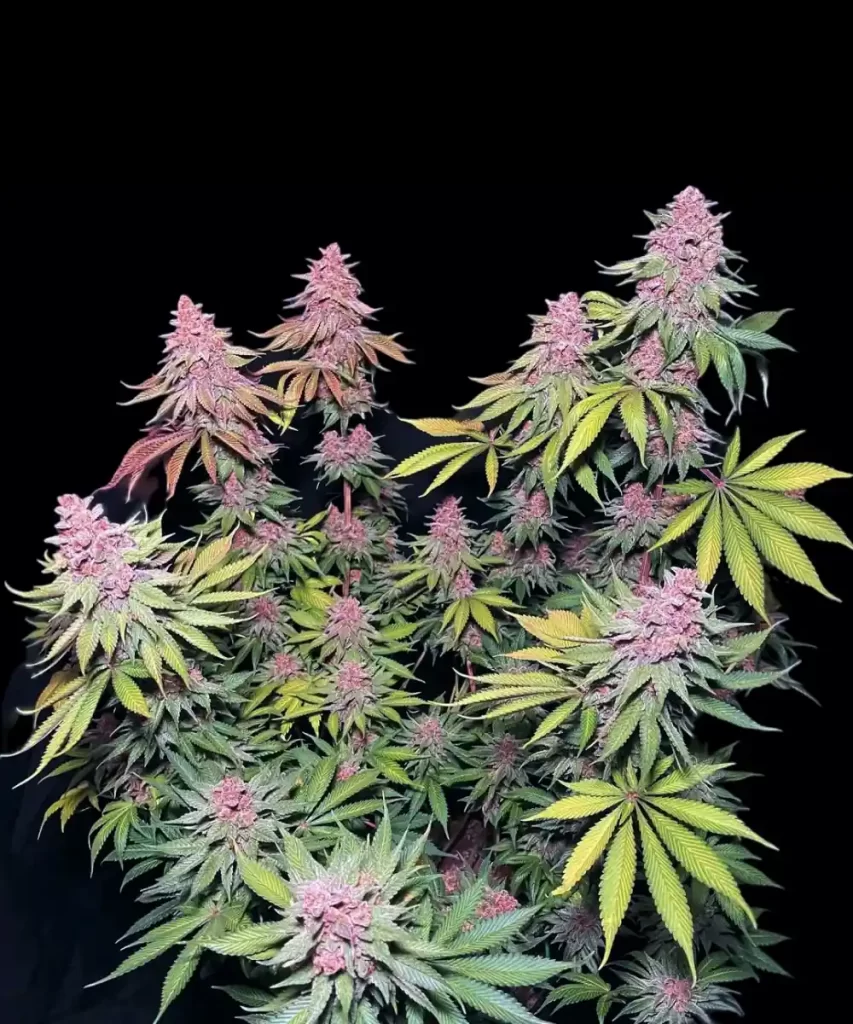
| Color potential | Green through deep purple, with bright orange pistils often reported |
| Likely growth direction | Vigorous, medium-to-tall growth with useful lateral branching; expression varies by version and phenotype |
| Main grower priority | Identify the version before choosing a training or harvest schedule |
The figures above describe the original family and historic F2—not every seed now sold under the name. A pack marked FF, Fast, Auto, Purple, S1, or another breeder’s name needs its own instructions.
Tropicana Cookies began with GSC crossed to Tangie. Harry Palms is widely credited with the original work, while the later Oni Seed Co. second generation became known as Tropicanna Cookies F2. Both one-n and two-n spellings now appear in menus, databases, and grow logs.
The spelling does not prove identity. The complete label does.
| Label you may see | What it most likely means | Which clock matters |
| Tropicana Cookies, Bloom-associated original | Early GSC × Tangie photoperiod line | Breeder or cut-specific flowering data |
| Tropicanna Cookies F2, Oni Seed Co. | Second-generation regular photoperiod population | Roughly 65 days is a useful inspection reference |
| MTN Trop | A selected cut from the Tropicana family; public generation labels conflict | Provenance-backed clone data |
| Tropicana Cookies FF or Fast | A fast-flowering photoperiod project with additional breeding | Weeks after the 12/12 flip |
| Tropicana Cookies Auto | An autoflower carrying Tropicana Cookies ancestry plus ruderalis-derived breeding | Total life cycle from seed |
| Breeder-specific feminized version | A namesake, reconstruction, S1, or related project | The exact pack’s pedigree and breeder notes |
One current fast-flowering product lists Tropicana Cookies × Tropicana Cookies Auto and advertises six to seven weeks of flowering. The same company’s autoflower lists Tropicana Cookies × Strawberry Banana Auto F5 and describes an eight-to-nine-week seed-to-harvest cycle. Neither number should be transferred to a regular Bloom or Oni seed plant.
If a page says “eight weeks” without defining the clock, the number is not ready for your calendar.
Photograph the front, back, batch sticker, and any breeder card. Then put the information into the grow log before the package disappears into a drawer.
| Field | What to record | Why it changes the plan |
| Breeder or source | Full company or verified clone source | Separates original-family material from a namesake |
| Exact spelling | Tropicana or Tropicanna | Can help trace the release, but is not proof by itself |
| Seed format | Regular, feminized, autoflower, fast photoperiod, clone | Determines sexing, light cycle, and training time |
| Generation | F1, F2, S1, Bx, F5 Auto, or unspecified | Signals how much variation may appear |
| Parents | Copy the printed pedigree exactly | Reveals added genetics behind timing and structure |
| Timing definition | Flowering after flip or total life cycle | Prevents a multiweek scheduling mistake |
| Plant code | Breeder–version–plant number | Keeps phenotype notes attached to the correct plant |
For regular F2 seeds, label each plant before roots tangle or cuttings are taken. Preserve a backup of promising females before flowering. An F2 is a population, not a packet of identical copies, so averages cannot replace plant-level notes.
If the pack provides only the name, log it as Tropicana Cookies—unverified version. You can still grow it well, but the results should not be presented as proof about the historic line.
Public guides describe Tropicana Cookies as everything from medium and bushy to tall and strongly sativa-leaning. The disagreement makes sense when different generations and versions are combined. For a new seed line, treat stretch as a measurement you need to collect.
Start with the space the canopy can actually use:
Usable vertical growth space = tent height − container and bench − fixture depth − light clearance − safety margin
Then plan the flip:
Maximum pre-flip canopy height = usable growth space ÷ planning stretch multiplier
The multiplier is a risk allowance, not a cultivar fact. Until your version has been tested, use a conservative figure that fits your equipment and training method.
| Item | Height used |
| Tent | 80 in |
| Container and riser | −15 in |
| Light fixture | −4 in |
| Required light-to-canopy distance | −18 in |
| Safety and adjustment margin | −6 in |
| Usable vertical growth space | 37 in |
With a planning allowance of 2×, the canopy should enter transition at roughly 18.5 inches or lower. If the plant stretches less, the trellis can spread the unused height into width. If it stretches more, early measurements give you time to tuck flexible leaders before stems harden.
A clone with reliable room-specific history can use a tighter estimate. An untested F2 population deserves more margin because individual plants may not stretch alike.
“Top it and use a SCROG” is not a complete instruction. A regular photoperiod can recover from planned topping. A fast photoperiod has a shorter flowering window. An autoflower cannot wait for a delayed flip because there is no flip.
| Material | Best first-run approach | Avoid |
| Original/F2 regular photoperiod seed | Top after vigorous establishment, spread leaders with LST, and use a trellis if stretch or branch count justifies it | Training every phenotype identically before its structure is visible |
| Proven photoperiod clone | Use the source’s stretch and recovery data, then refine with your room measurements | Assuming all Tropicana clones behave like MTN Trop |
| Fast-flowering photoperiod | Build the canopy earlier, finish major cuts before transition, and support dense sites before they gain weight | Heavy restructuring after the flip |
| Autoflower | Begin gentle tie-down early, keep the root zone stable, and make small adjustments while stems remain flexible | Repeated topping, severe defoliation, or recovery-heavy work without plant-specific evidence |
| Unverified seed line | Use reversible LST first and collect data before making strong cuts | Borrowing the most aggressive schedule from another breeder |
For the original/F2 family, one topping above a healthy, established node can create useful leaders without turning the first run into a stress test. Allow recovery, then spread the branches so light reaches the interior. Add a second trellis only if it solves a real support problem.
Remove growth that will remain permanently shaded, but do not strip the plant merely because a calendar says “defoliation day.” Citrus-forward, longer-branched phenotypes may need selective interior cleanup. A compact Cookies-leaning plant may need less removal and more space between tops.
The Hypno Seeds guide to low-stress training provides the tie placement and recovery principles behind these decisions.
Stretch management works best as a short measurement routine. Choose the tallest living point on flip day and measure from the same reference at every check.
| Day | Record | Decision |
| 0 | Canopy height, width, leader count, distance to light | Confirm enough usable headroom remains |
| 3 | New height and branch angle | Begin gentle outward tucking if leaders are accelerating |
| 7 | Height multiplier and internode change | Separate dominant tops; raise or rebalance light only if needed |
| 10 | Fastest and slowest plants in the population | Give vigorous plants more horizontal space without burying slower ones |
| 14 | Remaining soft growth and flower initiation | Finish major tucking; avoid crushing stiffening stems |
| 21 | Final transition height and canopy gaps | Shift from shape-building to support, airflow, and flower protection |
Calculate the observed multiplier as:
Current canopy height ÷ flip-day canopy height = observed stretch
A plant that moves from 18 to 29 inches has reached 1.61× at that check. Keep measuring until vertical acceleration slows. On the next cycle, that record is more useful than an anonymous “1.5–2×” estimate online.
For a multi-plant F2 run, record each plant separately. The shortest plant may be the best use of a low tent, while a taller citrus-heavy phenotype may suit a larger room or outdoor garden.
Purple flower helped make Tropicana Cookies famous, but color alone is a weak keeper criterion. A useful selection compares architecture, citrus intensity, resin, finish, and post-cure quality.
| Trait | Measure during the run | Keeper question after cure |
| Stretch | Flip height, peak height, and final multiplier | Did the plant fit the intended room without excessive labor? |
| Branch strength | Angle, flexibility, and support needed | Can the structure carry its flowers predictably? |
| Flower density | Upper, middle, and interior sites | Did density add quality without creating moisture risk? |
| Aroma direction | Stem rub, early flower, harvest, dry, and cure | Did bright peel, sweet orange, cookie, earth, or spice persist? |
| Color | Date and location of pigment onset | Was the color stable without sacrificing vigor? |
| Resin character | Coverage, texture, and handling | Does the resin suit flower, dry sift, or wash testing? |
| Finish | Calyx maturity and trichomes by date | Did the plant mature evenly within the available window? |
| Usable yield | Dry, trimmed flower from that plant | Was the result efficient for its footprint and veg time? |
Do not discard a green plant before the cure. It may carry the sharpest tangerine aroma, strongest branch structure, or most useful finish time. Likewise, a dramatic purple plant may lose aroma quickly or produce less usable flower.
For regular seed, sex is another selection gate. Take and label backups before the flip so a strong female can be retained. If breeding is not the goal, identify and remove males according to the legal and operational requirements of the garden.
No single VPD or feed chart has been verified across the original, F2, FF, auto, and modern feminized versions. Use these as general indoor starting ranges for an established photoperiod plant, then adjust for leaf temperature, medium, irrigation method, and flower density.
| Stage | Day temperature | Relative humidity | Approx. VPD | Tropicana-specific watchpoint |
| Established vegetative growth | 75–80°F | 58–68% | 0.9–1.2 kPa | Keep vigorous shoots compact enough for the planned flip height |
| Transition | 74–79°F | 52–60% | 1.1–1.3 kPa | Measure stretch and open overlapping leaders |
| Early flower | 73–78°F | 48–55% | 1.2–1.4 kPa | Finish canopy positioning before stems harden |
| Mid flower | 71–77°F | 44–51% | 1.3–1.5 kPa | Inspect dense purple or green flowers equally for humid pockets |
| Late flower | 68–75°F | 40–48% | 1.3–1.5 kPa | Protect aroma and dry nights without forcing cold color |
Use measured leaf temperature with the Hypno Seeds VPD chart for cannabis. Check the canopy shortly after lights-off, when air temperature falls and relative humidity can rise. A sensor above the canopy may miss the still, damp air inside a crowded trellis.
Branch spacing matters as much as a controller set point. Direct fans through lanes and under the canopy rather than blasting one top. When a phenotype builds compact flowers, increase inspection frequency before making large environmental changes.
A soil bed, coco pot, and recirculating system should not share an EC schedule simply because the plant name matches. Start with the proven method for the medium, then read input, root-zone trend, water use, and leaf response together.
| Observation | Check first | Practical response |
| Fast growth with clean tips | Root-zone EC and moisture trend | Hold the program; vigor alone is not a reason to push feed |
| Dark, glossy leaves or hooked tips | Nitrogen level, salinity, and irrigation frequency | Reduce the cause after confirming it; do not add supplements |
| Pale new growth | Root-zone pH, saturation, light intensity, and current demand | Restore availability before making a large concentration jump |
| Droop in a wet container | Dry-back, oxygen, and root temperature | Correct irrigation timing or root-zone aeration |
| Runoff EC rising each event | Volume, frequency, and evaporation | Adjust irrigation strategy before blaming the cultivar |
| Water use drops suddenly | Root health, environment, saturation, and maturity | Diagnose before the next automatic feed |
During transition, water demand can rise quickly with leaf area. Do not respond by keeping the medium continuously saturated. Match shot size and frequency to the substrate and root volume.
The Hypno Seeds hydroponics vs soil guide explains why the same symptom can require different root-zone decisions in different systems.
Anthocyanin pigments contribute to red and purple cannabis tissue. Genetics determine whether strong pigmentation is available, while temperature and other conditions can affect expression. That does not mean colder is always better.
Research has found that the temperature favoring anthocyanin accumulation does not necessarily maximize flower dry weight. Extreme cooling can slow plant function while creating the appearance a grower hoped to see.
Treat color as a phenotype note:
A healthy green Tropicana Cookies plant is not a failed phenotype. Judge the finished flower after cure.
For an Oni F2, the cited 65-day mark is a sensible point around which to intensify inspection. It is not an automatic cut date. Other photoperiod versions may finish earlier or later, and autoflowers use a different clock entirely.
Inspect trichomes on swollen calyxes from upper, middle, and interior sites. Sugar leaves can amber early. Combine magnification with calyx development, water-use trend, flower firmness, and aroma.
| Signal | What it may tell you | What it cannot decide alone |
| Mostly cloudy calyx trichomes | The resin window is advancing | Whether lower sites have caught up |
| Some amber on representative calyxes | The plant is moving later in its window | The “best” effect for every preference |
| Calyxes are swollen and pistils have receded | Flower development is well advanced | Final maturity without resin checks |
| Orange-peel aroma becomes fuller | Aromatic development may be near a strong point | That the plant is ready without other signals |
| Sharp citrus becomes flat or dull | The aroma may be fading, or the environment may be too warm | The cause without room and plant records |
| Purple becomes nearly black | Pigmentation has intensified | Potency or harvest readiness |
In a phenotype hunt, consider staggered samples. Take small, labeled branches at different maturity points, dry them under the same conditions, and compare after cure. This turns harvest timing into a repeatable sensory decision instead of a guess.
Citrus-heavy profiles depend on volatile aromatic compounds that can be lost through warm, fast, or uneven post-harvest handling. Many growers begin near 60–65°F and 58–62% relative humidity with darkness and indirect air movement. Use that only as a starting range; branch size, room volume, flower density, and actual drying rate still govern the process.
| Risk | Likely result | Better control |
| Direct fan on flowers | Crisp surfaces with wetter interiors and muted aroma | Move air around hanging material, not at it |
| Warm drying room | Faster loss of bright volatile notes | Control temperature before increasing airflow |
| Mixed phenotypes | No reliable comparison of citrus, cookie, color, or finish | Label every plant and harvest date through cure |
| Dense branches touching | Moisture pockets and uneven drying | Leave space and inspect interior flower sites |
| Sealing too early | Unstable moisture and a stalled cure | Equalize gradually and monitor container humidity |
| Selecting immediately after dry | Aroma and texture may not have settled | Reassess after several weeks under controlled storage |
Record aroma at harvest, after drying, and after two and four weeks of cure. A plant that smells loud in the room but fades in the jar may rank below a quieter phenotype with better retention.
If a resin-rich keeper also performs well in a small wash test, keep the sample and conditions attached to the plant code. The Hypno Seeds Piatella hash guide explains why resin behavior and cold-chain handling require their own evaluation.
Hypno Seeds already covers Trop Cherry, so the distinction must stay clear.
| Name | Recorded identity | Why it needs its own page |
| Tropicana Cookies | GSC × Tangie; original and later F2 history | The parent family covered in this guide |
| Tropicanna Cookies F2 | Oni Seed Co. second generation of the Tropicana family | A population with generation-specific variation |
| Trop Cherry / Tropicana Cherry | Tropicana Cookies × Cherry Cookies F3 by Relentless Genetics | A descendant with added cherry-family genetics |
| Tropicana Cookies FF | Fast photoperiod project with Tropicana Cookies and auto-derived ancestry | Different morphology and six-to-seven-week breeder window |
| Tropicana Cookies Auto | Autoflower project with additional auto ancestry | No 12/12 flip and a seed-to-harvest life cycle |
Do not target “Trop Cherry” as a synonym in the title or metadata. Link to the existing Hypno Seeds Trop Cherry grow diary when a reader wants that descendant.
A fast photoperiod’s six-to-seven-week flowering window and an auto’s eight-to-nine-week total cycle describe different plants and different start points. Copy the exact timing language from your pack.
A feminized reconstruction, F2, fast line, auto, and clone can all be useful. They should not be presented as identical material. Preserve breeder, format, generation, and parents in the plant code.
Tent height is not usable plant height. Subtract the container, fixture, light clearance, and safety margin before setting the canopy target.
A tall, open citrus expression and a compact, dense plant may need different topping, spacing, and cleanup. Use reversible training until the structure is clear.
Color is only one trait. Compare aroma retention, resin, branch strength, finish, and usable yield before choosing a keeper.
Fast growth does not prove that the root zone needs more concentration. Read moisture, EC trend, tips, and water use together.
A hot or direct-air dry can flatten the feature that made the cultivar worth growing. Control the drying room and keep phenotypes separate.
Tropicana Cookies earned its reputation by combining Tangie-family citrus with Cookies-family resin, structure, and depth. The name now covers enough versions that a generic schedule can cause more confusion than help.
Begin with the package. Record the breeder, spelling, format, generation, parents, and timing definition. Calculate usable headroom before the flip, measure each photoperiod plant through transition, and give autoflowers a lower-stress plan. Protect dense flower sites from humid pockets, but do not chill a healthy crop merely to chase purple.
Most importantly, keep each plant separate through the cure. The best keeper may be the purple showpiece, the sharpest orange expression, the easiest plant to manage, or the phenotype that preserves its aroma longest. A scorecard lets the plant earn the name in your room.
For the next step, use the Hypno Seeds guides to low-stress training, VPD for cannabis, hydroponics vs soil, Piatella hash, and the existing Trop Cherry grow diary. Together, they cover the canopy, environment, root zone, resin, and family-tree decisions that this cultivar makes especially important.


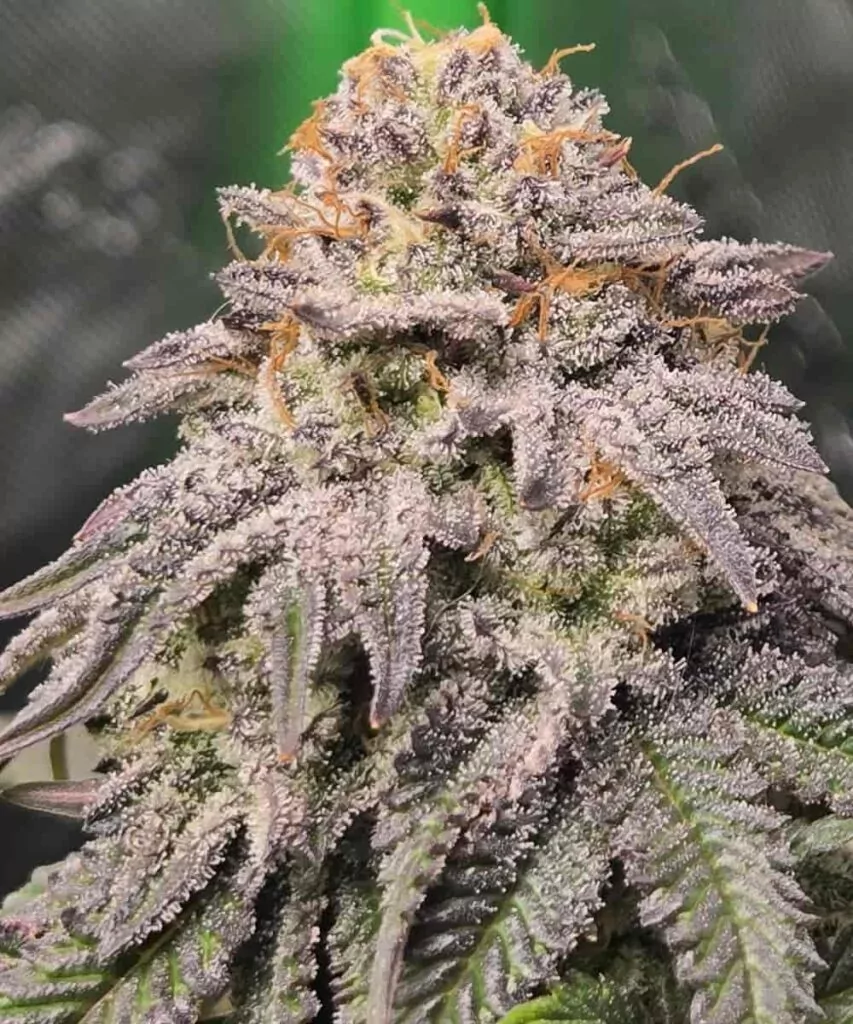


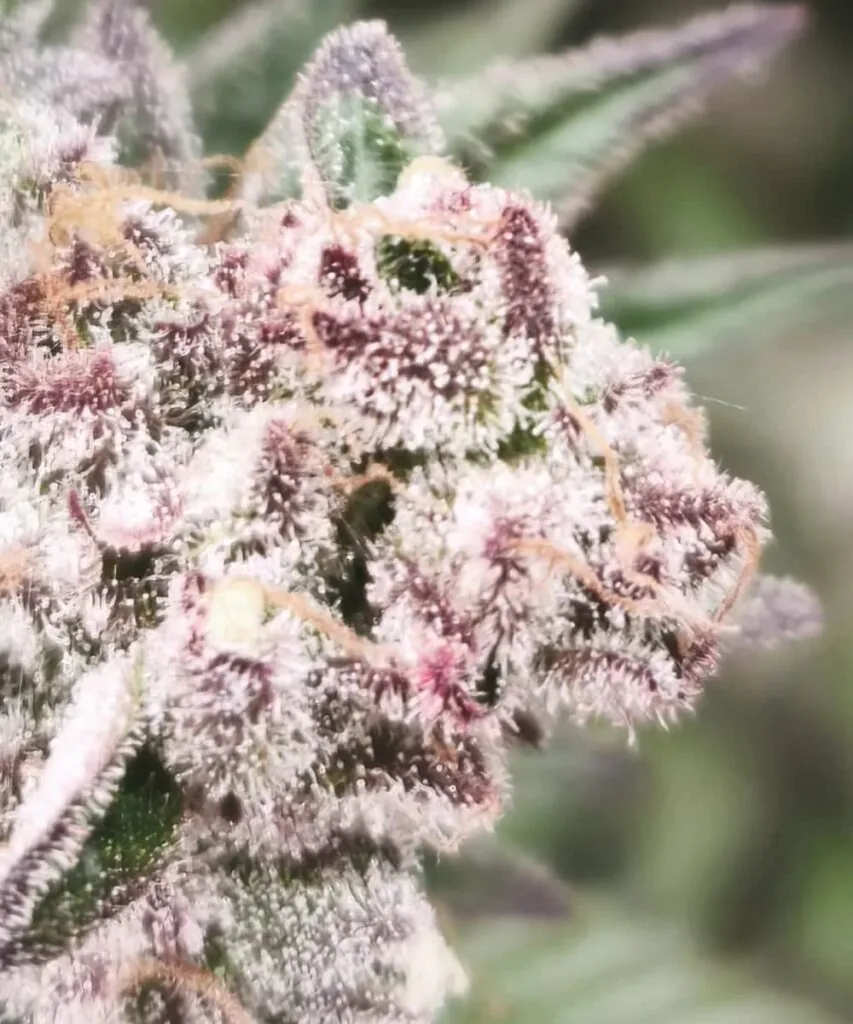
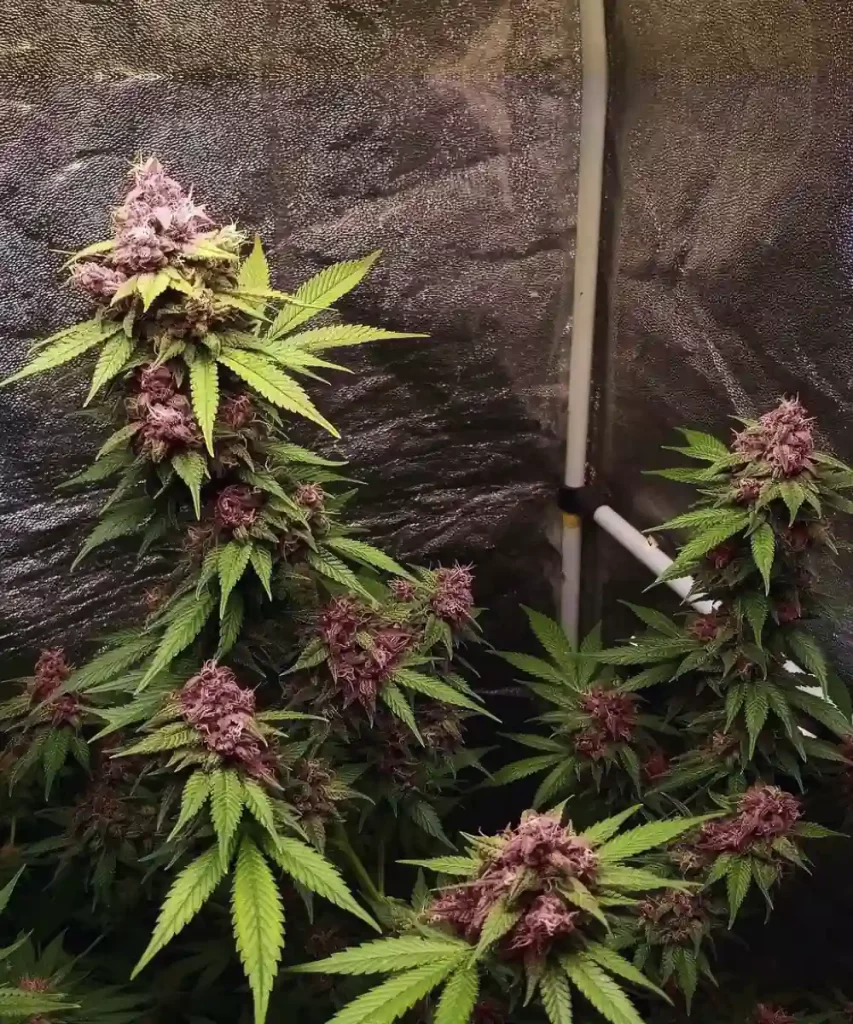
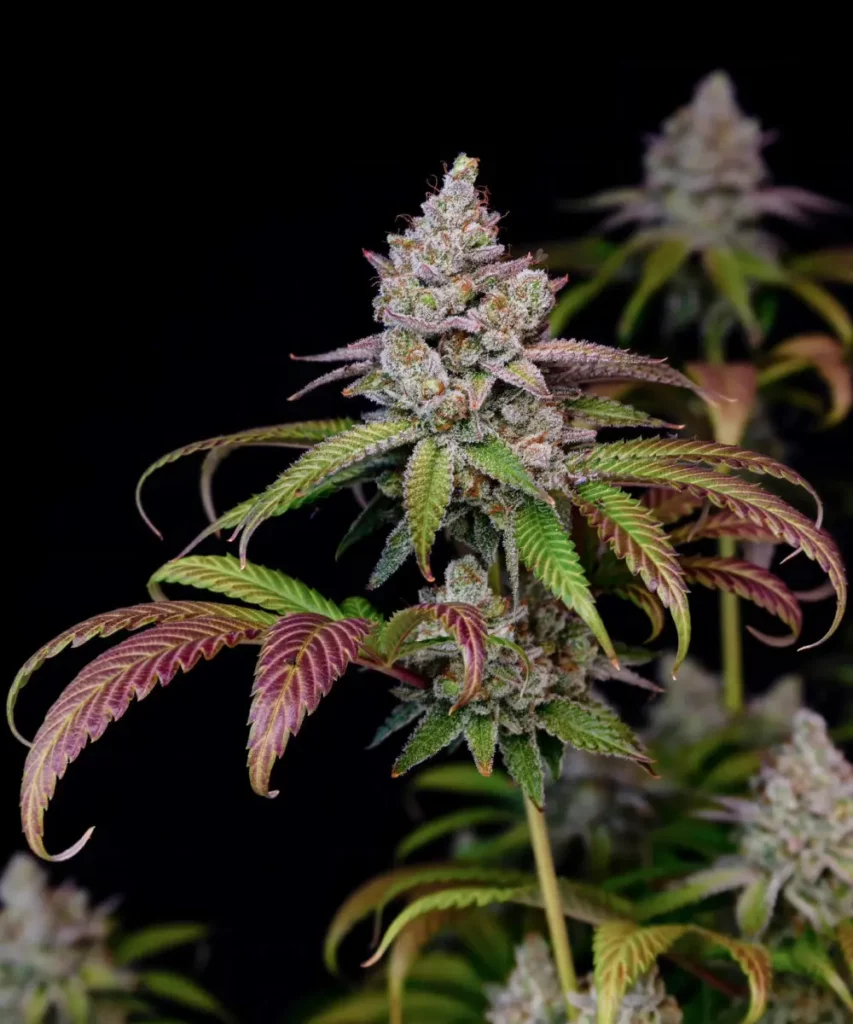

I planted 10 Super Boof seeds, and all germinated without a hitch. The plants grew strong and healthy, producing dense, frosty buds with a sweet, earthy aroma. The high is uplifting yet relaxing—a perfect balance. Impressive yield too, even with minimal effort

I’ve been growing weed for 30+ years, and to be honest, it’s quite difficult to surprise me. After a few decades of facing different strains, changing growing conditions, and solving whatever problem you could possibly think of, by then, I believe I’ve seen it all in cannabis growing.
Gary Payton defied every single one of my expectations.
The plant thrived, growing to an impressive 6 feet in what seemed like a blink of an eye. It quickly filled out with buds and displayed better smell each day, showing solid proof of superior genetics. The buds were tight, aromatic, and a source of immense pride, surpassing the outcome of many of my previous endeavors.
Hypno Seeds with their Gary Payton strain has won my complete admiration and loyalty. Outstanding genetics in this plant have truly turned what I always thought of to be an experiment with negligible expectations into one of the most satisfying grows of my long career.
Looking forward, my excitement for the next growing season is unparalleled. I can’t wait to see how much I can take these strains, especially with the attention that Gary Payton really does deserve right from the start.

TRUE MAGIC! This strain really stands out. I am trying Hypno Seeds for the first time and I surely made the right choice. I will be ordering more RS11 seeds just to keep this beauty in my garden for the upcoming season. Growing in Virginia and it’s only shown perfection by now.

Starting my latest grow, I decided to try out some Blackberry Kush from Hypno… I planted her on a whim alongside my other favorites. Hypno Seeds said it had to be a powerful plant with rich, fruity scents… Seeing is believing. She developed purplish hues and dense resin coated buds and quickly took center stage in my garden and produced much more than expected. The buds are tightly packed, literally bursting with the heady aroma. The yield? Very impressive for her conditions…
Germinated three seeds using the paper towel method with100% success rate within 48 hours. Planted in 5 gallon pots with living soil under a 315W CMH light. Plants remained compact (3.5 ft) with thick lateral branching, showing high resistance to humidity and minor nutrient fluctuations. Yield per plant: 5.8 oz of extremely dense, trichome-heavy buds. Smell profile during flower: sharp pine, pepper, and a hint of citrus. Harvested at week 9, after trichomes showed 30% amber for peak sedative effects. Smoke report: Potent. Deep relaxation without full sedation. Ideal for stress relief.


