

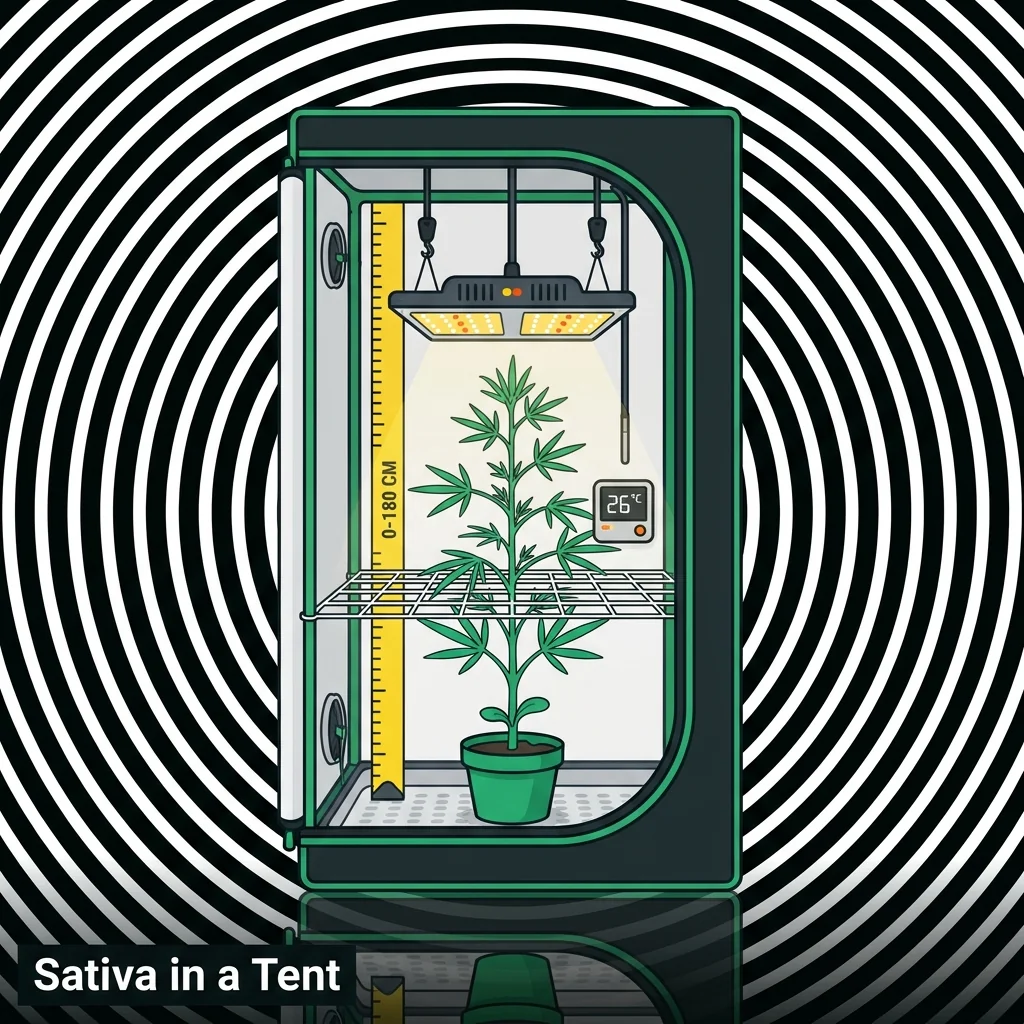
So… what actually makes a high-THC sativa thrive in a short tent? Success depends on three decisions made before the stretch begins:
- Pick a line with predictable stretch.
- Flip to flower based on measured headroom.
- Train the canopy flat so every top sits at a safe distance from the light.
Most growers underestimate how fast sativas stretch. Heat at the canopy quietly costs them aroma. Lines developed and stabilized in-house over multiple generations are more consistent. That consistency matters in a small tent: with room for only one or two plants, a single surprise tall phenotype can wreck the canopy.
- Indoor sativas typically reach 3 to 6 feet at maturity, enough to fill a standard tent.
- Calculate usable headroom, then flip to flower at roughly half that height or less.
- Topping, low-stress training and a SCROG net turn vertical growth into a wide, even canopy.
- Terpene retention depends on managing canopy temperature and drying slowly.
Sativa-leaning plants outgrow short tents because their growth habit is built for vertical reach, and the biggest surge comes after the switch to flowering. Indoor sativas typically finish at 3 to 6 feet. Tent sizing guides commonly recommend at least 6 feet of height to fit lighting and ventilation above the canopy.
Do that math. A mature sativa can claim the whole tent on its own.
The stretch is the trap. After the flip, the plant lengthens its stems and spaces its nodes further apart, building a tall frame before committing energy to buds. Growers who flip based on how big the plant looks, rather than how much room is left, tend to meet their light fixture weeks later.
Because height is the main constraint, it’s tempting to shop by label. The label describes structure, not chemistry. A 2021 study published in Nature Plants found that sativa- and indica-labelled samples were genetically indistinct overall, with the labels tracking only a small number of terpenes. A plant’s specific cannabinoid and terpene profile drives what it produces.
- Pick for aroma based on the line’s documented terpene profile.
- Pick for stretch based on grow reports. A sativa-leaning hybrid is often far easier to contain than a pure haze.
- Treat potency as a trait of the mature plant. A strain can be bred for high-THC flower, but the result always depends on genetics and grow conditions together.
Once the strain is chosen, the next decision is arithmetic. Most growers overestimate their space because they measure the tent, not the room under the light.
| Measurement | Action |
|---|---|
| Tent interior height | Starting number |
| Pot plus any stand or saucer | Subtract |
| Light fixture plus hangers | Subtract |
| Light-to-canopy gap from your fixture’s manual | Subtract |
| Result | Usable canopy height |
Sativa stretch can easily double a plant’s height. Flip at about half your usable canopy height, and earlier for haze-heavy lines.
💡 Pro Tip: Tape your usable canopy height on a tent pole. When the tallest top reaches the halfway mark, flip. Guessing by eye is how lights get hugged.
Cannabis cultivation laws differ by state and locality. Growers must check and follow their own.
Building on the headroom budget, training spends your space sideways instead of upward. It works because of apical dominance: the main tip releases auxin, a hormone that holds side branches back. Think of a traffic light stuck on red for every branch below it. Remove or bend that tip and the light turns green.
| Technique | When | What it does |
|---|---|---|
| Topping | Veg, after several nodes | Splits growth into multiple main colas |
| Low-stress training | Veg into early flower | Ties stems flat to widen the canopy |
| SCROG net | Late veg through the stretch | Holds tops at one even height |
| Supercropping | During the stretch | Pinches and bends runaway stems lower |
| Lollipopping | Around the flip | Removes weak lower growth |
💡 Pro Tip: Keep tucking tops under the net until the stretch visibly slows. Stop too early and the final push undoes your flat canopy.
Let’s be real: a short tent puts buds nearer the lamp, and that’s where terpene retention suffers. Terpenes are volatile, meaning they evaporate easily. Picture perfume left on a hot dashboard: heat drives off the lightest aromatics first. Buds in a hot spot lose terpenes the same way, and intense light can also cause foxtailing and bleached tops.
| Stage | Common grower target | Why |
|---|---|---|
| Flowering canopy | Measure temperature at leaf level | Hot spots burn off terpenes |
| Late flower | Around 40 to 50% RH | Limits mold in dense colas |
| Drying | Around 60°F and 60% RH | Slow drying retains aroma |
| Curing | Sealed jars, opened periodically | Evens moisture without venting terpenes |
- Dim your LED rather than raising it when height runs out.
- Exhaust air from the top of the tent, where heat collects.
With the method set, strain choice decides how hard your tent has to work. Here are the top sativa strains 2026 short-tent growers can build around, which we’ve selected for flavor and manageable structure.
Durban Poison – The African Classic
A pure sativa with sweet anise and pine aromas. Its structure is relatively manageable for its type. Shop Durban Poison
Green Crack – The Mango Sprinter
Sativa-dominant with sweet mango and citrus notes. It flowers relatively quickly for a sativa, so you spend fewer weeks managing the canopy. Shop Green Crack
Super Lemon Haze – The Zesty Stretcher
Loud lemon terpenes with serious haze stretch. Best for growers ready to top early and run a SCROG. Shop Super Lemon Haze
Amnesia Haze Auto – The Low-Ceiling Option
An autoflower that skips the flip and stays more compact, carrying an earthy citrus haze profile. Shop Amnesia Haze Auto
For more aroma-led options, browse the Flavor Collection.
Can you grow a sativa in a 4- or 5-foot tent?
Yes. Flip early, top and run a SCROG net, or choose an autoflower sativa. The shorter the tent, the earlier you flip.
When should I switch a sativa to flower in a short tent?
Flip when the tallest top reaches about half your usable canopy height, since stretch can easily double plant height.
Does training reduce THC?
Training doesn’t change genetic potential. An even canopy gives more tops similar light, which often improves bud development. Avoid heavy stress late in flower.
Do autoflower sativas have less flavor?
Not inherently. Flavor comes from terpene genetics, not the flowering trigger.
Are feminized seeds better for small tents?
With room for only one or two plants, feminized seeds help because you don’t lose space to male plants.
Hypno Seeds is a US cannabis seed breeder that develops and stabilizes its own genetics in-house over multiple generations for consistent growth, yield and terpene profiles. Every batch is germination-tested every 30 days, and each seed is hand-inspected for maturity and shell integrity. Orders ship from a climate-controlled warehouse in Las Vegas, NV, dispatched within 24 hours, with delivery typically in 2 to 5 business days. That control from breeding to shipping makes a line predictable enough to plan a short-tent grow around.
Ready to plan your next short-tent sativa run? Explore the lineup in the Hypno Seeds shop.
In a small tent, the best harvest usually belongs to the grower who measured the ceiling first.


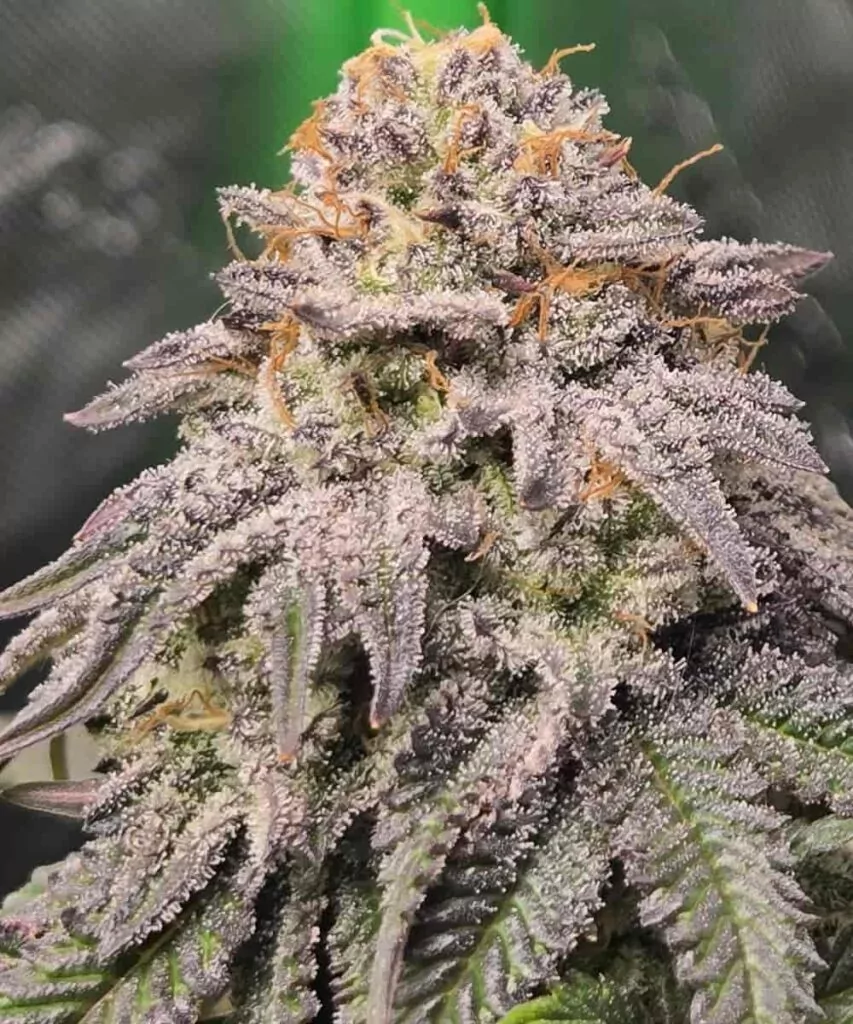


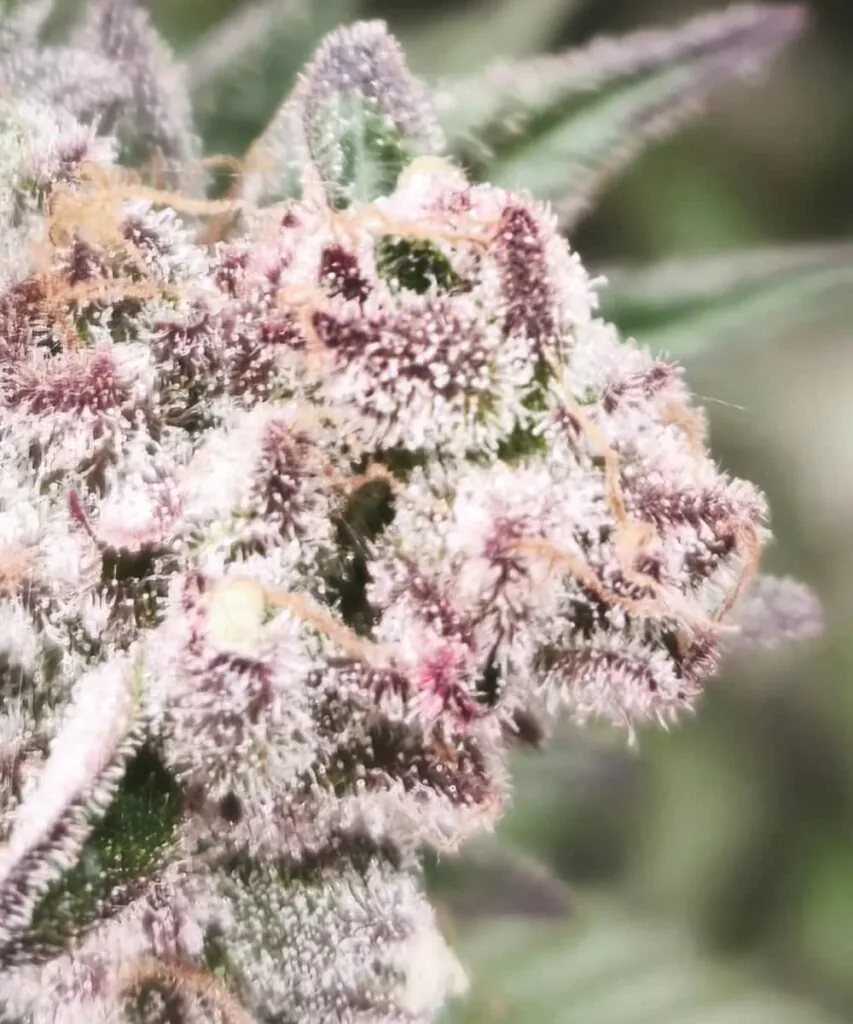
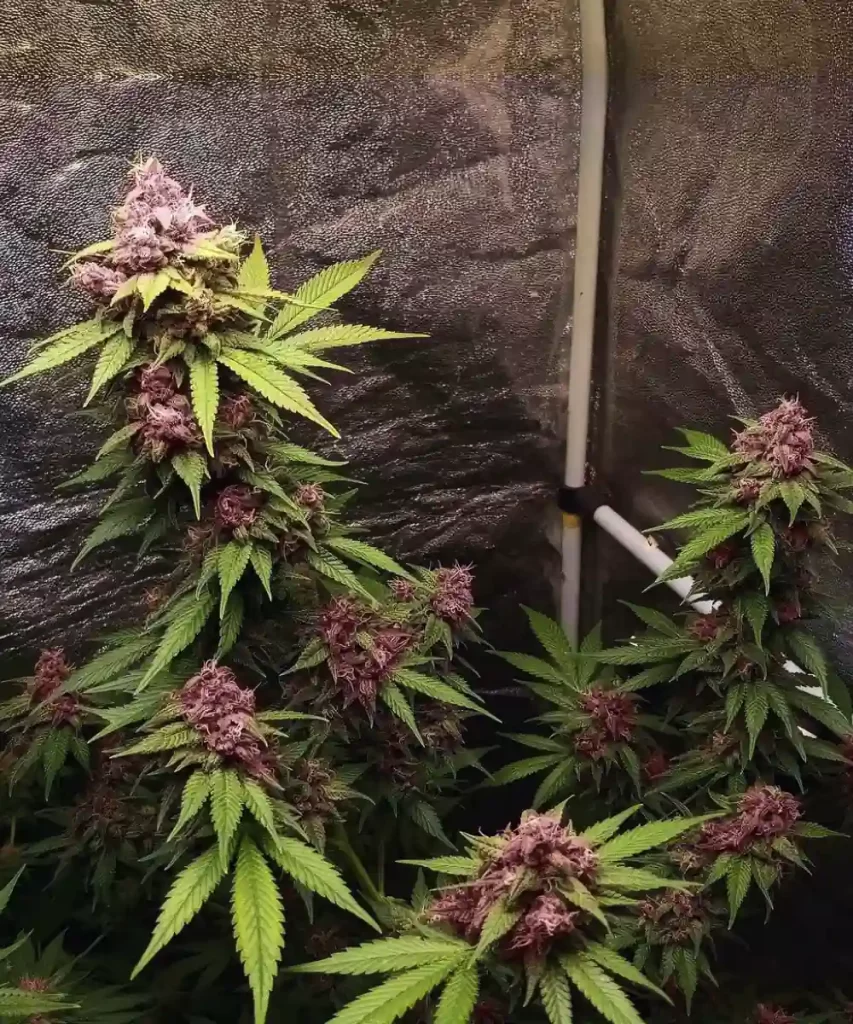
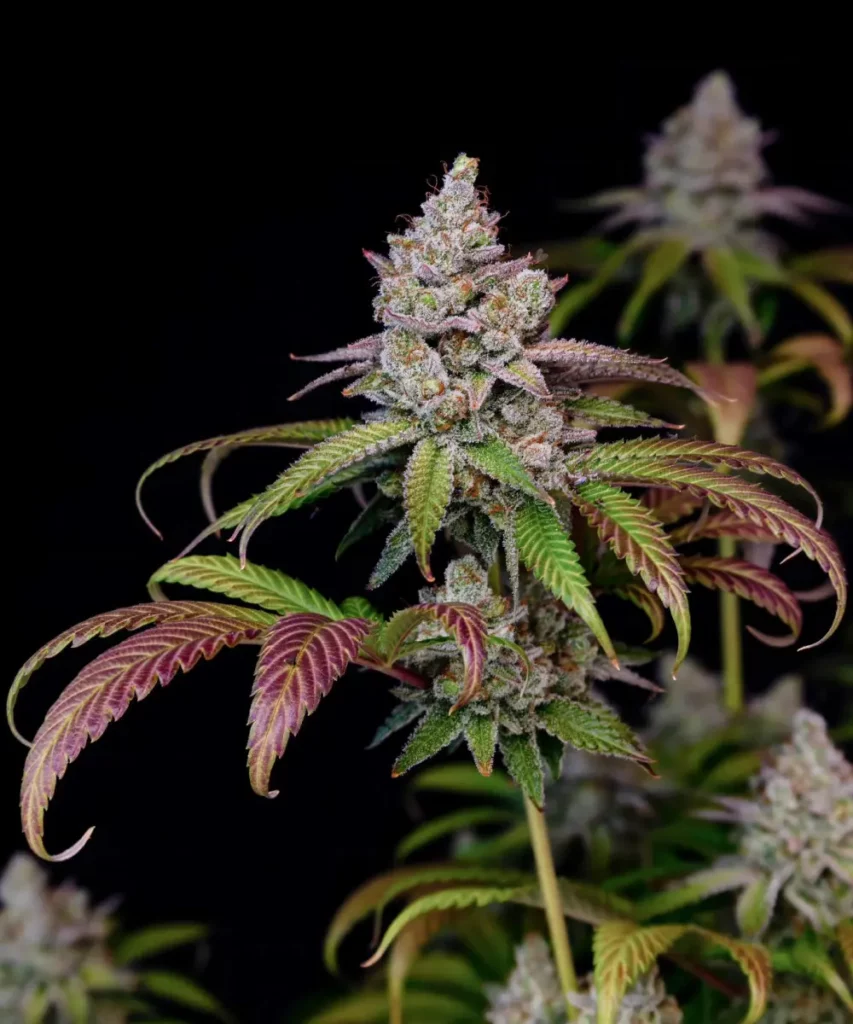
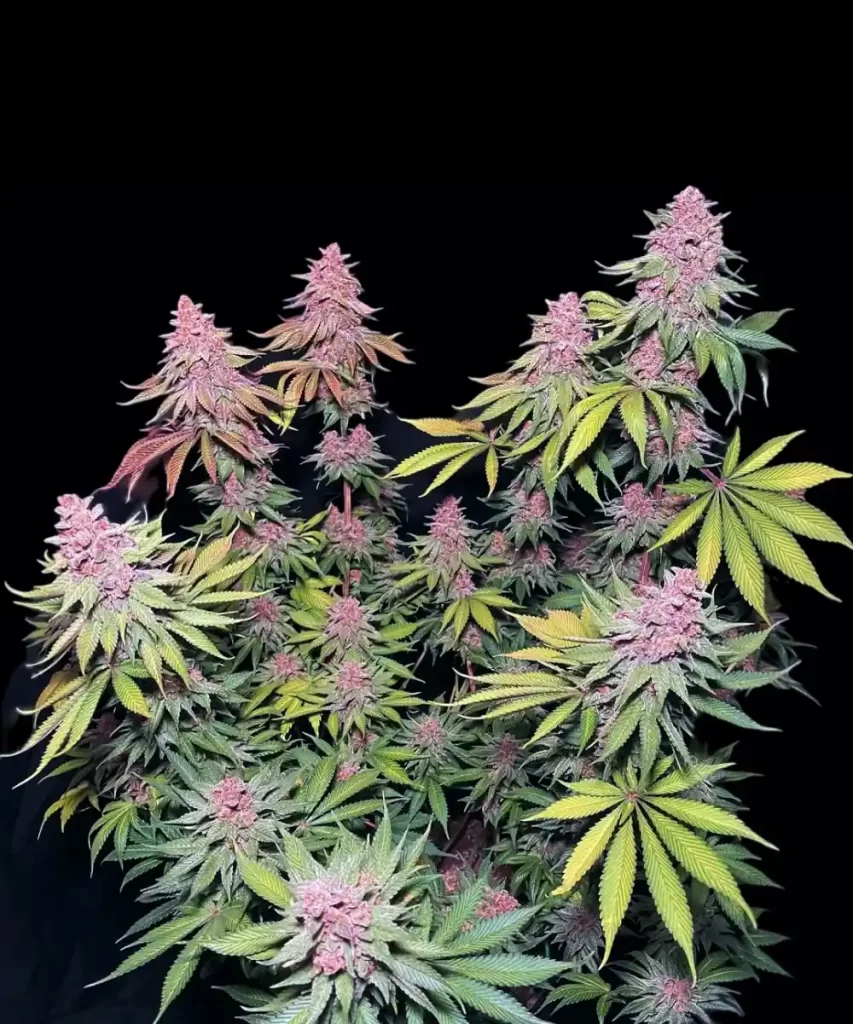

I planted 10 Super Boof seeds, and all germinated without a hitch. The plants grew strong and healthy, producing dense, frosty buds with a sweet, earthy aroma. The high is uplifting yet relaxing—a perfect balance. Impressive yield too, even with minimal effort

I’ve been growing weed for 30+ years, and to be honest, it’s quite difficult to surprise me. After a few decades of facing different strains, changing growing conditions, and solving whatever problem you could possibly think of, by then, I believe I’ve seen it all in cannabis growing.
Gary Payton defied every single one of my expectations.
The plant thrived, growing to an impressive 6 feet in what seemed like a blink of an eye. It quickly filled out with buds and displayed better smell each day, showing solid proof of superior genetics. The buds were tight, aromatic, and a source of immense pride, surpassing the outcome of many of my previous endeavors.
Hypno Seeds with their Gary Payton strain has won my complete admiration and loyalty. Outstanding genetics in this plant have truly turned what I always thought of to be an experiment with negligible expectations into one of the most satisfying grows of my long career.
Looking forward, my excitement for the next growing season is unparalleled. I can’t wait to see how much I can take these strains, especially with the attention that Gary Payton really does deserve right from the start.

TRUE MAGIC! This strain really stands out. I am trying Hypno Seeds for the first time and I surely made the right choice. I will be ordering more RS11 seeds just to keep this beauty in my garden for the upcoming season. Growing in Virginia and it’s only shown perfection by now.

Starting my latest grow, I decided to try out some Blackberry Kush from Hypno… I planted her on a whim alongside my other favorites. Hypno Seeds said it had to be a powerful plant with rich, fruity scents… Seeing is believing. She developed purplish hues and dense resin coated buds and quickly took center stage in my garden and produced much more than expected. The buds are tightly packed, literally bursting with the heady aroma. The yield? Very impressive for her conditions…
Germinated three seeds using the paper towel method with100% success rate within 48 hours. Planted in 5 gallon pots with living soil under a 315W CMH light. Plants remained compact (3.5 ft) with thick lateral branching, showing high resistance to humidity and minor nutrient fluctuations. Yield per plant: 5.8 oz of extremely dense, trichome-heavy buds. Smell profile during flower: sharp pine, pepper, and a hint of citrus. Harvested at week 9, after trichomes showed 30% amber for peak sedative effects. Smoke report: Potent. Deep relaxation without full sedation. Ideal for stress relief.


