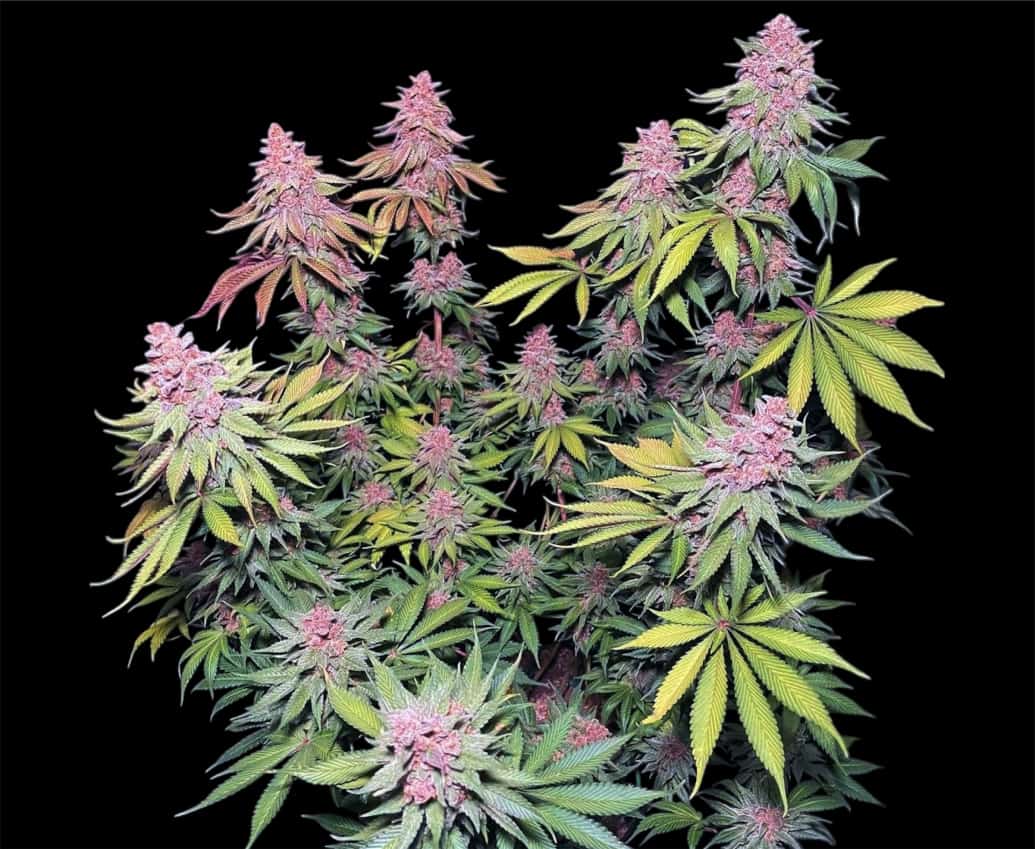
Autoflower Seeds — Fast, Feminized, USA-Grown
Fast, feminized, and beginner-friendly. Our autoflowers finish in 8–10 weeks from seed, with some strains reaching up to 35% THC. Bred in-house and shipped across the USA in 2–5 days.


Fast, feminized, and beginner-friendly. Our autoflowers finish in 8–10 weeks from seed, with some strains reaching up to 35% THC. Bred in-house and shipped across the USA in 2–5 days.























Autoflower seeds grow into plants that flower automatically with age, instead of waiting for a change in the light cycle. Photoperiod plants only start flowering when their daily darkness increases; autoflowers — sometimes written “auto-flowering” — switch over on their own, usually within a few weeks of sprouting. That makes them one of the simplest and fastest ways to grow cannabis at home.
They’re feminized too, so nearly every seed produces a bud-bearing female plant — no light timing to manage, no males to remove.
Both produce female plants; the difference is what triggers flowering and how much control you have.
For speed and simplicity, autoflowers win. For maximum yield and control, photoperiod plants have the edge.
Short — that’s the whole appeal. Most autoflowers run their full life cycle in about 8–10 weeks from germination, moving through the seedling, vegetative, and flowering stages without you changing a thing. In our own range, several finish on the faster end: Creme Brulee Auto and Crystal Ball Auto are ready around 8 weeks, while sativa-leaning strains like Amnesia Haze Auto take closer to 9.
Because the growth cycles are so compressed, outdoor growers in milder climates can often pull more than one harvest in a season.
Most are ready 8–10 weeks after germination, but the plant tells you more than the calendar does. Two cues to watch:
A cheap jeweler’s loupe or pocket microscope makes the trichome check easy. Our autos are bred to finish predictably, so a strain listed at 8–9 weeks is usually ready right in that window.
Yes, all of ours are. We use proven feminization techniques so close to 100% of seeds grow into female, bud-producing plants. That means no identifying and removing male plants, which keeps the grow simple and protects your final yield.
Today, yes. Early autoflowers inherited low THC from their ruderalis genetics and earned a weak reputation. Modern breeding changed that completely — by crossing autoflowers with high-THC indica and sativa lines, breeders closed the gap. Many of our autos test above 20% THC, and Sticky Kitty Auto reaches up to 35%. You no longer have to trade potency for convenience.
Indoors gives you full control over light, temperature, humidity, and feeding — usually the most consistent results.
Their short cycle and compact size make autoflowers great outdoors, even in shorter or cooler seasons.
The setup is simple, but a few basics make a real difference:
Because the cycle is so short, steady conditions from day one matter more than any fancy gear.
Match the strain to your space and goals rather than chasing one number. Worth weighing:
Browse the full autoflower collection to filter by THC, type, yield, and flowering time.
Autoflowers come from crossing regular cannabis with Cannabis ruderalis — a hardy subspecies from cold, short-season regions that evolved to flower by age rather than by light. Breeding that trait into high-quality indica and sativa lines is what gives a modern autoflower its automatic flowering while keeping real potency, yield, and flavor. Early generations were weak; today’s are a different plant entirely.
We stabilize every strain over multiple generations of backcrossing, so each seed reliably produces plants with the same growth pattern, cannabinoid levels, and flavor. Stability is the whole point of buying from a breeder rather than a reseller — you get what the description promises, batch after batch.
Every batch is tested before it’s sold — for germination rate, growth consistency, potency, and flavor — and backed by a germination guarantee. Seed stock is stored in a climate-controlled US facility and dispatched within 24 hours, so what reaches you is fresh and viable.
Current promotions, seasonal drops, and limited offers are on our deals page. When comparing, weigh value over headline price — reliable genetics mean fewer failed grows, which saves more than a cheap pack ever will. Every order also includes free seeds.
We breed our own genetics in-house, so our autoflowers are stable, feminized, and selected for both speed and potency. Add a germination guarantee, fast and discreet US shipping in 2–5 days, and grow support from people who actually cultivate, including our growing guides, and you get a straightforward path from seed to harvest. Ready to start? Browse the full seed shop.
Filter
Environment
Experience
Climate
Yield
Height
Effect
Flavor